


Continental Porcelain Statue
These continental porcelain statue pieces bring cabinet-level charm to a room, offering finely painted figures from centuries past.
Continental Porcelain Statue
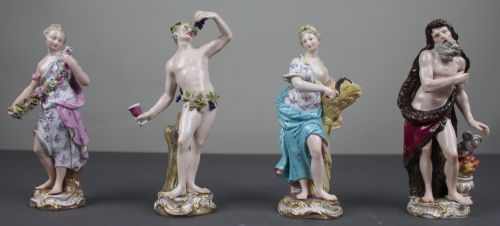
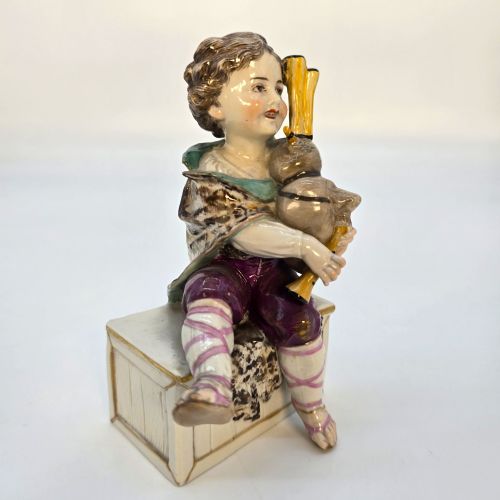
A continental porcelain statue takes the form of figurines, figure groups, and decorative sculptures representing humans, allegories, and animals. You will frequently encounter figures originating from German and French factories, spanning periods from the eighteenth century through to the early twentieth century.
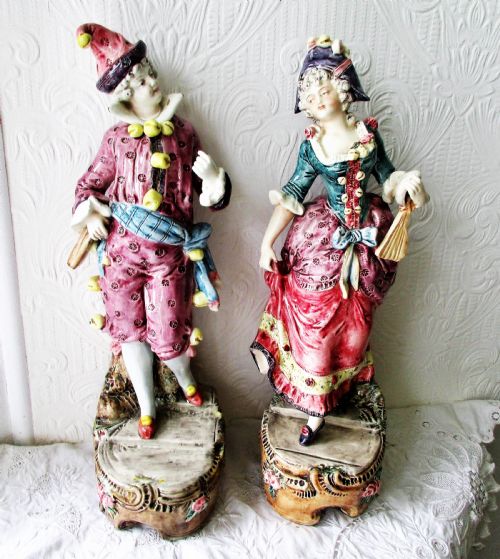
Makers and regional schools produce distinct subjects, ranging from allegorical representations of the seasons and harvesters to paired figures of lovers and children. These sculptural objects appear in various styles including Rococo Revival, Victorian, and Art Nouveau.
Collectors find individual figures alongside matched pairs and larger monumental pieces. The selection includes glazed examples alongside unglazed bisque porcelain forms.
How they were made
Potteries utilise hard-paste porcelain and ceramic bodies shaped into detailed moulds, sometimes employing bisque porcelain for an unglazed, marble-like matte finish. Artisans apply polychrome enamel painting by hand to bring out facial expressions, garments, and natural settings.
Gilt and gold leaf accents frequently highlight Rococo scrolls and Victorian detailing on the bases and drapery. Certain groups incorporate earthenware or majolica bodies alongside traditional porcelain.
Nineteenth-century potters once modeled mischievous porcelain dwarves and tiny dogs with surprisingly serious expressions.
What varies in quality
The refinement of the hand-painted enamel work determines much of the visual success, separating lively facial expressions and delicate floral motifs from heavy, careless brushwork. Modeling depth also divides standard production pieces from masterworks, as sharp moulding preserves intricate lace, fingers, and botanical details without blurring.
The precision of the kiln firing and the crispness of applied gold leaf or gilt decoration distinguish superior factory output from simpler copies. Pieces that retain their original modeled accessories and subtle colour shading demonstrate greater artistic ambition.
Meissen Porcelain Factory·Volkstedt Rudolstadt Factory·Samson of Paris·Royal Dux·Carl Thieme Dresden·Ludwigsburg Porcelain·Royal Berlin
The Continental Porcelain Statue Glossary
- Bisque Porcelain
- Ungluded porcelain fired to leave a matte, porous surface resembling white marble. This finish shows off sculptural modeling without surface gloss.
- Hard-Paste Porcelain
- A dense, vitrified ceramic composition made from kaolin and petuntse fired at high temperatures. It resists scratching and takes enamel colours cleanly.
- Enamel
- Vitrified glass paste applied to porcelain surfaces as paint and refired to fuse permanently. It provides the vibrant polychrome colour on figures.
- Gilt
- A thin layer of gold applied to the porcelain surface to accent clothing edges, bases, and ornamental details. It adds reflective warmth to the piece.
- Rococo Revival
- A nineteenth-century design style drawing on eighteenth-century asymmetrical curves, scrolls, and natural motifs. It appears frequently on ornate figurine bases.
Continental Porcelain Statue: Frequently Asked Questions
How do I identify a continental porcelain statue?
Examine the base for factory marks, underglaze blue swords, or impressed numbers that link the piece to German and French workshops.
Inspect the modeling quality and hand-painted enamel details, which reveal the period and standard of the pottery.
Where should I display these porcelain figures?
Place them inside glass cabinets or secure console tables where they remain protected from accidental knocks and heavy foot traffic.
Keep them away from direct sunlight to preserve the vibrancy of the hand-painted enamels and gilt highlights.
What is the difference between bisque and glazed porcelain?
Bisque porcelain is fired without a glaze, leaving a matte, porous texture that highlights fine sculptural details like skin and drapery.
Glazed porcelain receives a glassy coating before firing, producing a shiny, sealed surface that resists dust and moisture.
How do I clean antique porcelain safely?
Dust the surface gently with a soft, dry brush to remove loose particles without disturbing delicate fingers or applied flowers.
Avoid soaking painted or gilded areas in water, as harsh cleaning agents can damage the historic enamels.