




Hard Paste Porcelain Ornament
A hard paste porcelain ornament brings intricate detail and lustrous glaze to any mantel, capturing centuries of European craftsmanship.
Hard Paste Porcelain Ornament
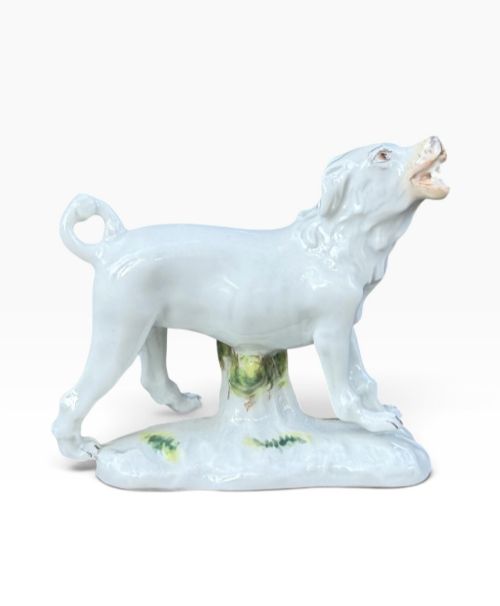
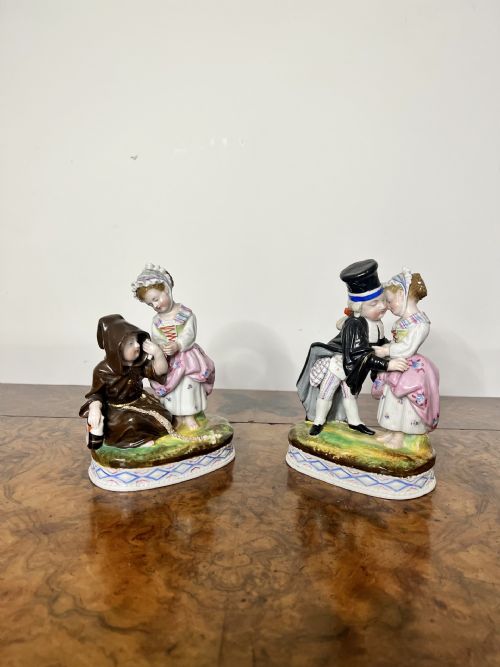
A hard paste porcelain ornament encompasses delicate figurines, decorative groups and candlesticks created by skilled European potteries. These pieces take the form of street traders, allegorical figures and animals rendered with expressive modelling.
Visitors to this selection will most frequently encounter figures and groups originating from German and French traditions. The periods represented span from the eighteenth century through the Victorian era.
The objects serve primarily as decorative mantel pieces or table ornaments rather than utilitarian wares. Each item displays the characteristic dense white ceramic body and smooth finish typical of true hard-paste porcelain.
Materials and construction
The pieces are fashioned from hard-paste porcelain, a true ceramic compound fired at very high temperatures to create a vitrified body. This durable material accepts fine glaze and detailed enamel painting without distortion during firing.
Makers applied hand-painted enamels and gold leaf highlights to enhance the modelled details of clothing, faces and surrounding foliage. Gilt accents and rich glazes define the decorative surface of the figures and candlesticks.
Materials recorded across the selection include enamel, gold leaf, and traditional glaze applied to hard-paste porcelain.
Assessment of quality
The application of enamel colours and gold leaf separates standard production from superior artistic output. Deeper tonal nuance in the painting and careful placement of gilding indicate higher workshop standards.
Meissen·Samson Paris·Derby
The Hard Paste Porcelain Ornament Glossary
- Hard-Paste Porcelain
- A true porcelain composed of kaolin and petuntse, fired at high temperatures to produce a hard, vitrified white body. This material is dense and resists scratching.
- Enamel
- Vitreous coloured compounds applied to the glazed ceramic surface and fired again to fuse permanently. These provide the rich palette seen on costume and decorative details.
- Gilt
- A thin layer of gold or gold leaf applied to portions of the porcelain ornament for decorative emphasis. It catches the light and highlights raised mouldings.
- Rococo Revival
- A nineteenth-century style drawing inspiration from the curving asymmetry and scrollwork of the mid-eighteenth century. Figures in this taste often feature elaborate C-scroll bases and lush floral elements.
Hard Paste Porcelain Ornament: Frequently Asked Questions
What is hard paste porcelain?
Hard paste porcelain is a true ceramic mixture of kaolin and petuntse fired at extremely high temperatures. This process yields a dense, impermeable white body that accepts fine glaze.
The resulting material provides a stable base for intricate modelled figures and detailed enamel painting. It differs fundamentally from softer artificial porcelain bodies.
How do I care for figures?
These decorative objects require gentle handling and placement away from direct sunlight and damp conditions. Dust them softly with a dry, clean brush.
Who made these ornaments?
European factories such as Meissen in Germany and Samson in Paris produced these decorative figures and groups. Many pieces also reference earlier eighteenth-century designs.
Craftsmen modelled human figures, allegorical scenes and animals with painted enamel and gilt decoration. Some items follow traditional Derby styles.
Are these pieces functional?
Most items function strictly as decorative ornaments, figural groups or candlesticks rather than tableware. Their primary purpose is aesthetic display on mantels and cabinets.
The detailed modelling and delicate painted surfaces make them unsuited for everyday utilitarian use. They were created to be admired in formal rooms.