



Samson of Paris Figurine
A samson of paris figurine is a spirited nineteenth-century ceramic copy of earlier eighteenth-century prototypes that brings decorative charm to a room.
Samson of Paris Figurine
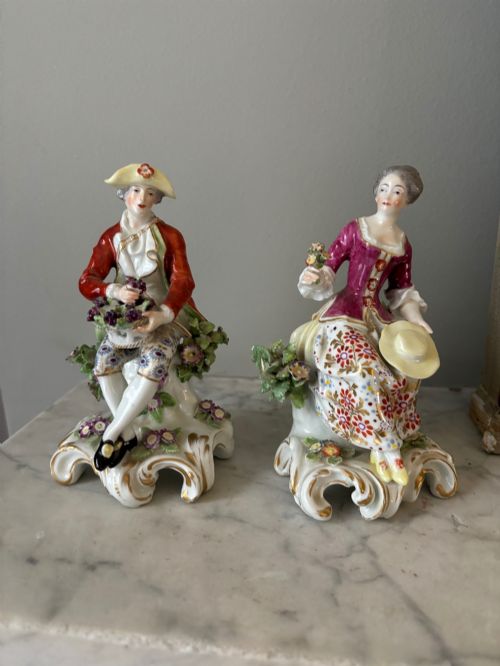
When you search for a samson of paris figurine, you find nineteenth-century French porcelain figures that pay homage to famous earlier factories like Chelsea, Derby, and Meissen. These decorative objects take the form of allegorical figures, street vendors, actors, musicians, and mythological characters.
The pieces on this page span the Victorian era, specifically appearing in decades from eighteen-fifty to eighteen-ninety. They include single figures and matched pairs shaped in revivalist styles.
How they were made
Makers utilised hard-paste porcelain to form the body of each figure, fired at high temperatures to achieve a durable ceramic base. This material allowed for crisp modelling of intricate clothing, facial expressions, and surrounding foliage.
Polychrome enamel colours and gold leaf application finished the surface, often adding rich gilding to the bases and garments. Skilled painting brought life to the pastoral scenes and character studies.
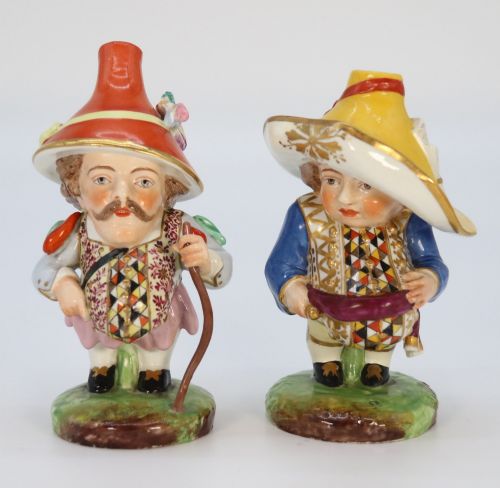
Mansion House dwarves wear absurdly large triangular hats and wide grins, serving as cheerful porcelain caricatures from Victorian Paris.
What varies in quality
The precision and richness of the hand-painted enamels and gilding also divide the range. Superior pieces display careful brushwork on costumes and naturalistic tones on skin and hair, while lesser examples look flat.
Edme Samson
The Samson of Paris Figurine Glossary
- Hard-Paste Porcelain
- A dense, vitrified ceramic composed of kaolin and petuntse, fired at high temperatures. It forms a durable body that resists scratching and holds fine details.
- Polychrome Enamel
- Multi-coloured glass-based paint applied to the surface of fired porcelain. It is fused permanently to the glaze during a subsequent low-temperature kiln firing.
- Bocage
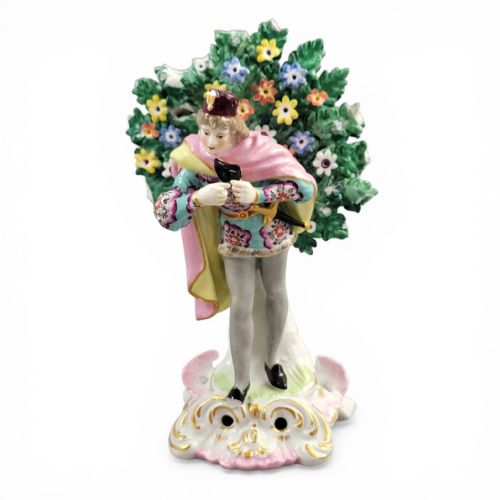
- An ornamental background of applied ceramic leaves and branches often found behind figures. This decorative element imitates the leafy arbours popular in eighteenth-century English porcelain.
- Gilding
- The application of gold leaf or powdered gold to ceramic surfaces for decorative effect. It highlights architectural details, clothing trims, and bases.
- Rococo Revival
- A nineteenth-century design movement that reinterpreted the asymmetrical, ornate curves of the mid-eighteenth century. It heavily influenced the theatrical poses and swirling bases of these figures.
Samson of Paris Figurine: Frequently Asked Questions
How can I date a samson of paris figurine?
Dating relies on stylistic clues, paste characteristics, and occasional factory marks from the nineteenth century. Most examples date from the mid to late Victorian decades.
Comparing the modelling style to known eighteenth-century prototypes helps narrow down the period of production within the eighteen-fifties to eighteen-nineties.
Were these figures meant to deceive buyers?
While some pieces mimic historic factory marks, they were primarily produced as decorative art for a market that admired earlier porcelain styles. They served as accessible alternatives to scarce eighteenth-century originals.
Collectors valued them for their own artistic merit and technical skill rather than as direct deceptions.
How should I display them at home?
These colourful porcelain pieces suit enclosed cabinets or sturdy mantelpieces where they are safe from accidental knocks. Good lighting helps reveal the fine details of the hand-painted enamels and gilding.
Keep them away from direct sunlight and dust them gently with a soft dry cloth to preserve the surface.