
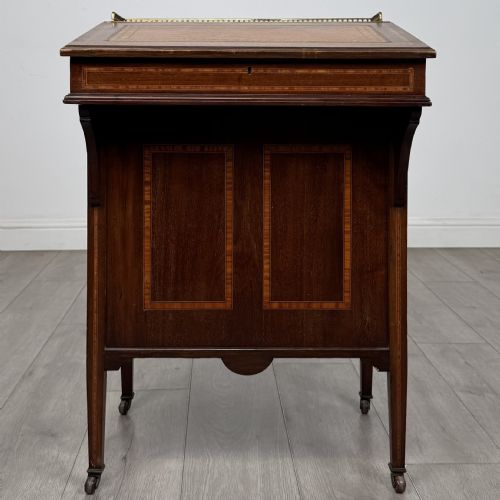
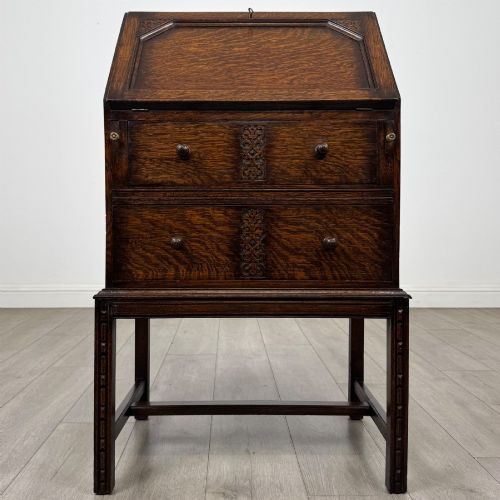


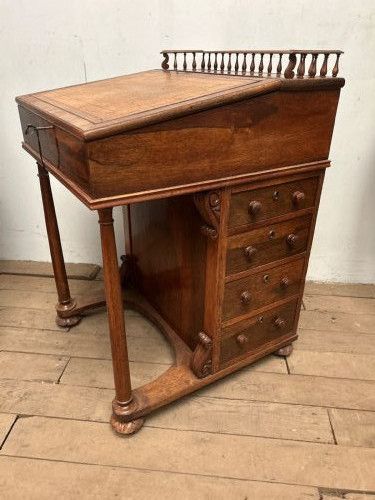
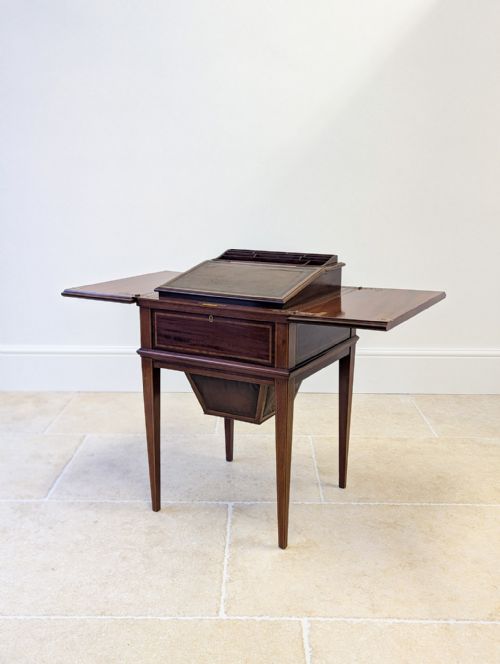
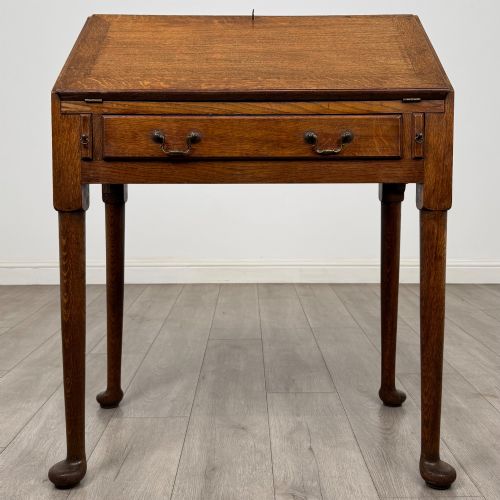
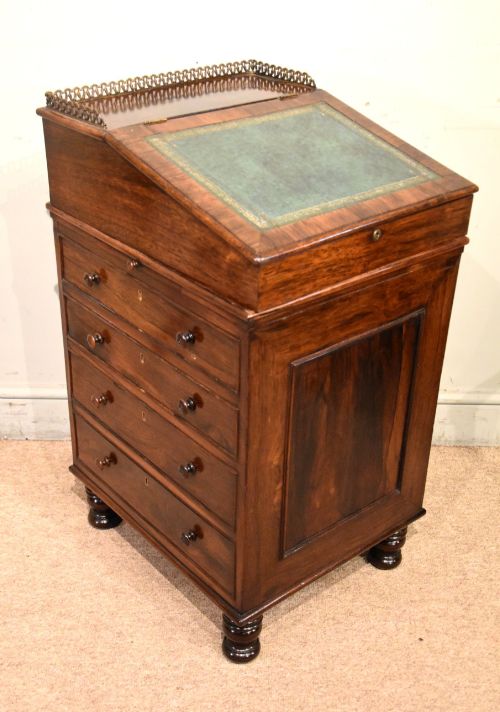
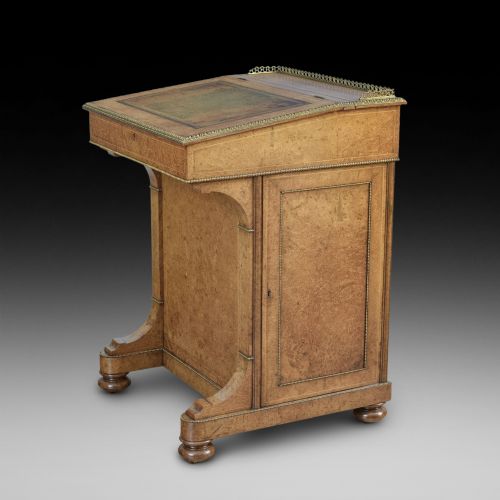
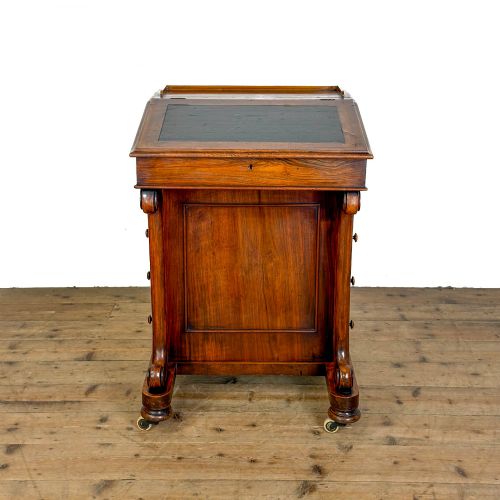
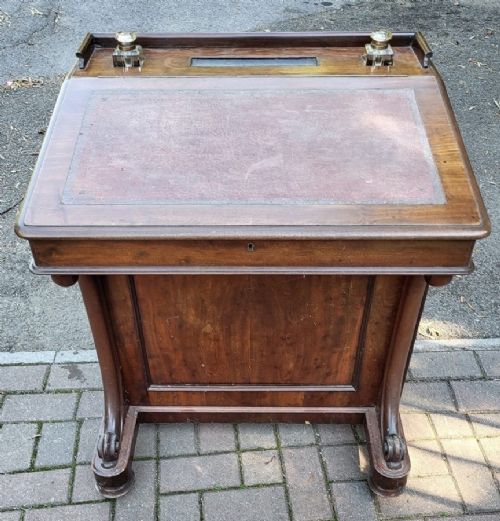
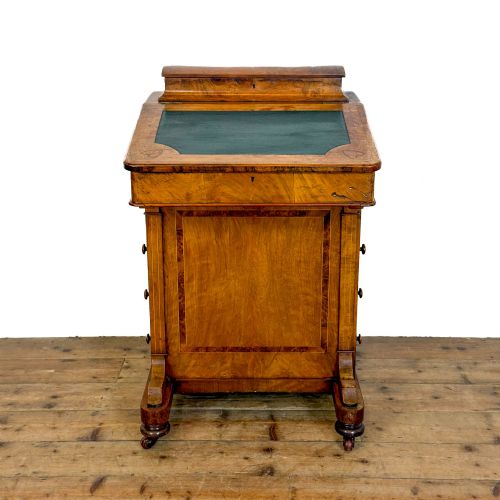
Compact Writing Slope Desk
A compact writing slope desk brings traditional paperwork surface and storage into tight spaces with enduring grace.
Compact Writing Slope Desk
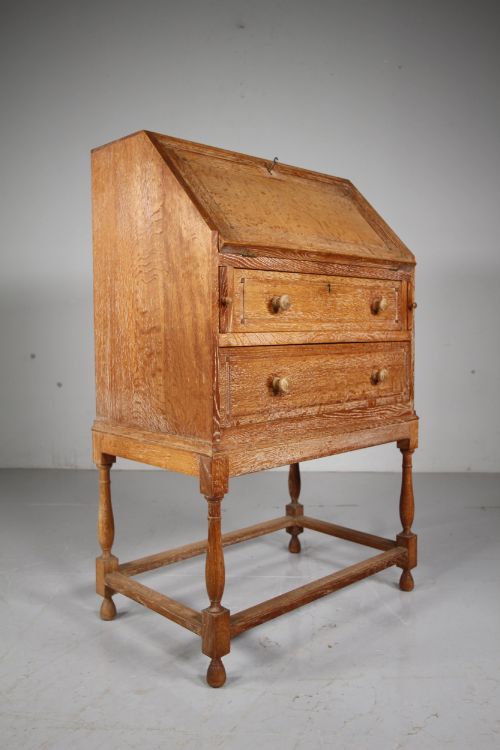
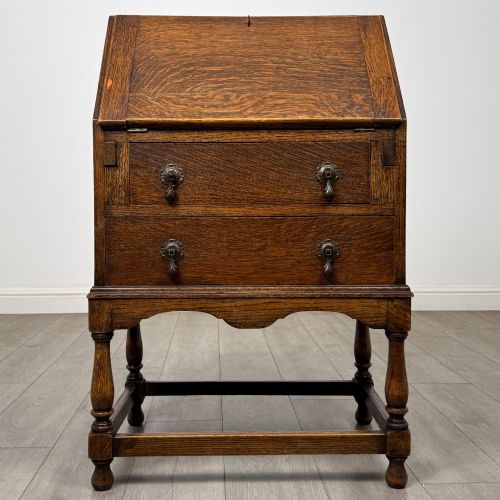
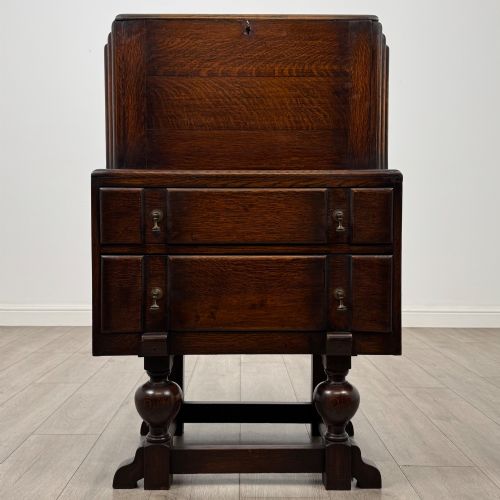
A compact writing slope desk combines a slanted working surface with integrated storage compartments designed for correspondence and papers. These pieces appear primarily across Georgian, Regency, Victorian, and Edwardian periods.
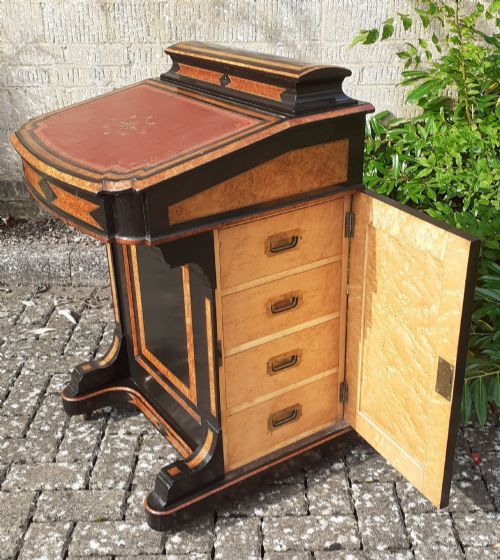
Buyers frequently encounter variants such as the Davenport desk alongside traditional small bureaux and writing tables. Woods like mahogany, burr walnut, and rosewood dominate the examples found on this page.
Origins trace through workshops of the nineteenth and early twentieth centuries, reflecting changing domestic requirements for personal correspondence. The scale remains diminutive, suiting smaller rooms without sacrificing practical utility.
Construction and materials
Cabinet makers utilised dense hardwoods including mahogany, walnut, and rosewood, often enhanced with exotic veneers like burr walnut or amboyna. Boxwood inlay frequently provides crisp geometric contrast along borders and drawer fronts.
Structural integrity relied on traditional joinery techniques, pairing dovetailed drawer construction with solid framing. Slanted lids often incorporate inset leather writing surfaces bordered by gilt tooling.
Brass mounts, galleries, and hinges added functional strength and decorative accent to these diminutive writing cabinets. Interior fittings frequently reveal satinwood secondary timbers and intricate small drawer arrangements.
Some Victorian examples include ingenious pop-up mechanisms that raise hidden stationery cabinets at the touch of a button.
Distinctions in quality
The selection of timber veneer dictates much of the visual impact, with matched burr walnut or figured mahogany commanding greater presence. Figured grain placement across multiple drawers requires careful selection by the cabinet maker.
Interior secondary woods and secondary drawers demonstrate the maker's commitment to hidden detail. Elaborate mechanical fittings, such as pop-up stationery compartments or sliding elements, reflect higher levels of workshop execution.
Subtlety of brass hardware, crispness of boxwood inlay, and retention of original leather writing surfaces separate standard production items from finer workshop commissions.
Heals of London·Gillow and Co·Gillows of Lancaster·Gillows George IV
The Compact Writing Slope Desk Glossary
- Davenport desk
- A compact form of writing desk featuring a sloping top and drawers opening to the side. This form gained immense popularity throughout the nineteenth century.
- Burr walnut
- A highly figured timber harvested from walnut tree growths, prized for its swirling patterns. Cabinet makers utilised these veneers on primary surfaces for dramatic visual effect.
- Secretaire
- A piece of furniture containing a writing drawer or fold-down panel concealing small pigeonholes and drawers. These compartments kept private correspondence secure.
- Crossbanding
- A decorative border of veneer laid around the edges of a panel so the grain runs perpendicular to the centre. This technique frames the primary wood nicely.
- Inlay
- The technique of inserting pieces of contrasting material into depressions in a base object to form decorative designs. Boxwood and various fruitwoods served this purpose on Edwardian and Georgian surfaces.
Compact Writing Slope Desk: Frequently Asked Questions
What is a compact writing slope desk?
A compact writing slope desk is a small cabinet designed for correspondence, featuring a sloping top for writing and integrated drawers for storage.
These pieces emerged strongly during the Georgian and Victorian eras, offering efficient storage in limited domestic spaces.
How do I identify a Davenport desk?
A Davenport is characterised by its small footprint, a slanted writing lid on top, and a bank of drawers opening to the side rather than the front.
Many examples include stationary boxes on the upper surface and pull-out slides for inkwells.
Which woods were commonly used?
Cabinet makers relied primarily on dense hardwoods like mahogany, walnut, and rosewood for structural stability and rich natural colour.
Finer examples frequently showcase decorative veneers such as burr walnut, amboyna, or olivewood.
How do I care for the leather writing surface?
Leather surfaces benefit from minimal moisture and occasional gentle conditioning to prevent drying out over time.
Keeping the surface free from dust preserves the gold tooling and the surrounding wood border.