


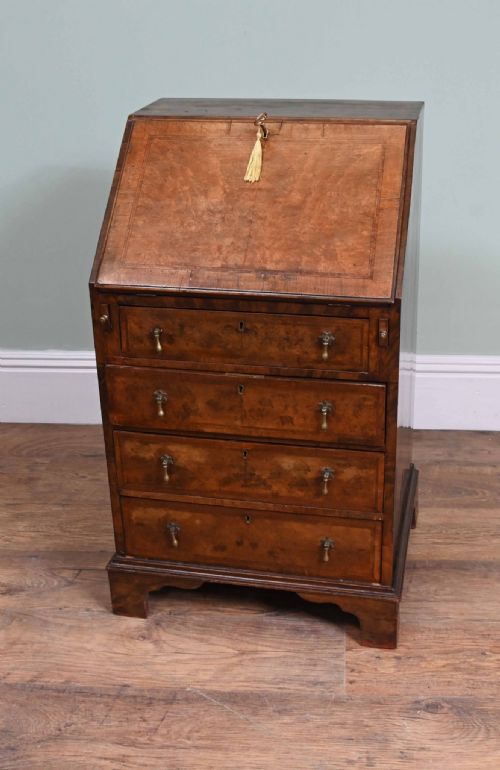

Compact Walnut Bureau
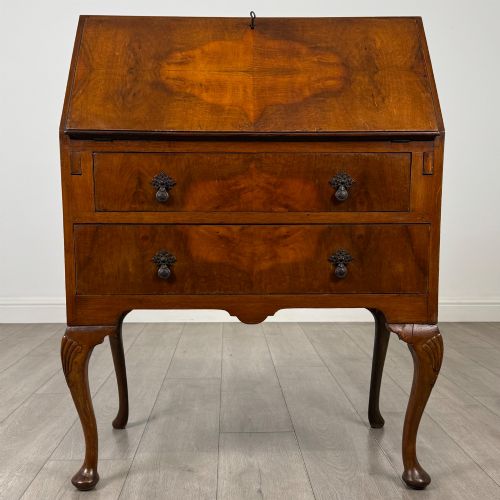
A compact walnut bureau brings warm timber grain and clever hidden storage into a room without dominating the floor space.
Compact Walnut Bureau
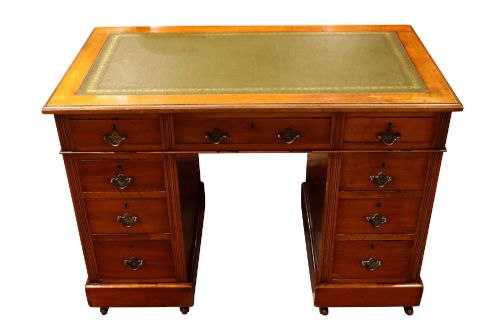
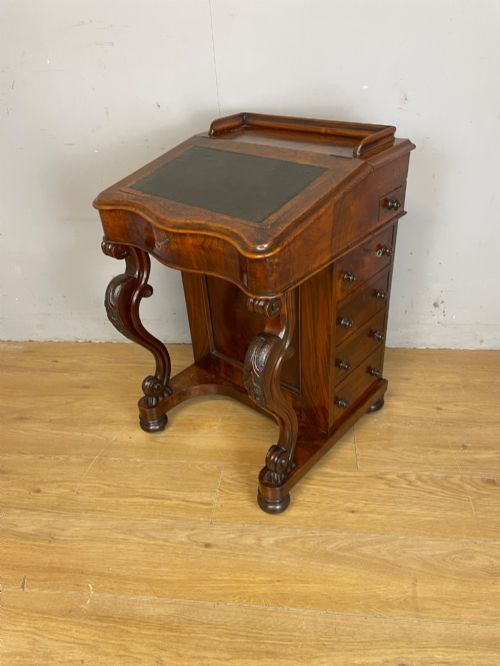
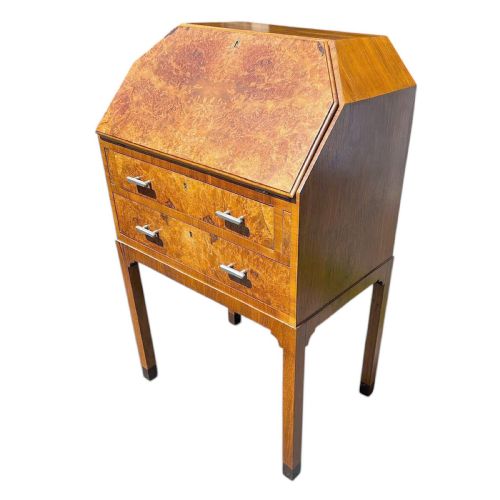
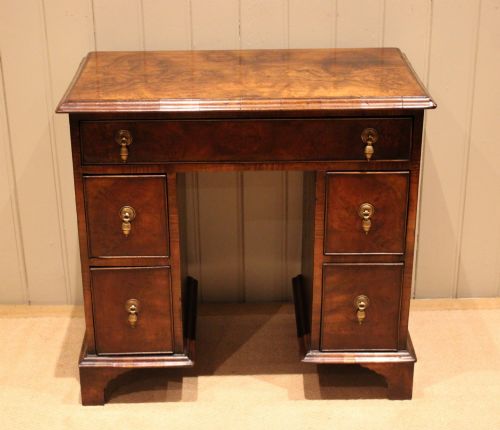
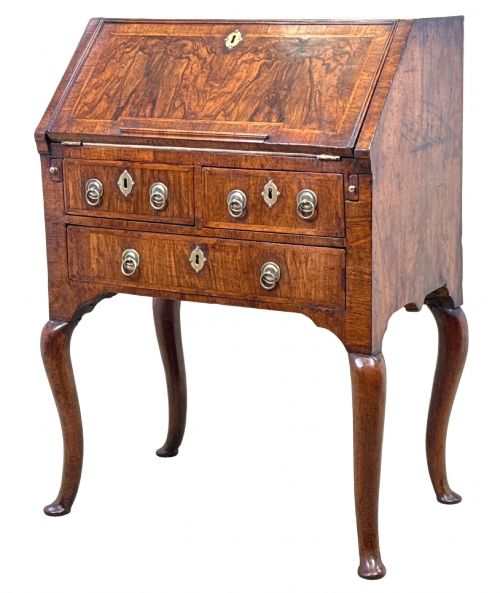
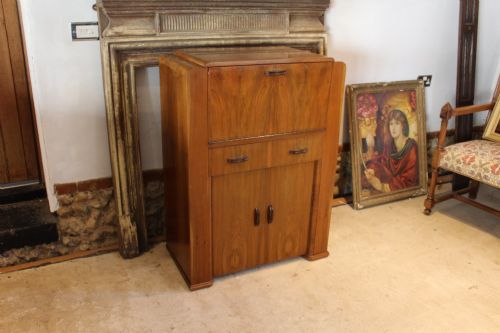
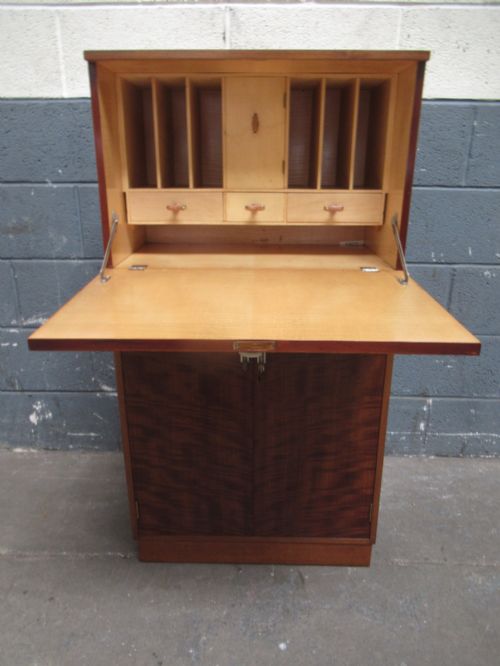
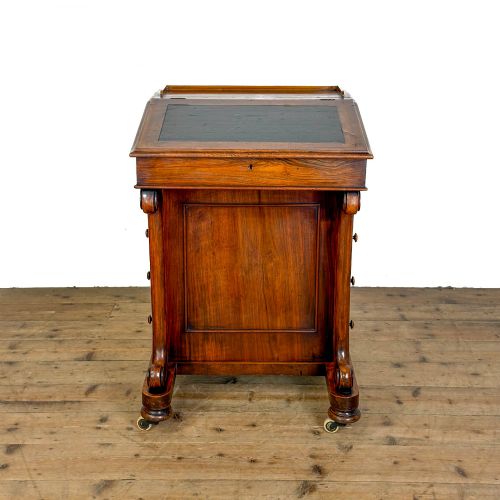
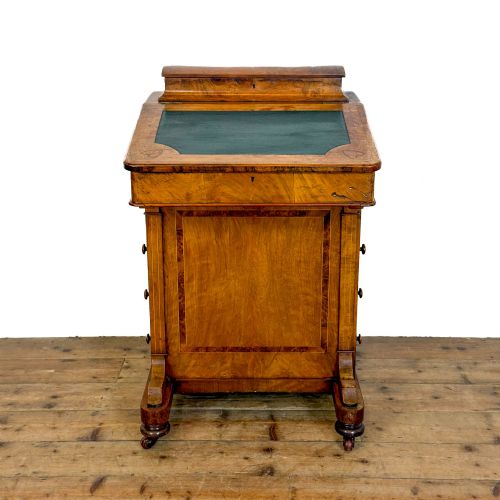
A compact walnut bureau is a dedicated writing desk that conceals a sloping fall-front lid and internal pigeonholes behind rich timber surfaces. Buyers searching for a compact walnut bureau will encounter forms ranging from small pedestal desks and Davenport writing cabinets to traditional drop-front writing desks.
The selections span numerous eras including the eighteenth century, the Victorian period, and Art Deco twentieth-century designs. Many examples utilise figured timbers and marquetry inlay to create visual depth on modest proportions.
Materials and construction
Cabinetmakers built these pieces using solid wood framing combined with decorative veneers such as burr walnut to display striking grain patterns. Brass hardware, leather writing inserts, and secondary woods like oak complete the primary construction.
Joinery methods rely on traditional cabinet techniques, allowing fine timber veneers to be applied smoothly across sloping lids, drawer fronts, and writing surfaces.
Listings span from the eighteenth century through Victorian and Edwardian eras to Art Deco twentieth-century designs.
Assessing quality
Quality rests upon the selection of the walnut timber and the crispness of any marquetry inlay work applied to the exterior. Superior pieces display matched grain patterns across the fall-front and drawers, maintaining balanced proportions.
F.H. Marshall & Co Glasgow
The Compact Walnut Bureau Glossary
- Bureau
- A desk featuring a sloping hinged lid that opens to reveal a writing surface and small interior compartments. It often sits above drawers or on a dedicated stand.
- Davenport
- A small compact writing desk with a sloped sliding top and drawers accessed from the side. It was popular throughout the Victorian era for correspondence.
- Burr walnut
- A prized timber harvested from the gnarled growth of a walnut tree, yielding intricate swirling grain patterns. Cabinetmakers used it for decorative veneer surfaces.
- Marquetry
- The art of applying pieces of veneer to a structure to form decorative patterns and pictures. It appears on fine nineteenth and twentieth century surfaces.
- Secretaire
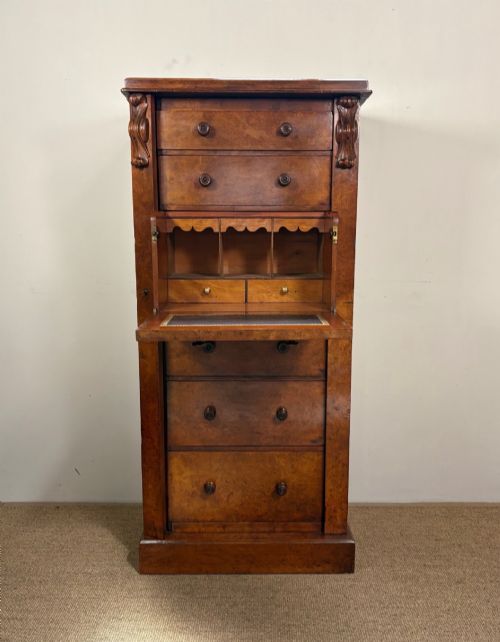
- A piece of furniture containing a drawer that pulls down to form a writing desk. It conceals fitted stationary compartments inside.
Compact Walnut Bureau: Frequently Asked Questions
What is a compact walnut bureau?
A compact walnut bureau is a small writing desk featuring a sloping fall-front lid that conceals internal compartments and pigeonholes for correspondence. These pieces are designed to provide a dedicated workspace while occupying minimal floor space.
They appear in various styles ranging from eighteenth-century designs to Victorian Davenport desks and twentieth-century Art Deco interpretations.
How do I date a walnut bureau?
Dating relies on examining the construction methods, hardware, timber preparation, and stylistic cues present in the piece. Eighteenth-century examples differ significantly in internal configuration and leg structure compared to Victorian or Edwardian variations.
Hardware fixings, secondary woods, and veneer thickness also provide reliable indicators of the period of manufacture.
Where should I place a bureau?
These desks suit studies, living rooms, and bedrooms where traditional timber furniture adds warmth and character. Their modest proportions allow them to fit easily into smaller alcoves or against empty wall spaces.
Ensure the placement allows adequate room to lower the fall-front lid or pull out the writing surface comfortably.
How do I care for walnut veneer?
Maintain walnut surfaces by keeping them away from direct sunlight and steady heat sources that can dry out the timber and veneers. Dust regularly with a soft dry cloth and avoid harsh chemical cleaners.
Occasional application of appropriate wax polish helps preserve the natural lustre of the wood grain.