


Art Deco Walnut Desk
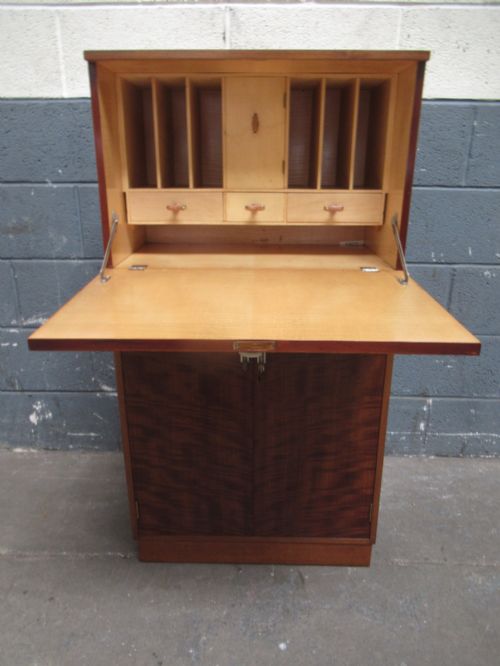
An art deco walnut desk brings the clean architectural lines of the 1930s into a study.
Art Deco Walnut Desk
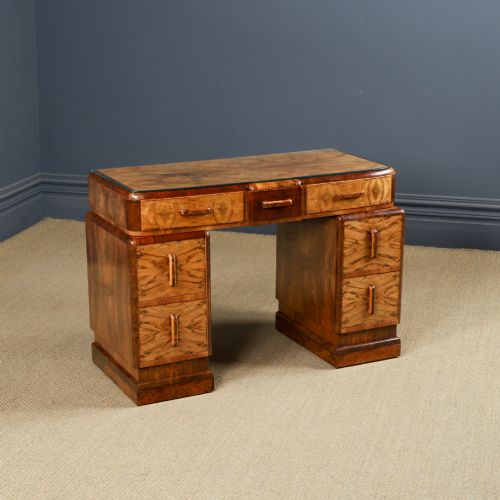
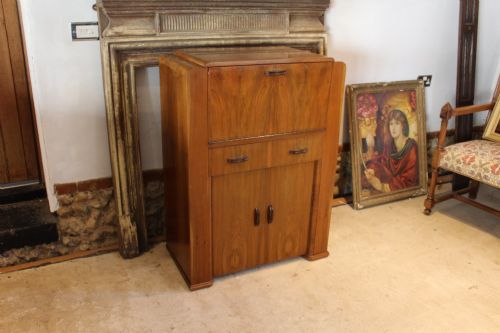
An art deco walnut desk typically takes the form of a pedestal or writing table originating from the interwar period, most frequently dated around 1930. These pieces range from compact writing tables to large partner's desks designed for executive offices.
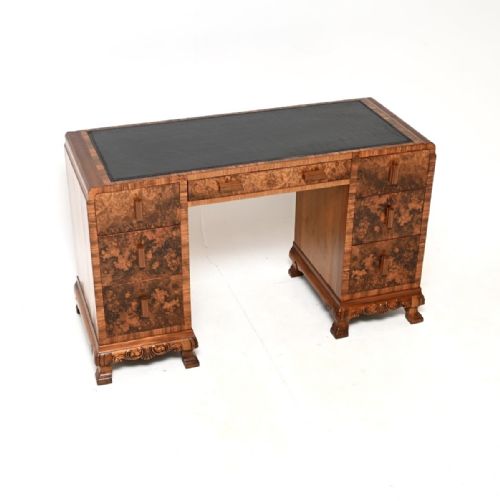
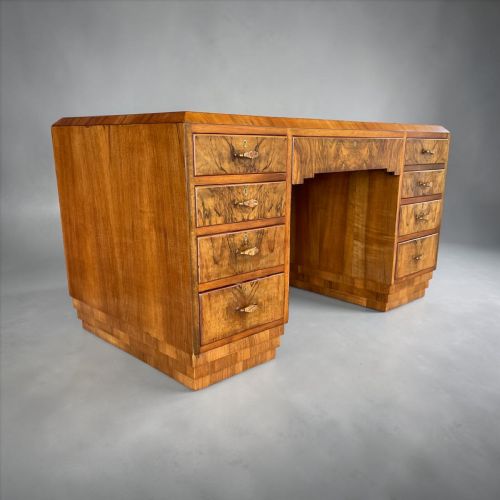
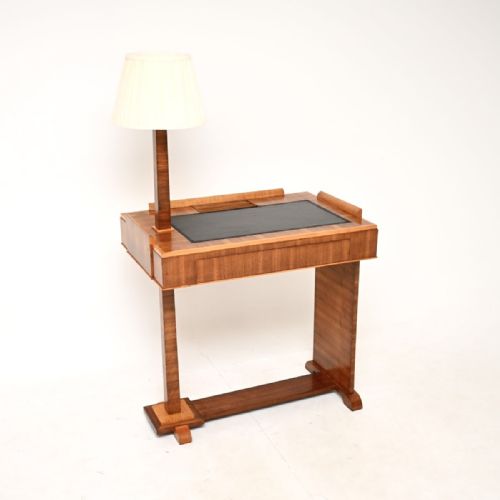
The aesthetic relies on geometric symmetry and streamlined silhouettes, often integrating functional drawers within twin pedestals. Many examples incorporate leather writing surfaces set into the timber top.
Makers and retailers from London and Paris shaped this output, producing both standard office furniture and bespoke modernist pieces.
Materials and construction
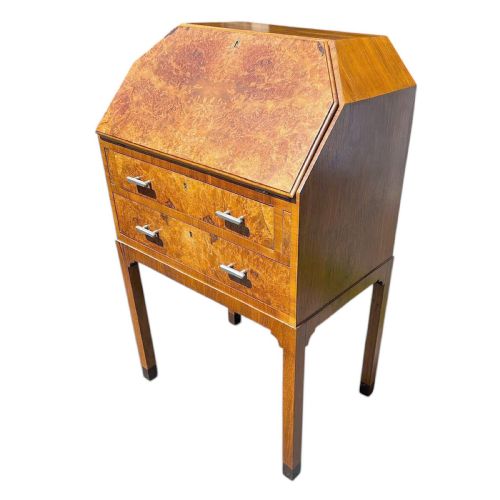
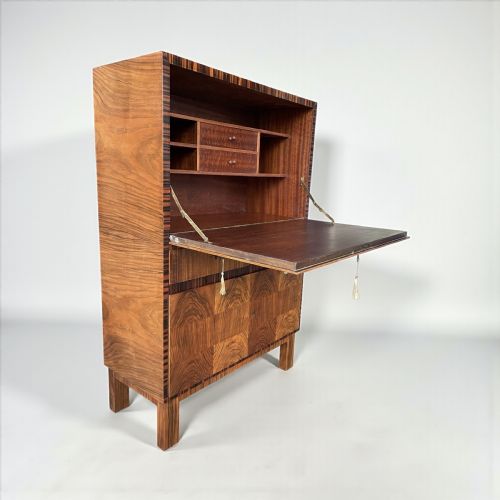
Makers utilised walnut timber, applying figured or burr veneers over solid carcases to create striking grain patterns across the flat surfaces. Leather inserts appear frequently on the writing planes, while metal elements such as brass or chrome provide structural contrast and decorative banding.
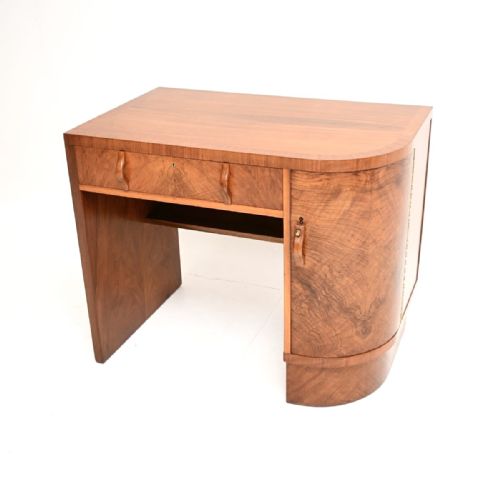
Construction techniques combine traditional cabinetmaking with modernist design principles, seen in curved pedestal shapes and integrated lighting fixtures. Glass and secondary woods such as sycamore or maple sometimes supplement the primary walnut structure.
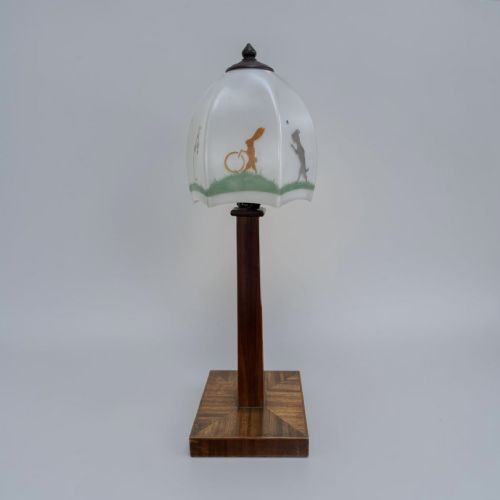
Some desks managed to squeeze an entire reading lamp right into the woodwork.
Distinctions in quality
The refinement of the veneer selection largely determines the visual hierarchy of an art deco walnut desk, where bookmatched burr walnut demonstrates superior craftsmanship compared to plain timber. The presence of documented workshop attribution or retail provenance elevates certain pieces above standard commercial production.
Structural complexity, such as curved skyscraper pedestals or integrated lamps, separates ambitious architectural designs from simpler writing tables. The integration of complementary materials like chrome handles and inset leather surfaces further defines the execution level.
Maple and Co·Betty Joel·Harry and Lou Epstein·Maurice Adams·Hille·Laszlo Hoenig·F.H. Marshall and Co
The Art Deco Walnut Desk Glossary
- Burr walnut
- A decorative timber cut from the warted growths of walnut trees, yielding intricate swirling grain patterns.
- Pedestal desk
- A heavy writing table supported by two banks of drawers rather than four independent legs.
- Partner's desk
- A large double-sided desk designed for two people to sit opposite one another.
- Veneer
- A thin slice of superior wood applied over a stable secondary timber base.
- Skyscraper style
- An architectural art deco form characterised by stepped vertical tiers reminiscent of early skyscrapers.
Art Deco Walnut Desk: Frequently Asked Questions
How do I care for the leather top?
Clean the leather surface gently using a slightly damp cloth, avoiding harsh chemical cleaners that might strip the original finish. Apply a neutral leather cream periodically to maintain suppleness and prevent cracking over time.
Keep the desk away from direct sunlight and heat sources to protect both the leather insert and the underlying walnut timber from warping or fading.
Are these desks suitable for daily computer work?
Many period pedestal desks offer ample surface area and sturdy construction to accommodate modern desktop equipment and laptops. Measuring the kneehole clearance beforehand ensures sufficient space for comfortable daily seating.
Cable management requires care to preserve the clean lines characteristic of the period without damaging the timber or veneer.
How do I identify the wood type?
Examine the grain patterns across the flat surfaces to distinguish between straight-cut walnut and highly figured burr or burl varieties. Contrasting tones often indicate secondary woods like maple or sycamore used for interior drawer linings or decorative banding.
Closer inspection under good lighting reveals the thin layer of veneer applied over solid secondary framing timbers.
Where were these pieces manufactured?
Production centred largely around major metropolitan workshops in London and Paris during the interwar years. Prominent department stores and specialist cabinetmakers retailed these designs to corporate and domestic clients alike.
Regional makers also contributed regional variations, though the dominant output reflects sophisticated urban cabinetmaking.