



Small Walnut Desk Bureau
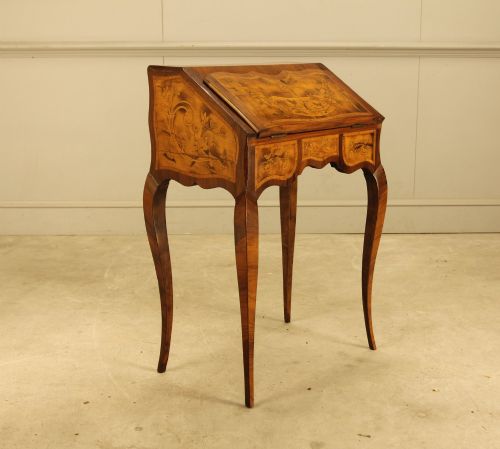
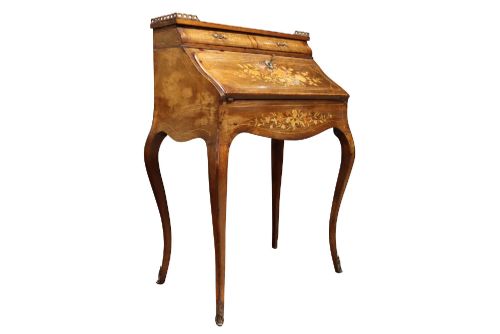
A small walnut desk bureau combines a sloping fall-front workspace with compact proportions, offering hidden compartments and fitted drawers for writing and storage.
Small Walnut Desk Bureau
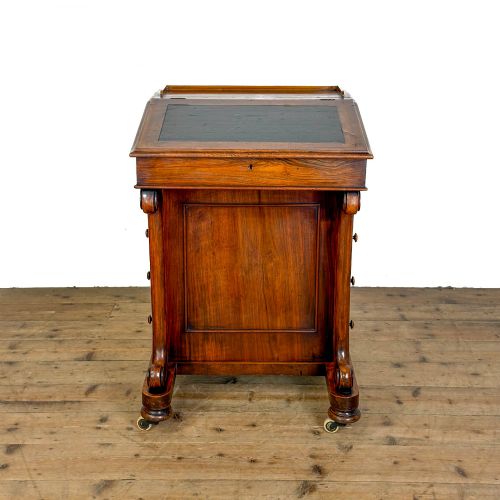
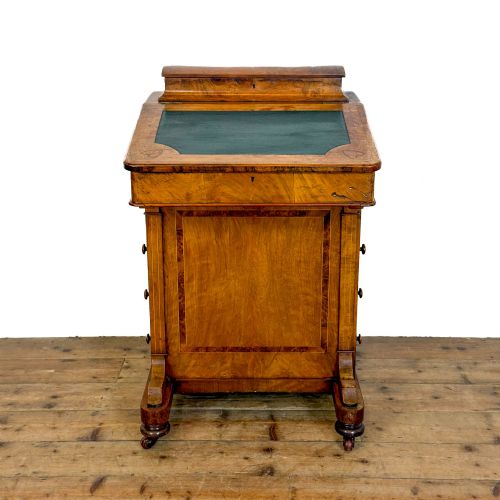
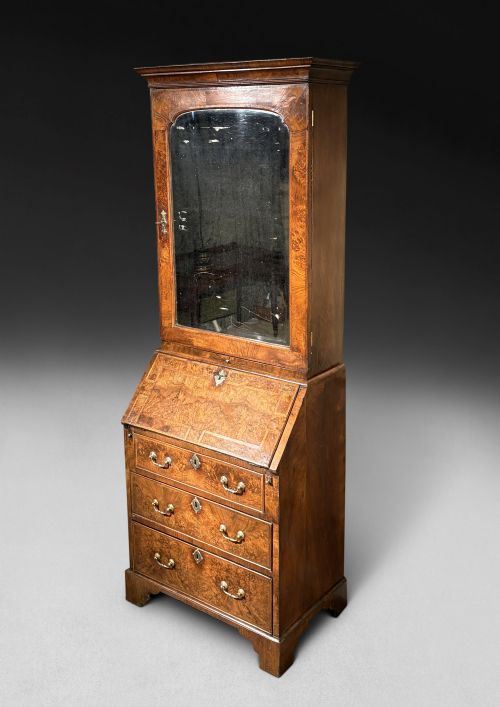
When you search for a small walnut desk bureau, you encounter compact writing furniture spanning from the eighteenth century through the Victorian era and into the early twentieth century. These pieces encompass fall-front bureaux, bureau bookcases, bureau on stand forms, and Davenport desks.
The versions most commonly met on this page date from the Victorian period, alongside earlier eighteenth-century examples and later Edwardian interpretations. They utilise timber grains such as burr walnut and feature fitted internal compartments often paired with leather writing surfaces.
How they were made
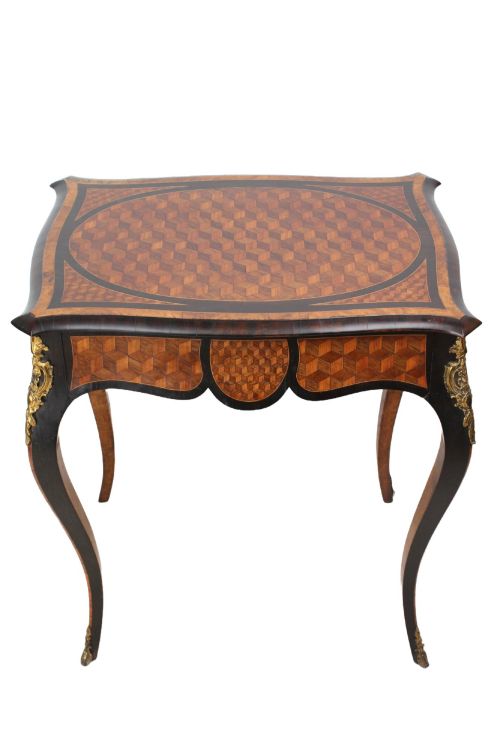
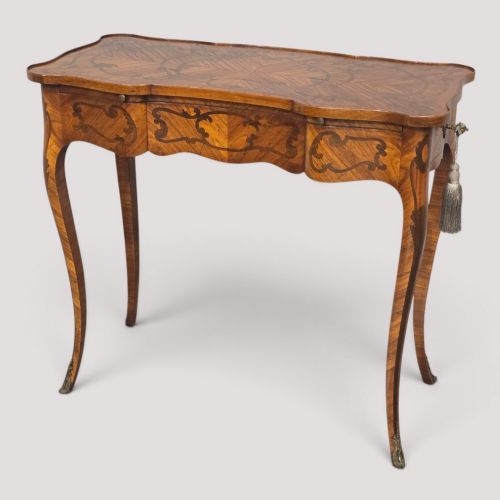
Cabinet makers constructed these desks using walnut and burr walnut veneers applied over secondary woods, incorporating marquetry, parquetry, and feather banding for surface decoration. Drawer linings frequently utilise oak or softer secondary timbers.
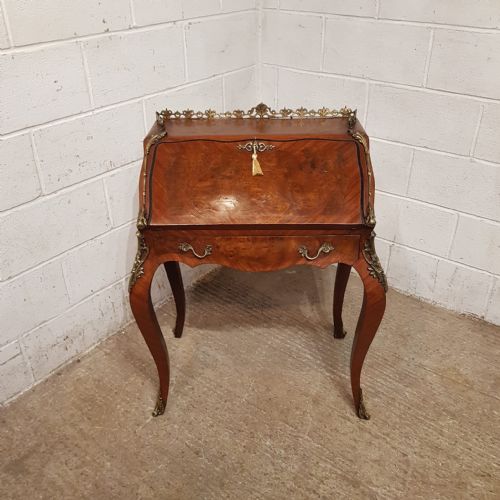
Internal components include pigeonholes and small drawers executed in secondary woods like satinwood, whilst structural fittings incorporate brass handles, locks, and occasional ormolu mounts on French-influenced models.
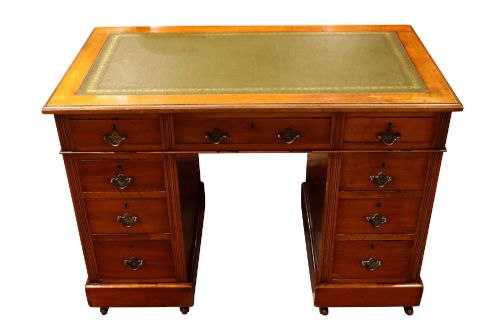
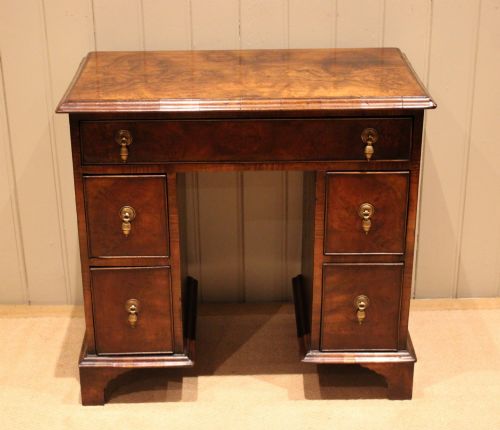
Forms range from Davenport desks and bonheur-du-jour tables to bureau bookcases and freestanding kneehole desks.
What varies in quality
The standard of a small walnut desk bureau depends upon the selection of timber veneers and the intricacy of the internal fitting. Finely figured burr walnut and crisp marquetry inlay separate superior examples from plain timber surfaces.
Structural integrity, the retention of original brass hardware, and the complexity of internal satinwood stationery compartments distinguish standard production pieces from exceptionally executed cabinet work.
JAS Shoolbred·Gillows
The Small Walnut Desk Bureau Glossary
- Bureau
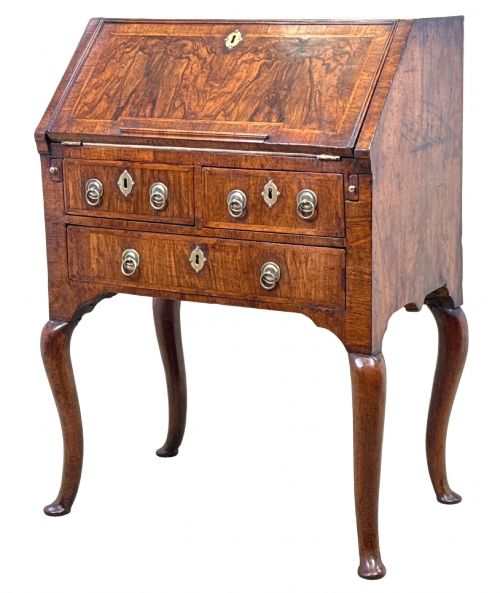
- A writing desk featuring a sloping hinged lid that opens to reveal a fitted interior of small drawers and pigeonholes. This form provides a concealed workspace that can be locked shut.
- Burr Walnut
- Timber taken from a tree growth or wart, yielding intricate, swirling grain patterns highly prized for veneer work. Cabinet makers applied these decorative slices to the primary visible surfaces.
- Davenport
- A compact pedestal desk with a sloping writing surface, usually incorporating a stationery compartment at the back and drawers opening to the side. Victorian ladies frequently utilised this form for correspondence.
- Bonheur-du-Jour
- A light ladies' writing desk featuring a small cabinet or set of shelves upon the top surface. French examples often display marquetry and delicate cabriole legs.
- Feather Banding
- A decorative inlay technique using veneer strips arranged in a herringbone or V-shaped pattern around drawer edges and borders. Eighteenth-century pieces regularly show this refined detail.
Small Walnut Desk Bureau: Frequently Asked Questions
What is a bureau de dame?
A bureau de dame is a ladies' writing desk, typically French in origin, featuring delicate proportions and ornamental details such as marquetry or ormolu.
These pieces were designed for domestic correspondence and light administrative tasks within a parlour or bedroom setting.
How do I tell an 18th century bureau from a Victorian one?
Eighteenth-century bureaux generally exhibit simpler, robust cabinet construction with feather banding and rich walnut patination, alongside bracket feet or simple stands.
Victorian pieces frequently incorporate burr walnut veneers, elaborate marquetry inlay, and fitted stationery galleries typical of nineteenth-century revival styles.
What is a Davenport desk?
A Davenport desk is a compact writing cabinet featuring an inclined desktop above a pedestal of drawers opening to the side. A stationery box often sits atop the rear.
First popularised in the nineteenth century, this form offers a functional writing space whilst occupying minimal floor area.
Where were these desks used?
These compact desks suited private sitting rooms, bedrooms, and drawing rooms where large library furniture proved too cumbersome. Their enclosed writing slopes kept unfinished correspondence hidden from view.
They served as personal writing stations for managing household accounts and writing letters.