


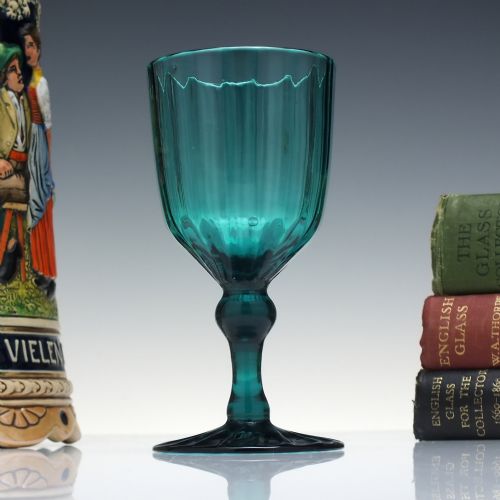
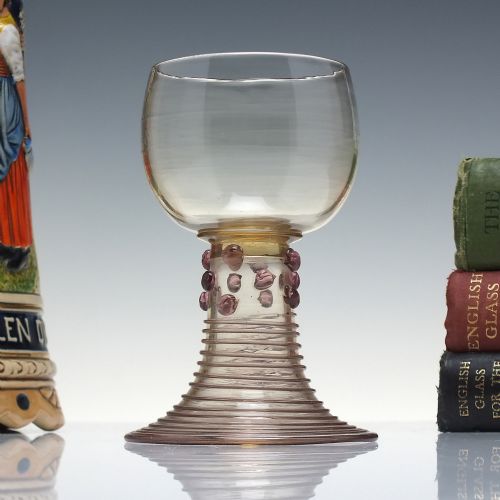


Coloured Glass Goblets
Coloured glass goblets bring deep hues and rich tones to the table, spanning Georgian and Victorian eras.
Coloured Glass Goblets
Coloured glass goblets span periods from the Georgian era through to the Edwardian period, appearing in forms such as wine glasses, rummers, and roemers. Buyers searching for coloured glass goblets encounter pieces shaped by hand-blown techniques and cut crystal methods.
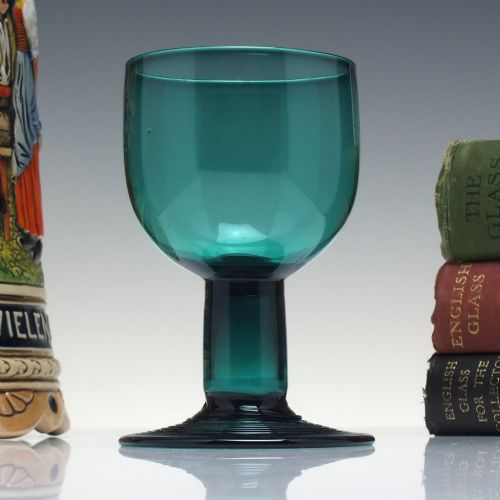
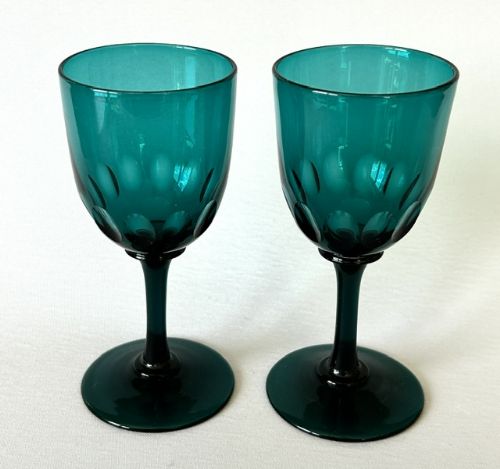
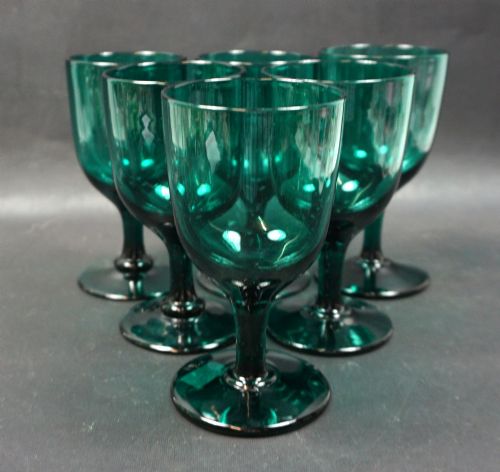
The selection on this page centres heavily on Victorian cranberry glass alongside Georgian green and turquoise vessels. Sets of six frequently appear, alongside pairs and individual examples.
Origins stretch from English workshops to Bohemian and Italian Murano makers. The forms serve primarily as drinking glasses and stemware.
Materials and production
Makers utilised lead glass and hand-blown glass to form the basic vessel structures. Colour was introduced through metallic oxides in the molten batch, creating shades from cranberry and ruby red to emerald and aqua green.
Techniques such as rib moulding and wheel cutting added texture and facet details to the bowls and stems. Workers shaped stems and applied bowls manually, resulting in subtle variations across matching sets.
Listings feature items from the Georgian, Victorian, and Edwardian periods, utilising green, cranberry, turquoise, and amethyst glass.
Standards of execution
Quality rests on the depth and saturation of the glass colour, alongside the precision of any rib moulding or wheel cutting. Superior examples exhibit balance in the stem and a clean resonance when tapped.
Consistency across a set separates standard production from finer work, particularly in hand-blown drinking vessels where matching dimensions demand high skill.
The Coloured Glass Goblets Glossary
- Cranberry glass
- A transparent pinkish-red glass coloured with gold chloride. It gained immense popularity during the Victorian period for tableware.
- Roemer
- A traditional Germanic drinking vessel featuring a large bowl on a patterned, ribbed stem. This form frequently appears in amber and green hues.
- Rib moulded
- A glass vessel blown into a small pattern-mould before being expanded, creating vertical ribs on the body. This technique dates across Georgian production.
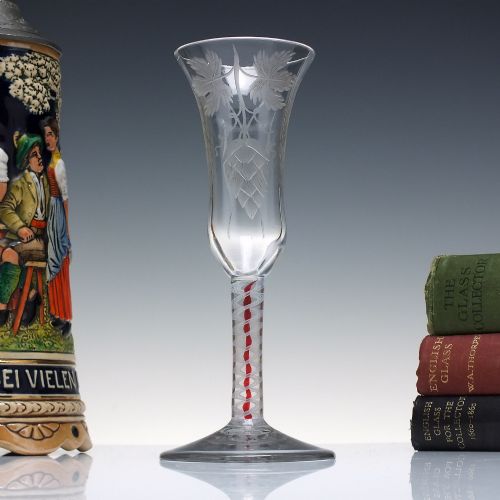
- Colour twist
- A decorative stem style incorporating threads of coloured glass within the clear glass twist. It appears in eighteenth-century drinking glasses.
Coloured Glass Goblets: Frequently Asked Questions
Can I use these goblets for daily dining?
Many buyers choose to use their coloured glass goblets for special dinners and formal gatherings. The sturdy lead glass and thick walls of Victorian stems handle careful use well.
For eighteenth-century examples or delicate hand-blown pieces, display or very occasional use preserves the material better.
How can I tell Georgian glass from Victorian pieces?
Georgian drinking vessels often display lighter metal, pontil marks on the base, and simpler tool marks from hand fabrication. Their colours tend toward deep greens and blues.
Victorian production frequently yields richer cranberry tones and uniform sets of stemware. The manufacturing methods became slightly more standardised by the late nineteenth century.
Why do sets vary in shade?
Hand-blown coloured glass relied on batch mixing where exact pigment formulas were difficult to replicate identically. Each melting pot produced subtle shifts in tone.
These minor variations confirm the handmade nature of the items rather than indicating a mismatched assembly.