



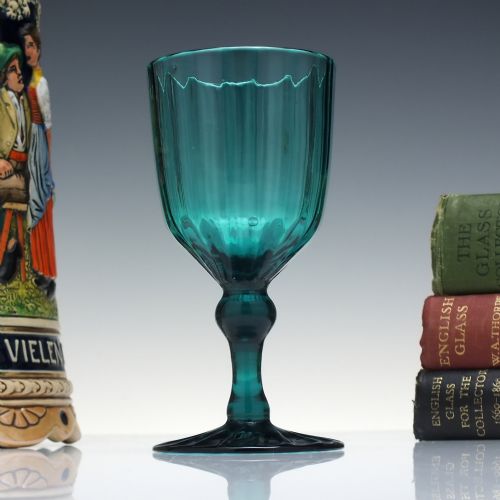


Green Glass Wine Stemware
Green glass wine stemware brings vibrant colour to the table, offering drinking vessels that catch the light and transform any meal.
Green Glass Wine Stemware
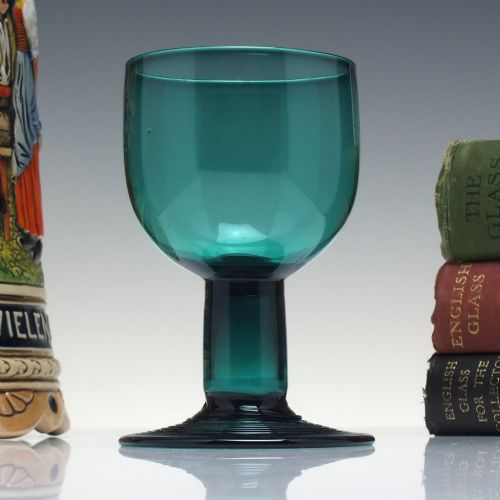
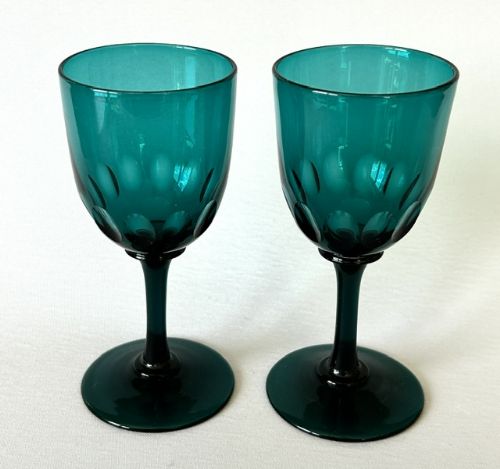
Green glass wine stemware encompasses drinking vessels ranging from Georgian dram glasses and rib-moulded pieces to Victorian sets and twentieth-century crystal hock glasses. Buyers searching this phrase look for distinctive vessels that bring period character to the table.
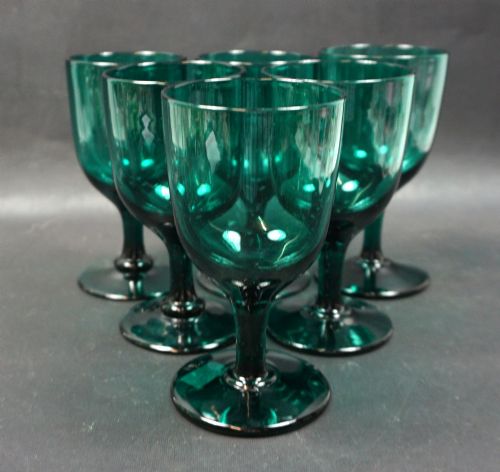
The versions most commonly met here span the Georgian, Victorian, Edwardian, and Art Deco eras, appearing in forms such as tall hock glasses, dessert wine glasses, and matching sets.
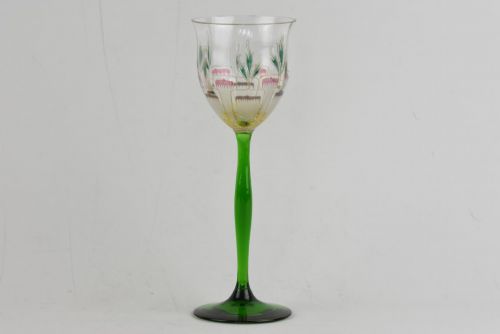
Origins represented on this page include English Bristol green wares, Bohemian Biedermeier pieces, French crystal from Baccarat and St Louis, and German glass from Theresienthal.
How They Were Made
Many of these pieces rely on hand-blown glass and lead crystal, shaped while molten by skilled blowers using traditional moulds or free-blowing techniques.
Makers added surface interest through rib moulding, facet cutting, and wheel engraving, while others incorporated delicate enamel decoration and gold leaf accents.
Some nineteenth-century vaseline wine glasses contain uranium oxide, causing them to glow an eerie neon green under ultraviolet light.
What Varies in Quality
The distinction between standard vessels and exceptional examples lies in the depth and purity of the coloured glass, the precision of the cut or rib-moulded facets, and the balance of the stem and bowl.
Refinements such as hand-painted enamel decoration, gilding, and matching sets across six or eight glasses elevate the desirability and standing of the glassware.
Baccarat·St Louis·Theresienthal
The Green Glass Wine Stemware Glossary
- Hock glass
- A tall-stemmed wine glass traditionally used for German white wines or hock, often featuring a coloured bowl.
- Rib-moulded
- A technique where molten glass is inflated inside a patterned mould to create vertical ridges along the body.
- Vaseline glass
- A type of glass coloured with uranium oxide that glows under ultraviolet light, appearing in yellowish-green shades.
- Lead crystal
- Glass containing metal oxide that increases weight, clarity, and the ringing sound when tapped.
Green Glass Wine Stemware: Frequently Asked Questions
How do I care for antique wine stemware?
Wash these pieces gently by hand in warm soapy water using a soft cloth, avoiding abrasive sponges or modern dishwashers.
Store them upright on a stable surface where stems will not be subjected to lateral pressure.
Can I use these glasses for daily dining?
Many people enjoy using antique stemware for special meals, though older lead glass and enamelled pieces require careful handling.
Hand-blown glasses from the Georgian and Victorian eras are surprisingly durable when treated with respect.
How do I distinguish Georgian from Victorian pieces?
Georgian stemware often displays pontil marks on the base, simpler rib-moulded forms, and deeper tones associated with early English glasshouses.
Victorian examples frequently showcase brighter hues like vaseline and aqua, alongside heavier cutting and matched sets of six or eight.
What does Bristol green mean?
Bristol green refers to a deep, rich shade of green glass historically produced in English glassworks around the city of Bristol.
The term describes the intense colour rather than a single factory, applying to wines, decanters, and finger bowls.