

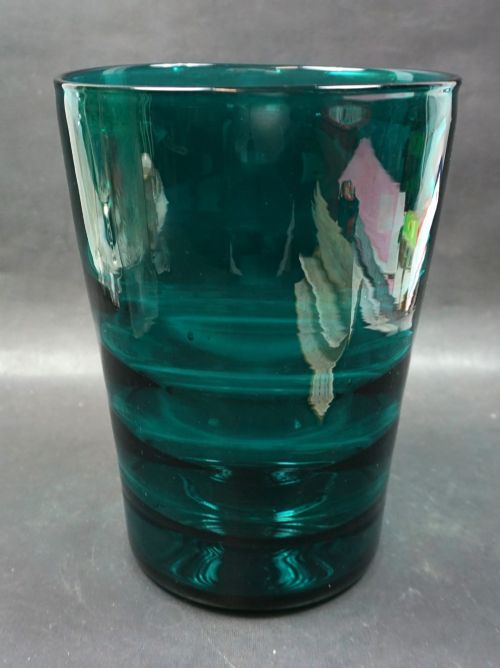
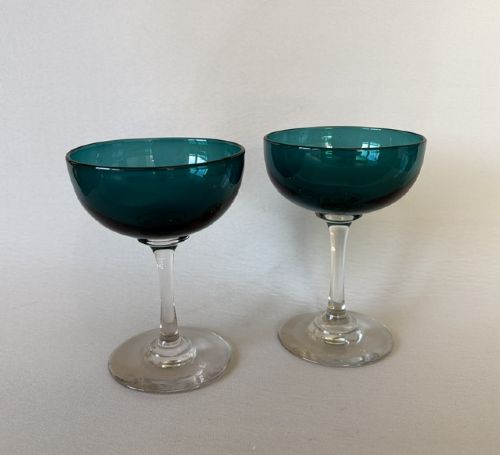



Antique Teal Glass
Antique teal glass brings vivid colour and tactile weight to a room, ranging from deep oceanic tones to bright turquoise hues.
Antique Teal Glass
When you search for antique teal glass, you encounter a striking array of drinking vessels, scent bottles, decanters and decorative bowls spanning the Georgian and Victorian eras. These items display rich green, aqua, turquoise and emerald shades that catch the light in domestic settings.
The objects most frequently met on this page include Victorian dessert wine glasses, wine bottles with silver mounts, and matched sets of liquor glasses. Pieces range from simple utilitarian glassware to elaborate forms featuring cut or engraved decoration.
How these pieces were made
The makers of these items utilised coloured glass, lead glass and teal glass, shaping them through traditional blowing and forming techniques. Many examples feature sliced-cut decoration or engraved patterns that reveal lighter tones beneath the surface colour.
Several vessels incorporate metal components, combining the glass bodies with silver mounts and silver necks to create durable and decorative household items.
Antique Teal Glass Retail Price Guide 2026
Typical asking prices for teal glass among the pieces listed under this phrase on Sellingantiques today, from the lower quarter to the upper quarter. They describe what is for sale here now, not the wider market.
The site's listings feature coloured glass, lead glass and engraved glass across Georgian and Victorian periods.
What varies in quality
The standard of a piece depends on the depth and evenness of the glass colour, alongside the precision of any cut or engraved details. Sharp facets on sliced-cut scent bottles and finely balanced stems on wine glasses demonstrate superior craftsmanship.
The integration of precious metal elements also marks out finer items, particularly where silver mounts or necks fit securely and bear professional finishing.
Lobmeyr
The Antique Teal Glass Glossary
- Teal glass
- Coloured glassware exhibiting a blue-green hue resembling the plumage of a teal duck. This vibrant shade was achieved through specific mineral oxides added during the melting process.
- Lead glass
- Glass containing lead oxide, which increases the weight, brilliance and clarity of the material. It lends itself well to deep cutting and polishing.
- Sliced-cut
- A decorative technique involving broad, flat cuts across the surface of the glass. It creates geometric facets that refract light effectively.
- Rummer
- A large drinking glass popular in the Georgian and Victorian periods, typically featuring a short stem and a capacious bowl. They were commonly used for ale, wine or punch.
- Islamic Revival
- A nineteenth-century design movement that drew inspiration from traditional Middle Eastern art and architecture. Items in this style often incorporate intricate engraved decoration and distinctive vessel forms.
Antique Teal Glass: Frequently Asked Questions
What is antique teal glass used for?
These pieces served practical dining and grooming purposes in period homes, functioning as wine glasses, liquor glasses, decanters and scented vessel containers.
Today, they are collected for display on shelves, sideboards and dining tables where their rich coloration enhances the interior decor.
How do I date antique teal glass?
Dating relies on identifying stylistic markers, manufacturing techniques and vessel forms characteristic of specific eras like the Georgian or Victorian periods.
Examining the pontil mark on the base and the style of cutting or engraving helps narrow down the decade of production.
How do I care for antique glass?
These items require gentle hand washing in lukewarm water with mild detergent, avoiding harsh scrubbing or sudden temperature changes.
Displaying them away from direct sunlight protects the coloration and prevents thermal stress on fragile lead glass structures.
Are all green glasses considered teal?
The colour spectrum in these listings spans turquoise, aqua green, emerald and teal shades, each determined by the specific mineral content used by the glasshouse.
While grouped under broader green or blue-green categories, individual pieces vary significantly in their exact chromatic balance.