







Antique Glass Aperitif Glasses
These antique glass aperitif glasses bring genuine period character to a table, offering small vessels designed for pre-dinner drinks and cordials.
Antique Glass Aperitif Glasses
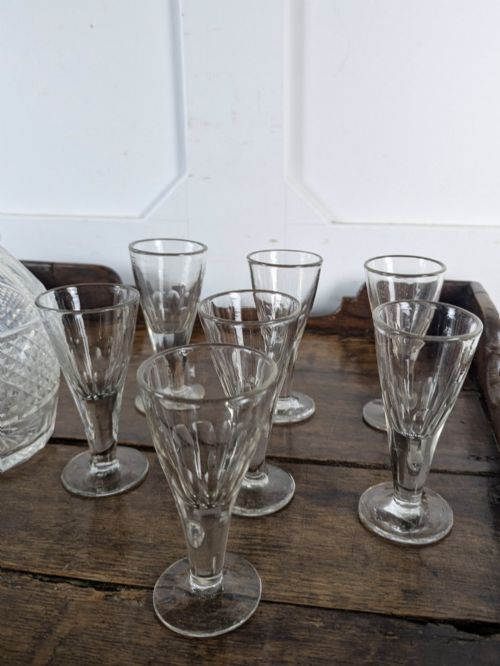
When you search for antique glass aperitif glasses, you encounter a variety of small-scale drinking vessels spanning multiple centuries and stylistic movements. The selection on this page ranges from Georgian and Victorian pieces to early twentieth-century designs.
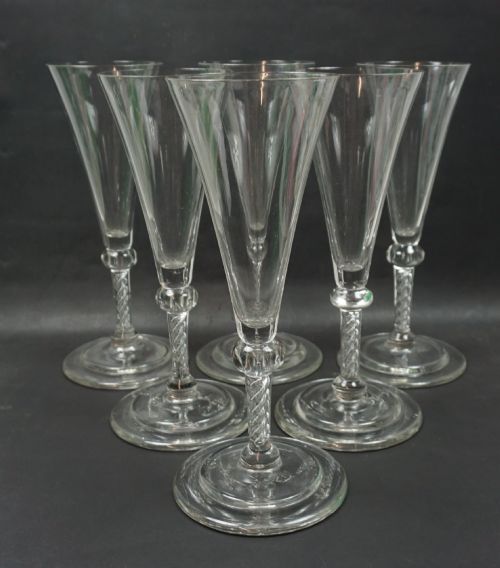
The forms include cordial glasses, liqueur glasses, sherry flutes, and dessert wine glasses. These pieces reflect the specific drinking habits of their respective eras, often sold in matched sets or large suites.
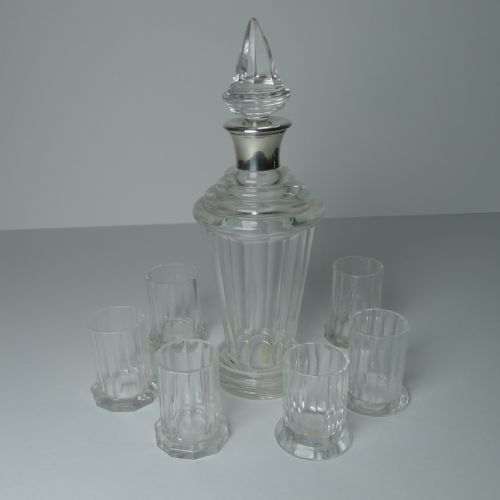
You are most likely to meet Victorian and eighteenth-century examples on this page, alongside Art Deco suites and early twentieth-century glass paired with silver plate.
How they were made
The manufacture of these pieces relies on clear glass, lead glass, and coloured glass shaped through traditional blowing and forming techniques. Makers utilised lead crystal to achieve clarity and weight in earlier drinking vessels.
Decoration was applied through hand-engraving, etching, thumb-cutting, facet-cutting, and enamel work. Some items incorporate silver-plated elements or metal mounts alongside the glass body.
Antique Glass Aperitif Glasses Retail Price Guide 2026
Typical asking prices for glass aperitif glasses among the pieces listed under this phrase on Sellingantiques today, from the lower quarter to the upper quarter. They describe what is for sale here now, not the wider market.
The listings on this page span from eighteenth-century Georgian pieces to 1930s Art Deco suites, featuring clear, cut, enamelled, and engraved glass alongside silver plate.
What varies in quality
Quality in these drinking vessels rests upon the crispness of the cutting, the precision of the engraving, and the purity of the metal. Finer examples display deeply struck facets, delicate enamel work, or complex stem formations.
The completeness of a matching set or large suite also dictates the standing of the pieces. Weight, balance, and the absence of distortion in the glass body distinguish superior production.
Theresienthal·Moser Glass
The Antique Glass Aperitif Glasses Glossary
- Thumb-cut
- A decorative surface treatment featuring shallow, concave depressions ground into the glass, resembling the mark of a thumb. This technique was popular on Victorian drinking vessels.
- Cordial glass
- A small stemmed drinking vessel intended for serving liqueurs or cordials after a meal. These pieces typically feature narrow bowls to concentrate aromas.
- Opaque twist
- An eighteenth-century stem formation created by drawing white or coloured enamel glass rods inside clear glass. This method produced intricate opaque threads within the stem.
- Faceted stem
- A stem shape featuring multiple flat planes ground and polished onto the glass. It catches the light and adds grip to the vessel.
- Enamel
- A fused glass powder decoration applied to the surface and fired for permanence. Hand-enamelled pieces show colourful opaque designs on the clear body.
Antique Glass Aperitif Glasses: Frequently Asked Questions
What were aperitif glasses used for?
These small glasses served alcoholic beverages before a meal to stimulate the appetite, or strong liqueurs and cordials afterwards. Their modest capacity matched the potent nature of spirits consumed in small quantities.
Over time, specific shapes evolved for sherry, port, vermouth, and dessert wines. Their presence on the dining table marked the formal structure of historical meals.
How do I date Georgian glass?
Georgian drinking vessels often display pontil marks on the base, heavier lead content, and particular stem constructions like air twists or opaque twists. Form and manufacturing quirks help narrow the decade of production.
Examining the foot fold, metal colour, and wear patterns underneath provides further clues. Eighteenth-century pieces carry distinct tactile qualities absent in later machine-made glass.
Can I use them for drinks today?
These antique vessels function well for serving modern aperitifs, spirits, and dessert wines in small quantities. Their historical capacity suits contemporary tastes for concentrated pours.
Hand washing in warm water preserves the aged glass and any enamel or engraved decoration. Avoiding sudden temperature changes protects fragile historical material during use.
What is the difference between lead glass and clear glass?
Lead glass incorporates lead oxide into the batch, producing a heavier vessel with higher refractive index and greater clarity. This composition allows for deeper cutting and sharper facets.
Standard clear glass lacks this heavy lead content, resulting in a lighter weight and different acoustic ring when struck. Eighteenth and nineteenth-century drinking vessels frequently utilised lead formulations.