





Cobalt Blue Pottery Dish
A cobalt blue pottery dish brings deep cobalt pigment and tin glaze together in plates, chargers, and serving platters spanning the eighteenth and nineteenth centuries.
Cobalt Blue Pottery Dish
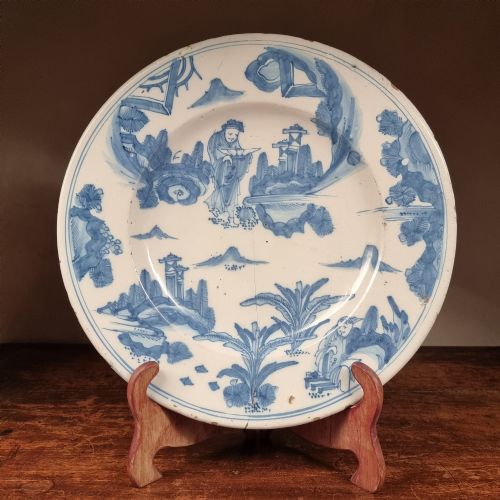
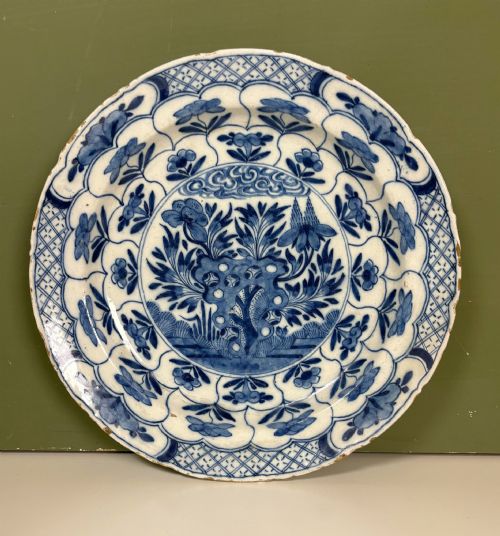
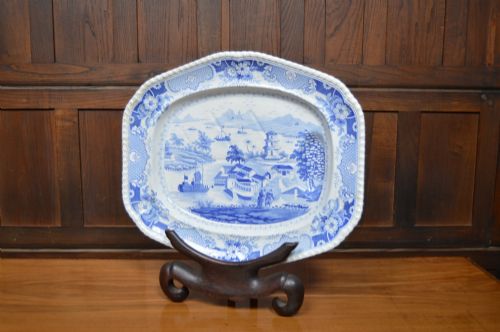
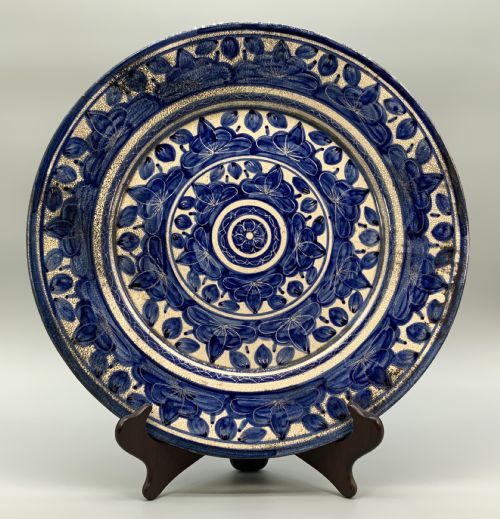
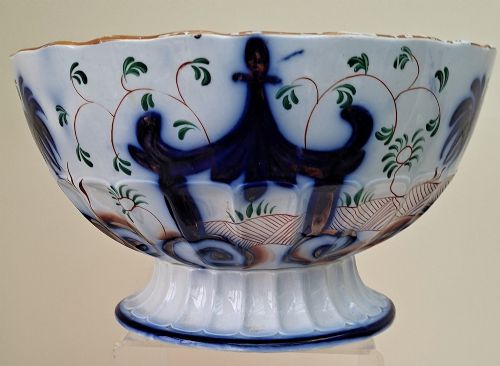
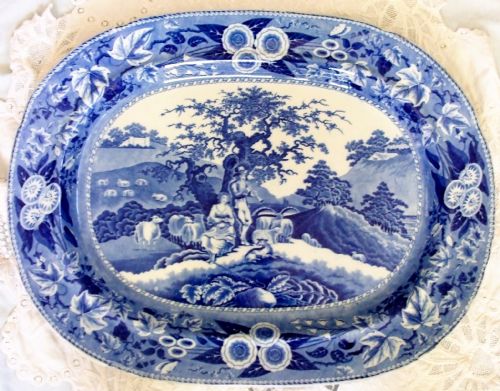
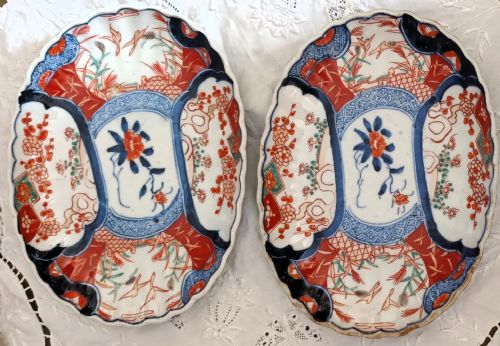
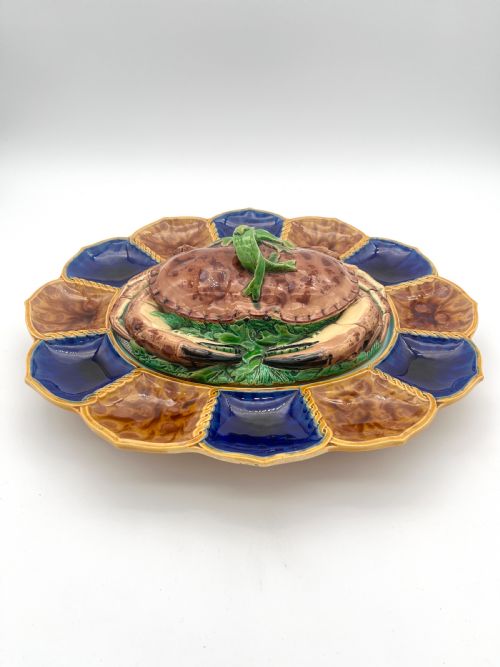
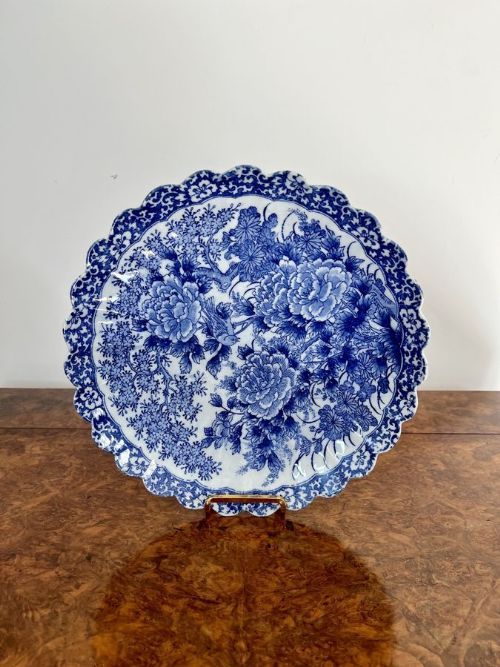
A cobalt blue pottery dish encompasses decorative plates, chargers, shallow bowls, and large meat platters originating from eighteenth and nineteenth century production centres. Buyers encounter English transferware, Dutch delftware, Japanese imari porcelain, and majolica pieces sharing a distinct blue palette.
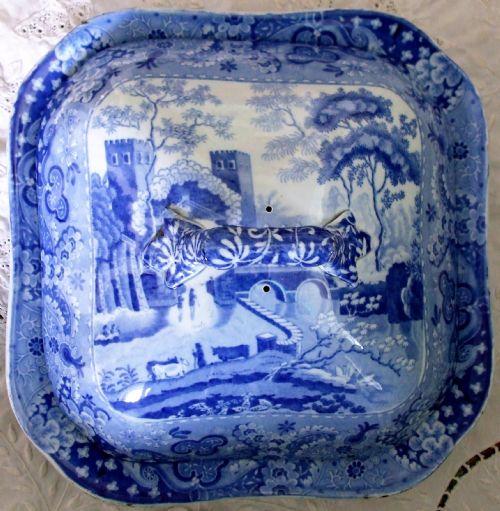
The selection ranges from early eighteenth century delft chargers to Victorian transfer-printed platters and Japanese Meiji period porcelain dishes. Chargers and large serving dishes dominate the early periods, while nineteenth century examples include tureens and footed bowls.
Continental delft faience and English earthenware form the core of the earlier items on the page, whilst Japanese imari and stoneware pieces represent the turn of the twentieth century.
Materials and technique
Potters applied cobalt oxide pigment directly onto earthenware, stoneware, or porcelain bodies before firing to achieve the characteristic deep blue coloration. Tin glaze provided an opaque white surface for hand-painted delftware, while transfer printing transferred complex pictorial scenes onto nineteenth century English ironstone and earthenware.
Glazing techniques varied from the soft, absorbent tin glaze of eighteenth century chargers to the glossy, vitreous surfaces of Victorian majolica and Japanese export porcelain. Cobalt pigment reacted with the underlying glaze during firing to produce depth and tonal variation across the painted surface.
Listings feature earthenware, porcelain, and stoneware bodies decorated with cobalt pigment, tin glaze, and transfer printing across the eighteenth and nineteenth centuries.
Qualities of execution
Quality rests upon the crispness of the cobalt transfer print or the control and fluidity of the hand-painted brushwork. Superior pieces display deep, saturated blue tones without blurring, runny edges, or kiln distortion in the ceramic body.
The refinement of the clay body and the evenness of the glaze application distinguish exceptional chargers and platters from utilitarian wares. Early delft pieces rely on the harmony of the tin glaze, whereas nineteenth century transferware depends on the clarity and registration of the printed design.
J. & R. Riley·J. & R. Clews·Minton·Doulton Burslem·John Ridgway·Stubbs·Spode·Wedgwood
The Cobalt Blue Pottery Dish Glossary
- Charger
- A large decorative plate, typically measuring over twelve inches in diameter, originally used for display on sideboards or dining tables.
- Tin glaze
- An opaque white glaze containing tin oxide applied to earthenware, providing a smooth surface for hand-painted cobalt decoration.
- Transferware
- Pottery decorated by applying a printed paper design from an engraved copper plate onto the ceramic body prior to glazing.
- Majolica
- Heavy earthenware pottery covered with colourful lead glazes, popular during the Victorian era for sculptural tureens and cheese dishes.
- Imari
- Japanese porcelain decorated in underglaze blue, iron red, and gilt, highly sought after by European collectors since the seventeenth century.
Cobalt Blue Pottery Dish: Frequently Asked Questions
How do I date a delft charger?
Examine the foot ring and the glaze on the reverse of the plate. Earlier pieces often exhibit unglazed bases with kiln spurs and a thinner, slightly irregular tin glaze.
Changes in the intensity of the cobalt pigment and the style of the hand-painted motifs further help distinguish seventeenth century work from later eighteenth century productions.
What is transfer printing?
Transfer printing is a technique where an engraved copper plate transfers a monochrome design onto tissue paper, which is then pressed onto the unfired ceramic body.
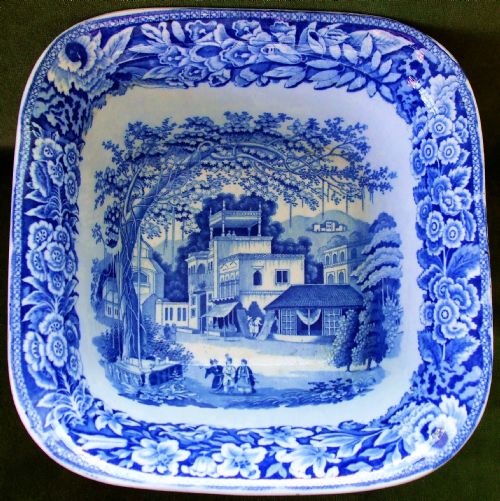
This method allowed potteries to produce intricate pictorial scenes, such as eastern street scenes or architectural views, with consistent detail across multiple plates.
Can I use these antique platters for food?
Most antique earthenware and delft pieces feature porous ceramic bodies and soft lead or tin glazes that are vulnerable to staining and modern detergents. It is safer to reserve these items for display rather than daily dining use.
Stoneware and ironstone platters from the later nineteenth century are generally denser, but age still warrants careful handling.
How do I display a large charger?
Large chargers and serving platters look best mounted on secure wire wall hangers or displayed upright in sturdy plate stands on sideboards. Ensure the mounting hardware supports the full weight of the ceramic piece without placing pressure on the rim.
Grouping plates of varying periods creates an effective wall display while keeping the blue and white palette cohesive.