


Cobalt Blue Mantel Clock
A cobalt blue mantel clock brings vivid colour and striking French design to a room.
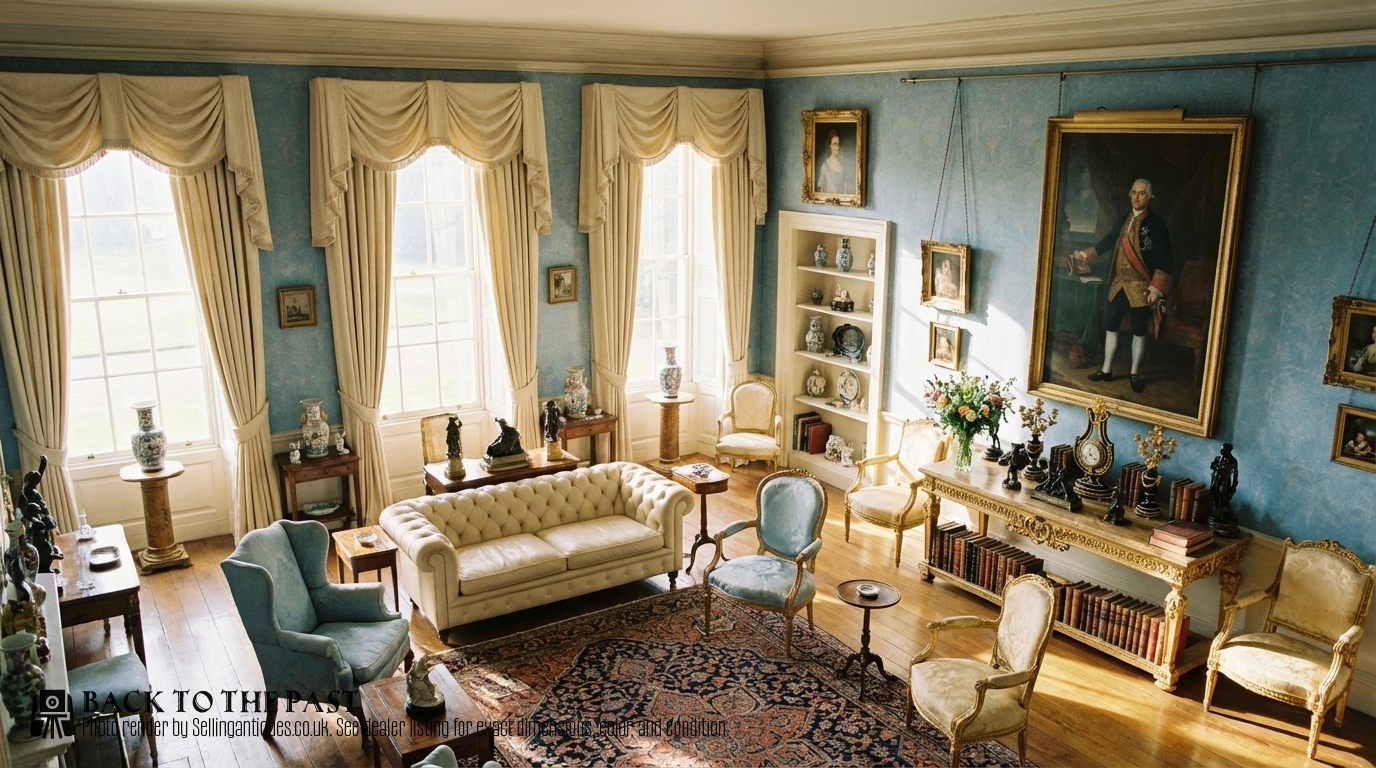
Cobalt Blue Mantel Clock
When you search for a cobalt blue mantel clock, you encounter ornate nineteenth-century timepieces created in France. These objects often arrive as part of clock garnitures or three-piece sets complete with matching side vases. The aesthetic leans heavily into French Rococo Revival and Louis XVI styles.
The porcelain body provides the rich blue ground, frequently described in listings as bleu de roi. Such pieces date across the Victorian era, spanning from eighteen-sixty to nineteen-hundred. They sit upon fireplace mantels or console tables, serving both a practical purpose and a decorative function.
Lyre-shaped clocks and classical urn forms dominate the selections seen here. Ormolu and gilt bronze mounts frame the porcelain panels, adding substantial weight and metallic contrast. Collectors seek these items to anchor a formal interior scheme with period authenticity.
How they were made
Makers utilised high-fired porcelain as the primary canvas for the deep blue glaze. Artisans then applied gilding and hand-painted details across the ceramic surface before firing it again. This process yielded a durable yet lustrous finish that retained its brilliance over generations.
Foundries cast ormolu, gilt bronze, and brass to create the elaborate mounts, bezels, and feet that encase the porcelain. Gilding was applied to the metallic components to complement the golden highlights on the clock faces and bodies. Skilled metalworkers chased the cast bronze to achieve sharp, intricate relief work.
Listings feature nineteenth-century French pieces combining porcelain, ormolu, and gilt bronze within Rococo and Louis XVI Revival styles.
What varies in quality
The crispness of the bronze casting and the depth of the mercury gilding determine the upper tier of these clocks. Better examples display finely chased mounts where every leaf and scroll is sharply defined. Lesser pieces show softer, shallower casting details with duller metallic surfaces.
Porcelain quality also separates the standard production from the exceptional. Superior clocks feature rich, even cobalt tones and meticulously hand-painted enamel decoration without blurring. The presence of matching side pieces in a complete garniture elevates the standing of the main clock.
The Cobalt Blue Mantel Clock Glossary
- Bleu de roi
- Royal blue. This deep, rich cobalt glaze appears frequently on nineteenth-century French porcelain.
- Ormolu
- Gilded bronze. Makers used this technique to mount and decorate clock cases with brilliant golden highlights.
- Garniture
- A set of matching decorative objects. These sets usually consist of a central mantel clock flanked by two matching vases or urns.
- Lyre clock
- A timepiece shaped like the ancient musical instrument. The porcelain body mimics the curved frame of a lyre.
- Rococo Revival
- A nineteenth-century design movement. This style draws on asymmetrical scrolls, floral motifs, and extravagant ornamentation.
Cobalt Blue Mantel Clock: Frequently Asked Questions
What is a clock garniture?
A clock garniture is a matching set designed to be displayed together on a mantelpiece. It typically includes a central clock accompanied by two matching side vases or urns.
These pieces share identical porcelain bodies, mounts, and colour palettes to create a balanced, symmetrical arrangement in a room.
How do I date a French porcelain clock?
Dating relies on examining the style of the mounts, the ceramic body, and any maker marks present on the movement or dial. Nineteenth-century pieces often reflect Revival movements such as Louis XVI or Rococo.
Material combinations like ormolu-mounted Paris porcelain also help narrow the period of manufacture between eighteen-sixty and nineteen-hundred.
Where should I place a mantel clock?
These clocks are traditionally designed for the mantelpiece above a fireplace, where their height and decorative mounts can be fully appreciated. They also sit well on console tables, chests of drawers, or desks.
Because many are part of a three-piece garniture, ensure you have sufficient surface length to display the matching side pieces alongside the clock.
Are these clocks mechanical?
Yes, these antique timepieces operate using traditional mechanical clockwork movements driven by springs or weights. They require periodic winding and occasional professional servicing to keep accurate time.
The winding holes are typically visible on the enamel dial face, accessed using a matching winding key.