




Victorian Sevres Clock
A Victorian sevres clock brings nineteenth-century French elegance and hand-painted porcelain panels to a mantelpiece.
Victorian Sevres Clock
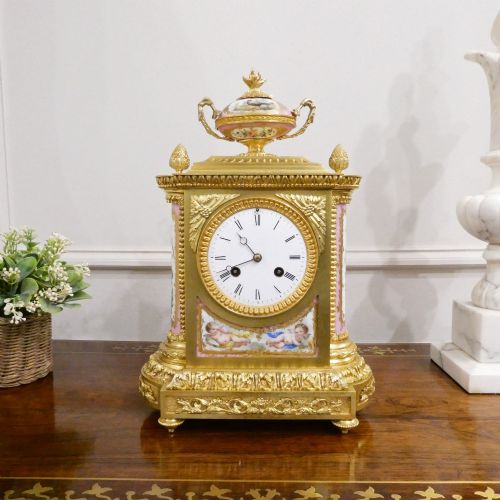
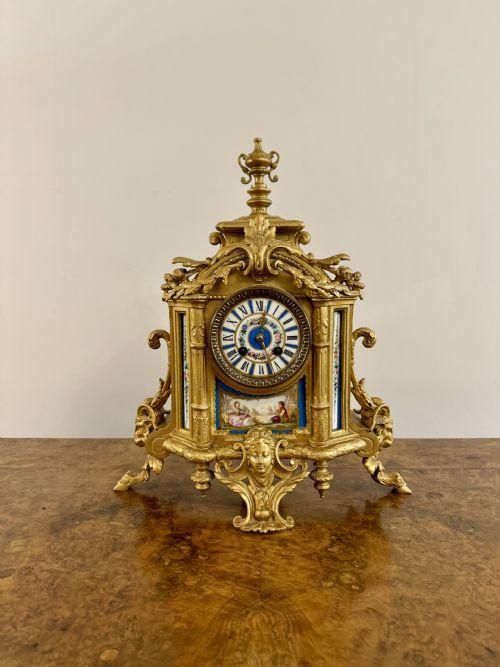
A Victorian sevres clock combines gilded metalwork and hand-painted porcelain panels into an impressive nineteenth-century mantelpiece centrepiece. The pieces found here span the middle and late decades of the nineteenth century, taking the form of standalone mantel clocks or complete clock garnitures.
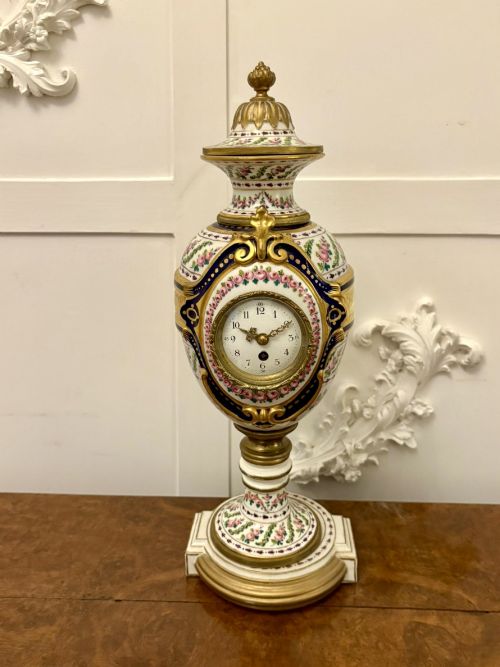
Makers and workshops from Paris dominate the selection, producing ornate timepieces in French Rococo Revival, Louis XVI style, and Napoleon III designs. These clocks frequently feature urn shapes, drum heads, or crystal regulators alongside matching side pieces.
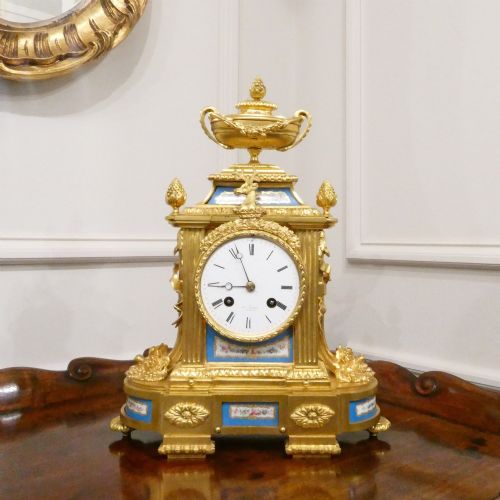
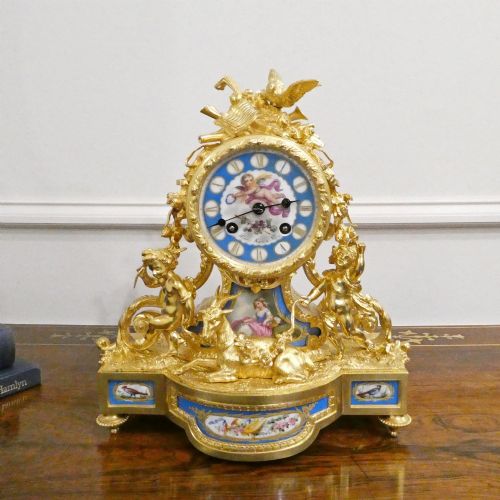
Buyers will encounter gilt bronze, ormolu, and gilt metal mounts framing porcelain panels decorated with painted scenes and floral motifs. The aesthetic reflects the grand interior taste of the Victorian period, drawing heavily on eighteenth-century French royal styles.
How they were made
The construction of a Victorian sevres clock relies heavily on cast bronze or gilt metal frames paired with porcelain components. Metal founders shaped ormolu and brass into elaborate scrollwork and architectural mounts, while ceramicists produced glazed panels and urn bodies.
Artisans applied hand-painted details and enamel numerals to the porcelain faces and plaques, often incorporating blue grounds and gilt highlights. Clockmakers then integrated mechanical bell-striking movements behind these decorative housings.
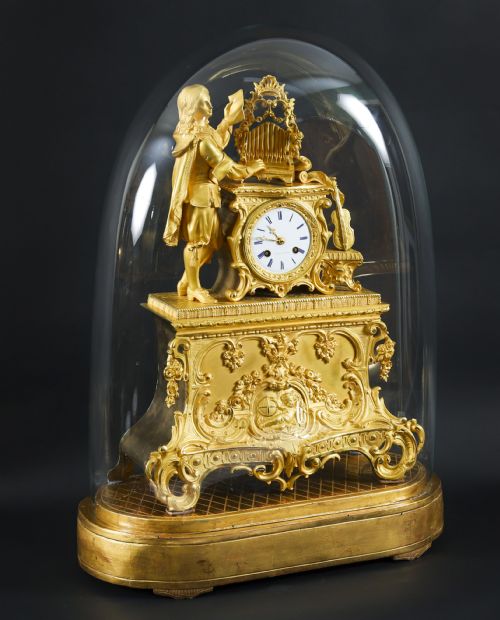
Some clocks spent their lives protected beneath heavy glass domes, preserving their delicate gilt finish from Victorian coal smoke.
What varies in quality
The calibre of the chasing in the ormolu mounts separates standard production from exceptional work, defining the crispness of foliage and scroll details. Heavier bronze castings and more refined hand-painting on the porcelain panels indicate superior manufacture.
Signed movements by known Parisian makers and horologists add significant distinction to an individual piece. The completeness of a matching clock garniture set also elevates the standing of the primary clock.
Jean-Baptiste Delettrez·Henry Marc·Leroy Paris·PH Mourey·Le Roy & Fils·Japy Freres·Miroy Freres
The Victorian Sevres Clock Glossary
- Ormolu
- Gilded bronze produced by applying a mercury-gilt amalgam to cast brass or bronze. This technique creates the bright metallic finish seen on nineteenth-century French clock cases.
- Garniture
- A set of decorative matching objects designed to sit together on a mantelpiece. These typically consist of a central clock flanked by matching urns or candelabra.
- Crystal Regulator
- A clock housed within glass panels that expose the mechanical movement from multiple sides. These pieces often feature porcelain dials and mercury pendulums.
- Drum Head
- A clock case shaped like a circular drum, usually elevated on a decorative plinth. This form places the porcelain dial prominently at the front.
- Rococo Revival
- A nineteenth-century design style mimicking the asymmetrical curves, scrolls, and natural motifs of the eighteenth century. French clockmakers utilised this aesthetic extensively for gilt bronze cases.
Victorian Sevres Clock: Frequently Asked Questions
How do I wind a Victorian sevres clock?
Wind the clock using the appropriate key inserted into the dial holes, turning gently until resistance meets you. Avoid over-winding to protect the internal tension springs.
Ensure you do not force the hands backwards when setting the time, moving them strictly in a forward direction to prevent damaging the striking train.
What is a clock garniture?
A clock garniture is a matched set containing a central mantel clock accompanied by two side ornaments, such as urns or candelabra. These sets were designed to create a balanced display across a fireplace mantle.
The pieces share identical gilding styles, porcelain panel designs, and casting motifs to maintain visual harmony.
How do I clean ormolu mounts safely?
Dust the gilt bronze mounts regularly with a soft, dry brush to prevent dirt accumulation in the recessed chasings. Avoid harsh chemical cleaners and metal polishes that strip the original mercury gilding.
Professional conservation is recommended if tarnishing obscures the intricate surface details of the bronze work.
Where were these clocks made?
The majority of these clocks originated in Paris workshops during the nineteenth century, reflecting the strong trade in luxury goods between France and Britain. Parisian horologists and bronze founders produced the movements and cases.
Retailers in London often imported these finished French movements and porcelain panels, adding their own signatures to the clock faces.