
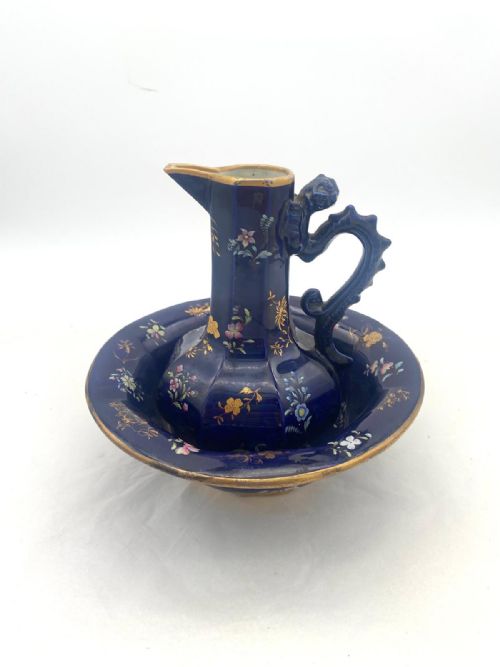
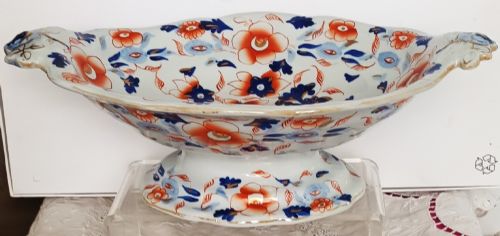
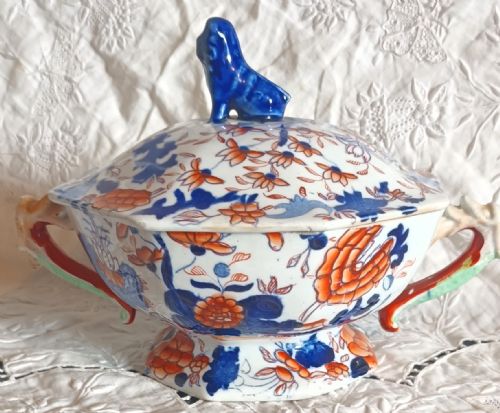
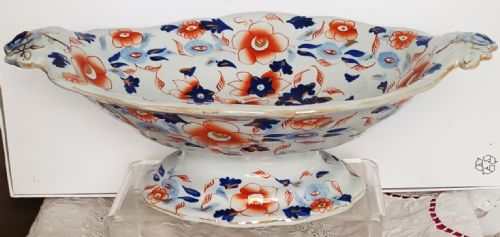


Cobalt Blue Ironstone Bowl
These robust cobalt blue ironstone bowl examples combine practical utility with vibrant orientalist patterns, making them durable centrepieces for any traditional table setting.
Cobalt Blue Ironstone Bowl
A cobalt blue ironstone bowl represents a durable category of earthenware developed in the nineteenth century to withstand daily use while mimicking expensive Chinese porcelain. Buyers seeking a cobalt blue ironstone bowl will frequently encounter nineteenth century Georgian and Victorian forms decorated with rich blue enamels.
The inventory on this page demonstrates that these items extend beyond simple tableware into decorative tureens, footed comports, and large basins. Most pieces date from the nineteenth century, reflecting the height of British ironstone production and the era's fascination with Imari and Chinoiserie aesthetics.
Makers such as Mason's dominate the surviving record, often applying vibrant patterns to heavy ceramic bodies. Whether acquiring a soup bowl or a large covered vessel, collectors secure a sturdy piece of British ceramic history designed for both service and display.
Materials and construction
Makers produced these dense vessels using a heavy ceramic body known as ironstone, which combined refined clay with slag of iron to create a robust alternative to porcelain. This dense ceramic material was fired at high temperatures to ensure durability and resistance to chipping during service.
Artisans applied deep cobalt blue enamels by hand, often incorporating gilt highlights, gold leaf, or additional glaze to enrich the finished surface. The resulting glaze protected the underlying decoration while imparting a bright, glossy sheen characteristic of nineteenth century production.
Listings show nineteenth century pieces predominantly utilising ironstone ceramic bodies decorated with cobalt blue enamel and gilt highlights in Georgian and Victorian styles.
Assessing quality and craftsmanship
Quality in these ceramics rests primarily upon the crispness of the transfer printing and the precision of the hand-applied cobalt blue enamel. Finer examples retain bright, unrubbed gilt highlights and show minimal firing flaws within the ceramic body.
The sophistication of the pattern also distinguishes standard utilitarian vessels from high-status display pieces. Elaborate Chinoiserie and Imari motifs executed with deep, saturated blue tones indicate superior workshop output.
Mason s·Coalbrookdale
The Cobalt Blue Ironstone Bowl Glossary
- Ironstone
- A patented ceramic body invented in the nineteenth century to provide a strong, vitrified alternative to porcelain. It resists cracking and forms a heavy base for rich enamel decoration.
- Chinoiserie
- A European artistic style reflecting Chinese motifs and landscapes. Artisans adapted these orientalist designs onto nineteenth century ceramics using vibrant cobalt blue palettes.
- Comport
- A footed dish or bowl elevated on a pedestal, used traditionally for serving fruit or sweets at the table. These decorative pieces often feature detailed border patterns.
- Imari
- A decorative style borrowed from Japanese export wares, characterised by cobalt blue and iron red highlights. British makers frequently utilised this palette on ironstone vessels.
- Tureen
- A deep covered bowl designed for serving soups or vegetables. These serving dishes often include matching stands or covers.
Cobalt Blue Ironstone Bowl: Frequently Asked Questions
What is ironstone china?
Ironstone is a heavy, durable ceramic material patented in the nineteenth century to provide a sturdy alternative to imported oriental porcelain.
It combines refined clay with slag of iron, resulting in a dense body that resists chipping and supports vibrant enamel decoration.
How do I date these pieces?
Dating relies primarily on stylistic markers, potter's marks, and the specific application of cobalt blue enamel and gilding.
Most surviving examples date from the nineteenth century, spanning the Georgian and Victorian periods.
Were these bowls used daily?
Many items were produced for practical dining service, including soup bowls and large basins intended for rigorous household use.
Over time, robust construction allowed these functional vessels to survive centuries of handling relatively intact.
What does Chinoiserie mean?
Chinoiserie describes European decorative designs inspired by Chinese art, featuring fantastical landscapes and architectural motifs.
On these ceramics, the style appears rendered in deep cobalt blue pigments across the surface of the ironstone.