
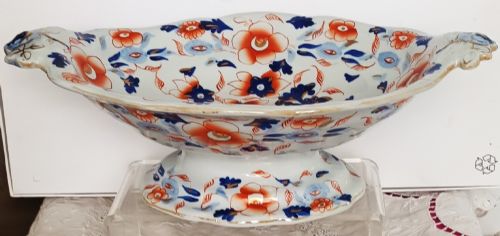
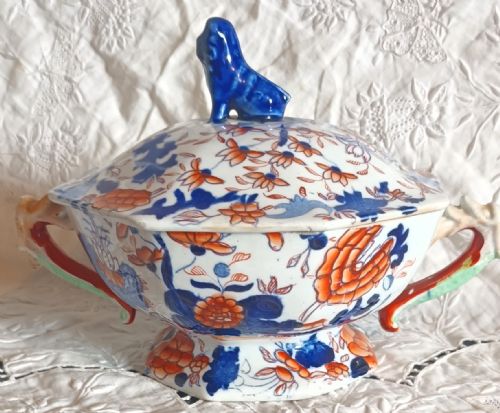
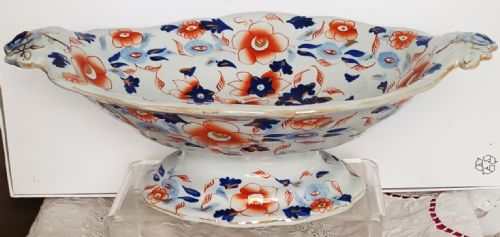


Georgian Ironstone Bowl
These robust georgian ironstone bowl examples offer striking utility and display presence, built to last through centuries of heavy use.
Georgian Ironstone Bowl
A georgian ironstone bowl encompasses sturdy ceramic vessels, footed comports, and covered tureens created during the nineteenth century. These pieces bridge the gap between delicate porcelain and everyday earthenware, offering practical heavy-duty service.
Most items you encounter here bear rich Chinoiserie patterns, Japan patterns, or mandarin designs, reflecting the period's fascination with Eastern motifs. Forms range from pedestal comports and vegetable tureens to chestnut baskets and mess bowls.
The objects stem from English production, spanning the Regency and Georgian periods into early Victorian times. They serve equally well as centrepieces on a dining table or as standalone decorative items in a traditional interior.
How they were made
Maker's workshops utilised dense ironstone ceramic and earthenware bodies to form heavy, durable vessel walls that resisted chipping far better than standard porcelain. Glaze was applied over the ceramic body to seal the surface before hand-painted enamels and gold leaf details were added.
Many items underwent high-temperature firing to vitrify the clay body, followed by secondary kilning to set vibrant transfer-printed or hand-painted Chinoiserie motifs. Artisans finished select pieces with rich gilt highlights and enamel colours such as green mandarin.
Current listings feature nineteenth-century ironstone ceramics from the Georgian and Regency periods, spanning tureens, footed comports, and decorative bowls.
What varies in quality
The crispness of the transfer printing and the precision of the hand-applied enamel work set superior examples apart from standard production. Rich gilding and well-preserved gold leaf elevate the visual weight of a piece.
Completeness dictates value and desirability, particularly when lids, covers, or matching trays remain paired with their original tureens and bowls. The complexity of the form, such as footed pedestal comports or elaborate chestnut baskets, also indicates higher ambition from the maker.
Mason s Patent Ironstone·Coalbrookdale
The Georgian Ironstone Bowl Glossary
- Ironstone
- A dense, heavy ceramic paste patented in the early nineteenth century to provide a durable alternative to porcelain. It resists chipping and thermal shock.
- Comport
- A decorative footed bowl or dish raised on a pedestal, traditionally used for serving fruit or sweets at the centre of a dining table.
- Tureen
- A deep covered bowl designed for serving soups, vegetables, or sauces. These vessels often include matching undertrays or covers.
- Chinoiserie
- A European decorative style influenced by Chinese artistic traditions, featuring imaginary landscapes, figures, and architectural motifs.
- Gilt
- A thin layer of gold applied to the ceramic surface or glaze as a decorative highlight. It provides a bright metallic contrast to the painted enamels.
Georgian Ironstone Bowl: Frequently Asked Questions
What is ironstone?
Ironstone is a heavy, durable ceramic body developed in the nineteenth century to withstand daily dining use while mimicking the appearance of fine porcelain. It combines refined clay with slag or stone to create a robust structure.
This material allowed potters to form large vessels, tureens, and comports that resisted chipping and heavy wear better than standard earthenware.
How do I use a comport?
A comport is a footed pedestal bowl historically placed at the centre of a dining table to serve fruit, nuts, or sweet dishes. The elevated design adds height and visual structure to a table setting.
In a modern interior, you can display a comport on a sideboard or use it to hold decorative items rather than food.
How do I care for ironstone?
Ironstone is remarkably tough, but antique pieces require gentle hand washing in warm soapy water to protect old glaze and delicate enamel painting. Avoid abrasive scrubbers that might dull the surface.
Keep pieces with gold leaf out of the dishwasher and microwave to preserve the original metallic decoration.