


Gilt Ceramic Covered Bowl
These gilt ceramic covered bowl pieces combine rich metal leaf with glazed earthenware, offering both refined table service and decorative presence.
Gilt Ceramic Covered Bowl
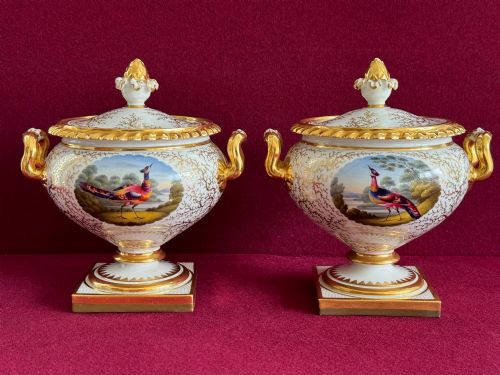
When you search for a gilt ceramic covered bowl, you encounter lidded vessels designed for sugar, sauce, dessert cream, potpourri, or soup service. The pieces span the Georgian, Regency, and nineteenth-century periods, originating from English factories and continental makers.
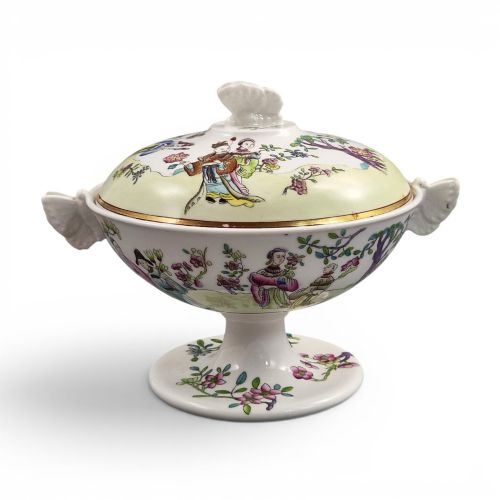
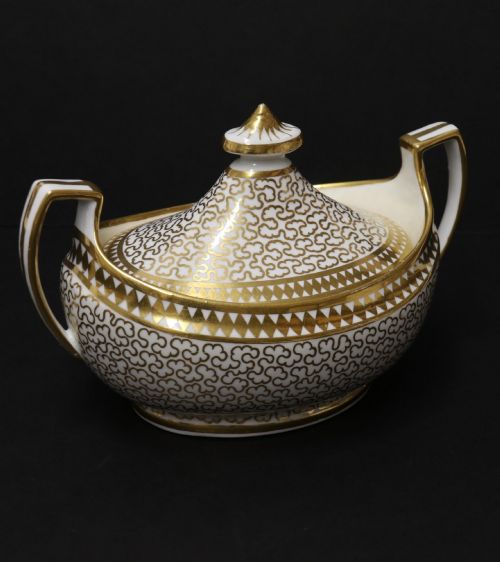
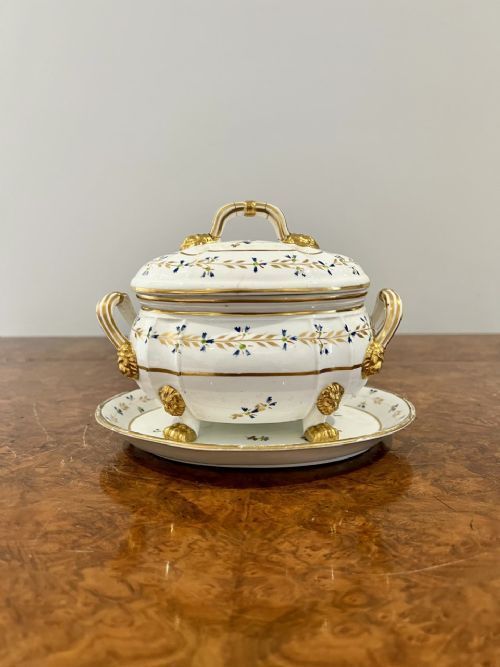
You will most frequently meet sugar bowls, sucriers, and tureens shaped in porcelain, bone china, felspar porcelain, and ironstone ceramic. Many examples incorporate stands, butterfly handles, or matching covers to complete the lidded form.
The aesthetic vocabulary encompasses French Rococo Revival, Victorian Imari, Chinoiserie, and French Chateau styles. These designs reflect both functional tableware requirements and purely decorative display intentions.
Materials and technique
Potters shaped these vessels using porcelain, bone china, ironstone ceramic, and felspar porcelain bodies. Skilled artisans applied enamel painting alongside gold leaf and general gilding to accentuate handles, rims, and surface patterns.
Selected pieces integrate ormolu mounts to complement the ceramic body and gilded highlights. The manufacturing process combined high-temperature ceramic firing with meticulous hand-applied metallic leaf and polychrome decoration.
Object forms include sugar bowls, tureens, potpourri lidded bowls, entrée dishes, and bonbonnières.
Distinctions in quality
The refinement of the ceramic body and the precision of the hand-painting set individual pieces apart. Superior examples display crisp moulding, delicate enamel work, and well-preserved gold leaf without heavy rubbing.
Makers known for technical innovation, such as Spode, Chamberlains Worcester, and Flight, Barr & Barr, command attention through superior paste consistency and sophisticated decorative schemes.
Spode·Chamberlains Worcester·Crown Derby·Mason·Mintons·Dresden·Flight Barr And Barr·Sevres·Meissen·Edm E Samson·Coalport
The Gilt Ceramic Covered Bowl Glossary
- Sucrier
- A small lidded vessel specifically designed to hold sugar for the tea table. These often feature matching covers and delicate handles.
- Felspar porcelain
- An innovative ceramic body developed in the nineteenth century using felspar to achieve greater durability and a bright white ground. It allowed for fine translucent forms.
- Ormolu
- Gilded bronze mounts applied to ceramic bodies for decorative effect. This technique was popular in French and continental workshop traditions.
- Imari
- A decorative style inspired by Japanese export wares, featuring rich underglaze blue and iron red combined with extensive gilding. Victorian makers adopted this palette enthusiastically.
- Tureen
- A deep covered bowl used for serving soups, sauces, or gravies. Many include an integral or separate matching ceramic stand.
Gilt Ceramic Covered Bowl: Frequently Asked Questions
What were these lidded bowls used for?
These vessels served various dining and domestic functions, ranging from holding sugar at the tea table to containing sauces, creams, or potpourri.
Larger forms functioned as soup or entrée tureens during formal dining, while smaller covered bowls acted as bonbonnières or decorative centrepieces.
How do I date a nineteenth-century piece?
Dating relies on identifying factory marks, ceramic bodies such as felspar porcelain or ironstone, and stylistic cues like Regency or Rococo Revival moulding.
Comparing the pattern style and gilding technique with documented manufacturer timelines helps narrow the period of production.
Can I use these bowls for serving food?
While these antique vessels were originally created for culinary and dining use, nineteenth-century gilding and enamels are often delicate.
Modern dishwashers and harsh detergents can damage the gold leaf and enamel decoration, so most owners choose display over active table service.
How do I distinguish between English and continental pieces?
English factories typically utilised specific bodies like bone china, ironstone ceramic, or felspar porcelain, often marked with pattern names or factory ciphers.
Continental workshops from Dresden, Sevres, Meissen, or Limoges often employed distinct paste colours, mount styles, and registration marks characteristic of European traditions.