

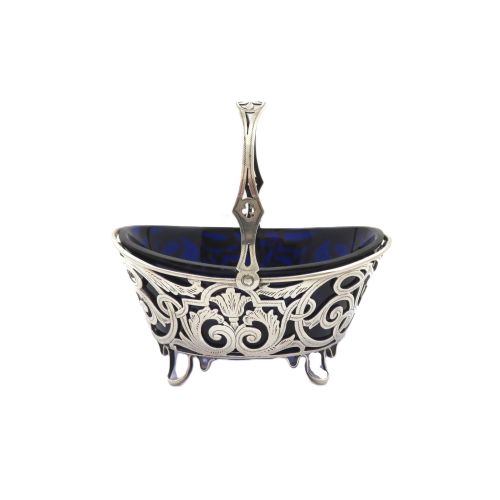
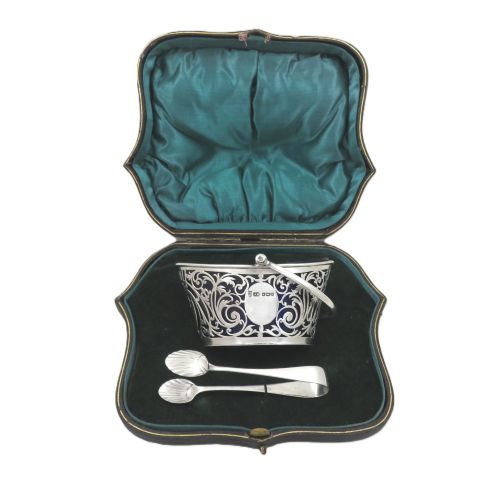
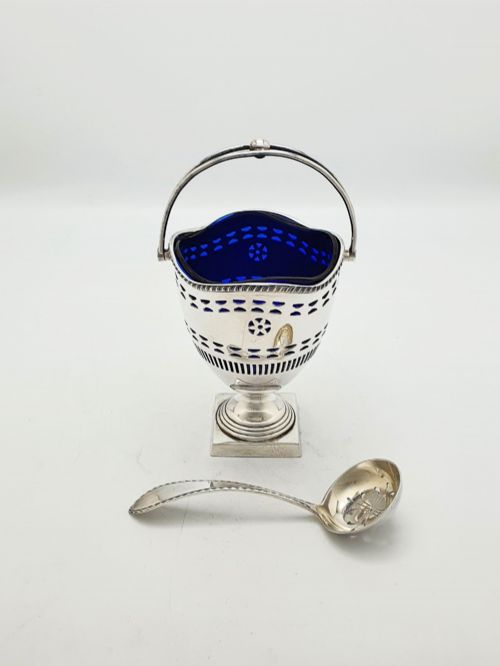





Cobalt Blue Glass Bowl
These cobalt blue glass bowls combine deep colour with metal mounts, spanning Georgian tableware to Art Deco decorative pieces.
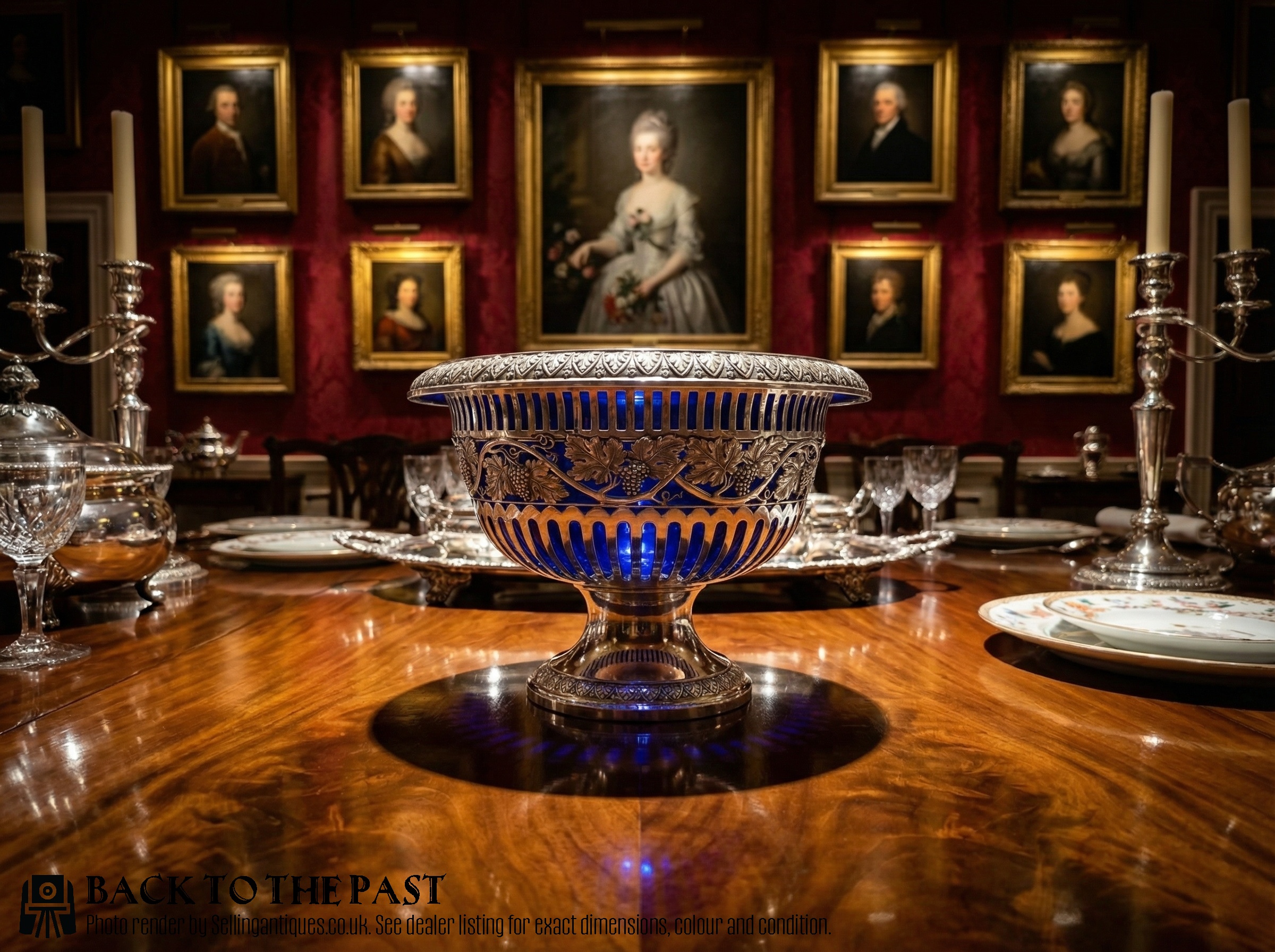
Cobalt Blue Glass Bowl
A cobalt blue glass bowl satisfies the search for deep indigo vessels, which most frequently appear paired with silver, silver plate, or metal mounts.
The selection ranges from Georgian sugar baskets and Victorian salt cellars to Art Deco comports and Bohemian display pieces.
Buyers encounter functional tableware such as sugar bowls and cream jugs alongside decorative centrepieces and bon bon dishes.
How they were made
Makers combined cobalt glass and lead crystal with sterling silver, silver plate, and enamel, often layering blue over clear crystal.
Metalworkers encased vessels in pierced silver frames, cast floral handles, and solid silver dish rings, securing glass liners inside metal frameworks.
The listings span multiple periods from the 18th Century through Georgian, Victorian, Edwardian, and Art Deco eras to 1930.
What varies in quality
The standard of a piece depends on the crispness of the silver piercing, the weight of the lead crystal, and the depth of the cobalt hue.
Hand-painted enamel details and crisply cast floral handles distinguish finer workshop production from simpler domestic tableware.
Aldridge and Green·Joseph Simon for VSL·Val St. Lambert·Makeig-Jones Wedgwood
The Cobalt Blue Glass Bowl Glossary
- Cobalt glass
- Deep blue glass coloured by the addition of cobalt oxide during melting. It creates the rich indigo tone seen across these vessels.
- Sugar basket
- A footed bowl with a swing handle, designed for holding lump sugar on the dining table. They frequently feature cobalt glass liners paired with silver frames.
- Comport
- A raised decorative dish or bowl used for serving fruit or sweets. Art Deco examples in blue glass often incorporate figural supports.
- Salt cellar
- A small open vessel for salt, placed on the table before individual diners. These often combine cobalt glass bowls with sterling silver spoons.
- Monteith
- A punch bowl with a scalloped or notched rim. Georgian examples occasionally incorporate blue glass rims or associated components.
Cobalt Blue Glass Bowl: Frequently Asked Questions
How do I clean a silver mounted blue bowl?
Remove the glass liner from the silver frame whenever possible to wash them separately in warm soapy water.
Polish the sterling silver or silver plate with a soft cloth, keeping metal cleaning compounds away from the glass.
Were these bowls used for dining?
Many examples served specific dining table functions, holding sugar, salt, or cream during formal meals.
Others functioned as decorative centrepieces, bon bon dishes, or dressing table jars rather than everyday tableware.
How do I date a blue glass bowl?
Examine the silver hallmarks on the mounts for official assay office symbols and date letters.
Style indicators like Georgian piercing, Victorian floral casting, or Art Deco geometric forms also point to specific periods.
What is the difference between a bowl and a basket?
Baskets feature an overhead swing handle designed for carrying or lifting at the table.
Bowls remain open without handles, intended for stationary display or holding food items.