



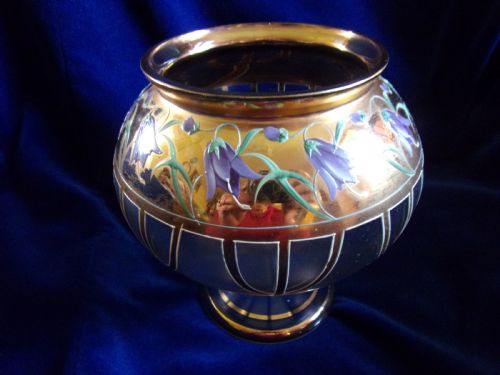


Bohemian Glass Bowl
A bohemian glass bowl brings weight and saturated colour to a room, turning simple daylight into rich pools of amber, ruby, or green.
Bohemian Glass Bowl
A bohemian glass bowl represents a long tradition of Central European decorative arts, spanning the nineteenth century through the art nouveau period. These pieces arrive in forms ranging from heavy cut tableware to iridescent centrepieces and footed dishes.
The objects seen here include large punch sets, tazzas, and simple decorative bowls originating from workshops across the Bohemian region. Victorian and 1900s examples dominate the selection, showing both classic wheel-cut clarity and vibrant coloured glass.
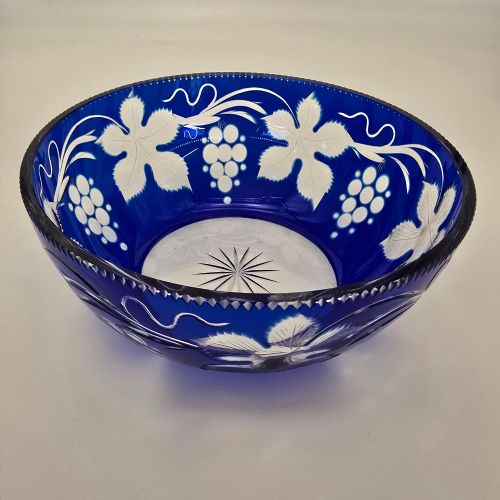
Buyers seeking a bohemian glass bowl will encounter deep cobalt blues, rich ruby reds, and striking emerald greens overlaid with enamel or gold leaf. The variety encompasses everything from small cabinet dishes to substantial standing bowls.
Materials and Manufacture
The production relies on heavy glass coloured with mineral oxides, producing deep shades of ruby, cobalt, and amber. Master glassmakers shaped these vessels by hand before applying intricate surface decoration.
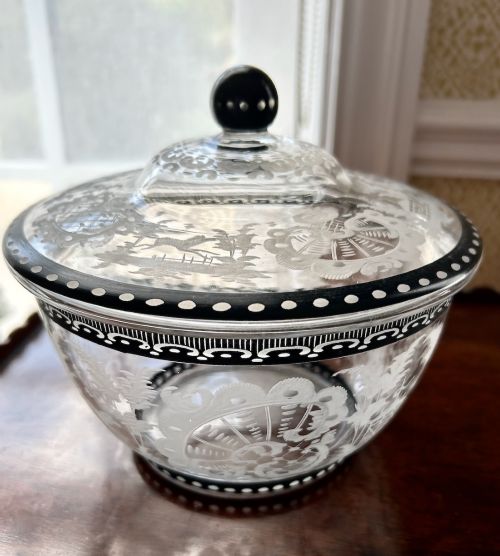
Techniques include detailed wheel-cutting, acid-etching, and the application of gold leaf and polychrome enamel. Overlay methods involve fusing a layer of coloured glass over a clear core and cutting through the top layer to reveal the contrast underneath.
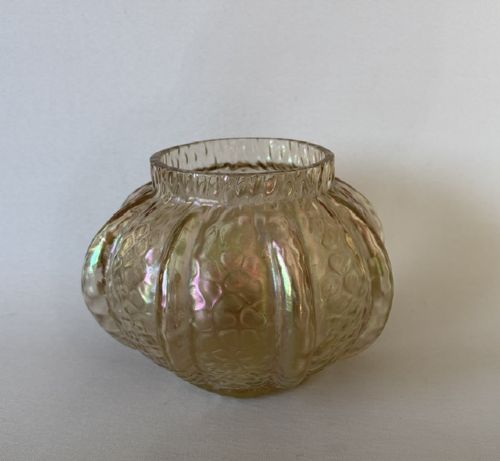
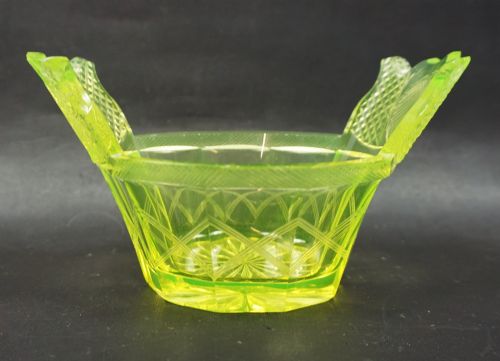
Specialised agents such as uranium were introduced to achieve distinct yellow-green hues that react under ultraviolet light. Iridescent finishes, notably developed in later periods, give the glass a metallic, shimmering surface akin to oil on water.
Bohemian Glass Bowl Retail Price Guide 2026
Typical asking prices for bohemian glass bowl among the pieces listed under this phrase on Sellingantiques today, from the lower quarter to the upper quarter. They describe what is for sale here now, not the wider market.
Materials appearing across these bowls include ruby glass, cobalt glass, uranium glass, and applied gold leaf.
Assessing Quality and Craft
Quality rests primarily on the crispness of the cutting and the depth of the glass colour. Superior pieces display sharp, clean facets and smooth, well-polished pontil marks on the base.
The fineness of the enamel work and the purity of the gilding set ordinary wares apart from exceptional examples. Painted details on higher-grade bowls show careful brushwork and precise registration rather than hasty application.
The weight of the object and the absence of bubbles or flaws within the body indicate greater technical skill in the furnace. Overlay glass requires precise temperature control during cooling to prevent stress fractures between the distinct layers.
Loetz
The Bohemian Glass Bowl Glossary
- Overlay glass
- A technique involving two or more distinct layers of glass fused together while hot. The outer layer is often carved away to expose the contrasting colour beneath.
- Tazza
- A shallow ornamental bowl raised on a high foot or pedestal. These pieces were traditionally used for serving fruit or sweets at formal tables.
- Pontil mark
- The rough scar left on the bottom of a vessel where the punty rod was snapped off after blowing. Its presence indicates traditional hand-blown manufacture.
- Uranium glass
- Glass containing a small percentage of uranium dioxide added as a colouring agent. It typically glows a vivid green under ultraviolet light.
- Gilding
- The application of gold leaf or gold powder to the surface of the glass. This decoration is often fired in a kiln to bond it permanently.
Bohemian Glass Bowl: Frequently Asked Questions
Can I use these bowls for serving food?
Most antique bowls serve primarily as decorative objects or centrepieces rather than everyday tableware. Older pieces, particularly those containing uranium or heavy lead, are best kept for display.
Acid-etched surfaces and delicate gold leaf can also wear away with frequent washing and acidic foods. Reserve them for dry display rather than culinary use.
How do I date a bohemian glass bowl?
Examine the base for pontil marks, wear patterns, and manufacturing characteristics that point towards specific eras. Victorian pieces often feature heavy wheel-cutting and rich overlay, while later 1900 examples lean towards iridescent finishes and organic shapes.
Stylistic cues such as art nouveau floral motifs or Biedermatier restraint provide further clues to the period of origin. Comparing the weight and colour saturation with documented examples helps narrow the decade.
What causes the iridescence on some glass?
The shimmering effect is achieved by treating the hot glass surface with metallic vapours or chemical salts inside the kiln. This process creates a thin surface film that refracts light into various prismatic colours.
Makers perfected this technique to mimic ancient Roman glass buried in the earth for centuries. The resulting sheen remains stable and integral to the glass.