







Victorian Glass Centrepiece Bowl
A Victorian glass centrepiece bowl anchors a dining table or sideboard with height, colour and light, drawing the eye instantly.
Victorian Glass Centrepiece Bowl
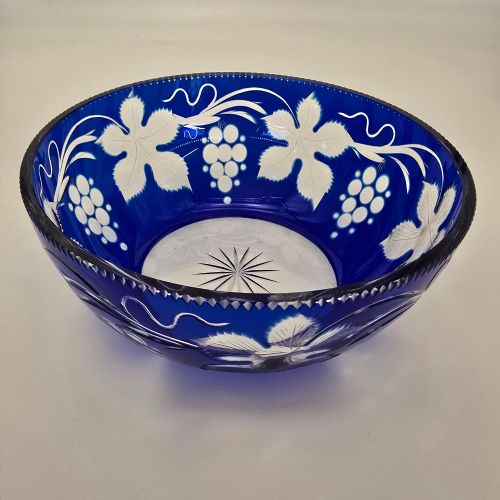
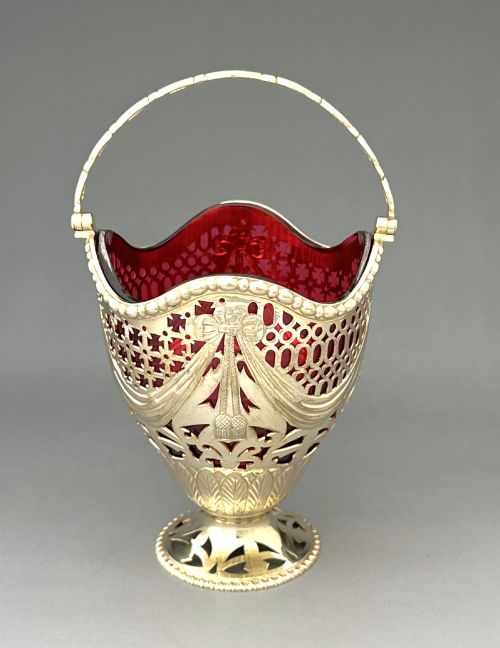
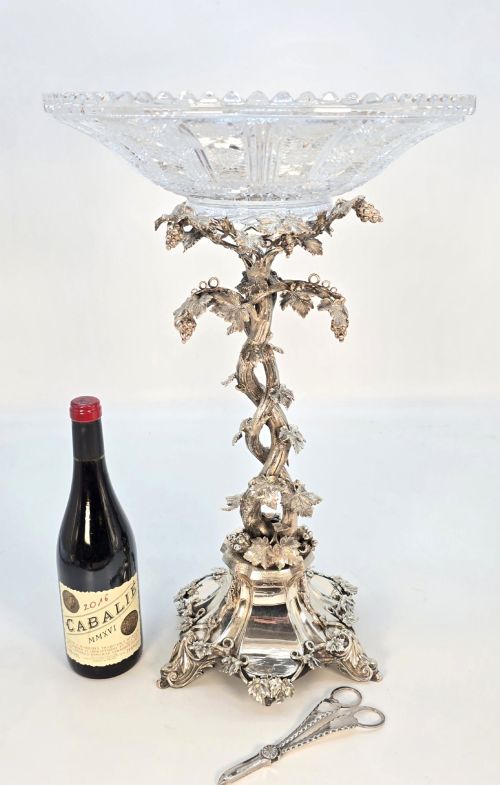
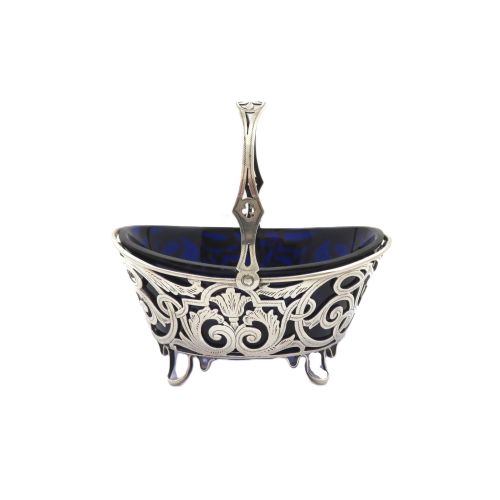
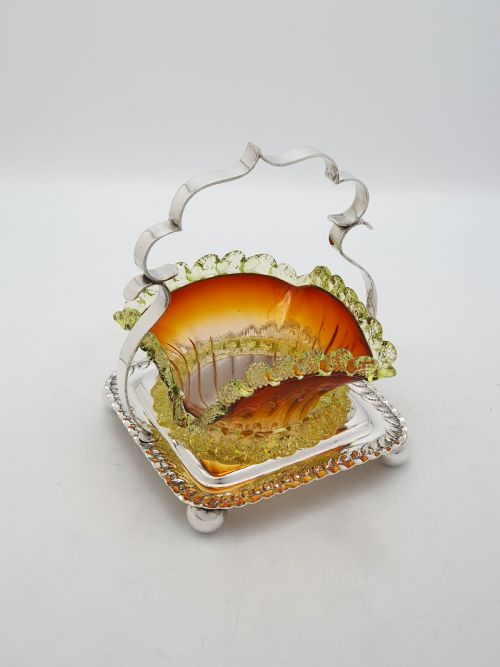
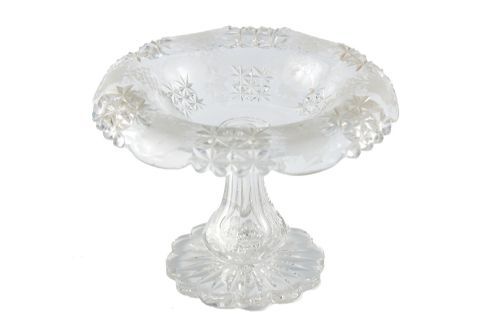
A victorian glass centrepiece bowl is a commanding vessel intended to dominate a dining table, sideboard or drawing-room surface. When you examine this selection, you encounter forms ranging from low pedestal bowls and tazzas to elaborate epergnes and swing-handled baskets.
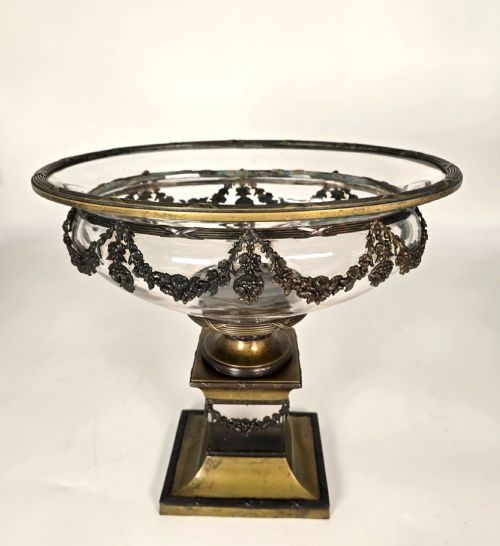
The objects frequently combine glass bodies with metal stands, integrating lead crystal, cut glass, cranberry glass and vaseline glass with silver plate, ormolu, brass and gilt bronze. Originating across Britain, France, Germany and Bohemia, these pieces span from the mid nineteenth century into the early twentieth century, encompassing Edwardian and Art Nouveau aesthetics alongside earlier Victorian designs.
How They Were Made
Glass production relied on hand blowing, moulding and intricate surface manipulation. Artisans cut deep facets into lead crystal, etched floral or geometric motifs onto clear and coloured bodies, and applied gilding or enamel to enhance the visual depth of the material.
Metal mounts and stands required skilled foundry work and silversmithing, utilising techniques such as silver plating over base metal, mercury gilding on bronze, and detailed wood carving for Black Forest elements. These distinct components were then secured together with threaded rods, pins or precise seating within frames.
Victorian Glass Centrepiece Bowl Retail Price Guide 2026
Typical asking prices for victorian glass centrepiece bowl among the pieces listed under this phrase on Sellingantiques today, from the lower quarter to the upper quarter. They describe what is for sale here now, not the wider market.
Materials recur across silver plate, cut crystal, cranberry glass and vaseline glass, often paired with brass, ormolu or carved wood stands.
What Varies in Quality
Quality rests upon the crispness of the glass cutting, the weight and clarity of the crystal, and the depth of colour in tinted varieties like cranberry or vaseline glass. Superior pieces display sharp, clean facet edges and free-blown uniformity without distracting optical distortions.
The secondary materials dictate the overall calibre just as strongly, evident in the thickness and durability of silver plating, the precision of cast ormolu mounts, and the integration between metal and glass. Maker attribution, seen in pieces bearing marks from firms like Walker & Hall or WMF, elevates the standing of a centrepiece.
Walker & Hall·Stuart for Liberty·George Fox·François-Eugène Rousseau·James Dixon
The Victorian Glass Centrepiece Bowl Glossary
- Epergne
- A large table centrepiece featuring a central bowl or basket surrounded by smaller hanging baskets or trumpets designed to hold fruit, flowers or sweetmeats. These multi-tiered vessels often utilise cranberry or clear glass mounted in silver plate.
- Tazza
- An ornamental shallow bowl or dish raised on a high foot or pedestal, frequently employed to serve fruit or confectionery. They appear in cut crystal, etched glass and gilded ruby variants.
- Vaseline glass
- A type of transparent or translucent glass coloured with uranium dioxide, exhibiting a distinctive yellow-green hue that glows under ultraviolet light. It is frequently encountered in Art Nouveau and Edwardian tableware.
- Ormolu
- Gilding technique involving the application of a finely ground high-carat gold-mercury amalgam to a bronze object. It provides a rich, warm metallic finish common on French decorative mounts.
- Comport
- A shallow bowl raised on a stem and foot, functionally similar to a tazza and used for serving fruit or sweet dishes during formal dining.
Victorian Glass Centrepiece Bowl: Frequently Asked Questions
What were glass centrepieces used for?
These large bowls and epergnes served as decorative focal points for formal dining tables, often holding displays of fresh fruit, flowers, or sweetmeats during Victorian and Edwardian meals. They added height and visual interest to the table setting while demonstrating the host's social standing.
Beyond dining rooms, they sat upon sideboards and console tables in drawing rooms as standalone decorative objects. Their coloured glass and reflective crystal surfaces caught the flickering light of oil lamps and candles during evening entertaining.
How do I clean a centrepiece bowl?
Cleaning requires careful hand washing in lukewarm water with a mild, non-abrasive detergent. Avoid submerging metal mounts or silver-plated stands for extended periods, as moisture can seep between fitted components and cause damage.
Dry the glass immediately with a lint-free cloth to prevent water spots, and use a specialised soft cloth on silver-plated or gilded sections without resorting to harsh chemical dips. Take extra care around delicate glass frills, applied enamel, and carved wooden bases.
Can I use these bowls for food?
Most antique glass bowls can safely hold dry foods, fruit or individually wrapped sweets for display purposes. Historic items with silver plating or lead content, however, are generally best reserved for decorative use rather than serving acidic foods or liquids.
When dealing with uranium-bearing vaseline glass or gilded surfaces, modern food safety guidelines advise against serving unsealed foodstuffs directly from the vessel. Visual enjoyment remains the primary purpose for these historic decorative objects.
How do I date a glass centrepiece?
Dating relies on observing a combination of manufacturing techniques, material styles, and any accompanying maker marks or registration numbers. Mid-nineteenth-century pieces often feature heavy hand-cut lead crystal paired with ornate silver plating or ormolu mounts in Rococo Revival styles.
Later Victorian, Edwardian, and Art Nouveau examples introduce fluid organic forms, lighter silver-plated frameworks, and specialised glass types such as cranberry and vaseline glass. Stylistic cues like naturalistic tendrils and stylized floral motifs point towards the turn of the twentieth century.