

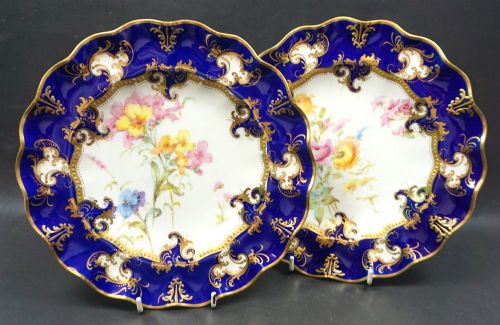
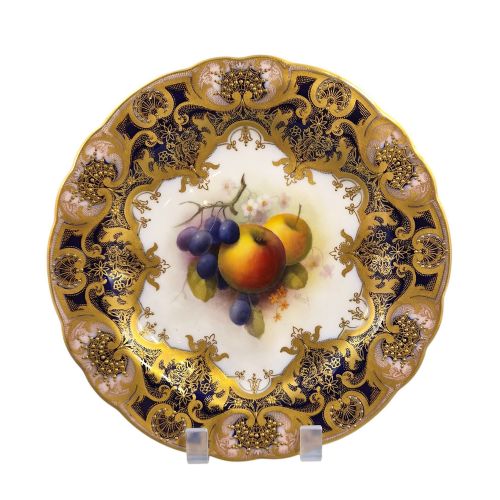
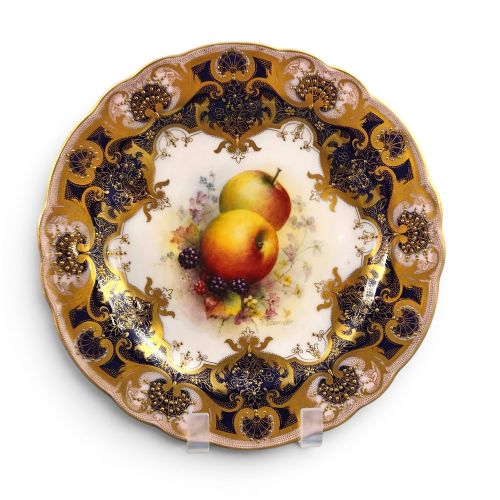
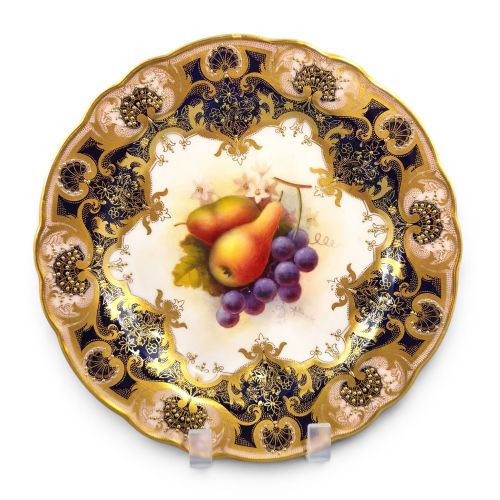
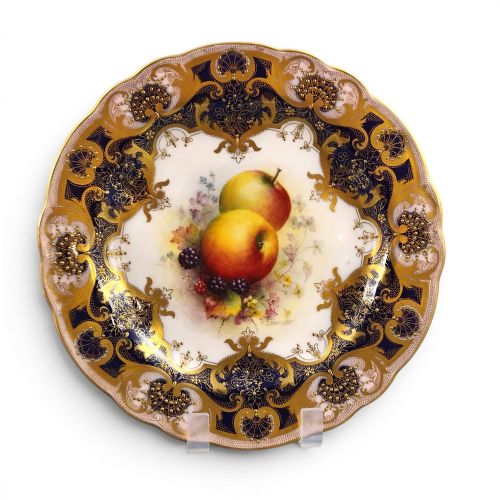
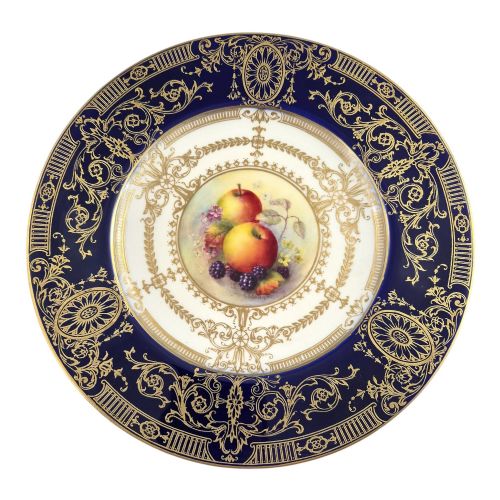
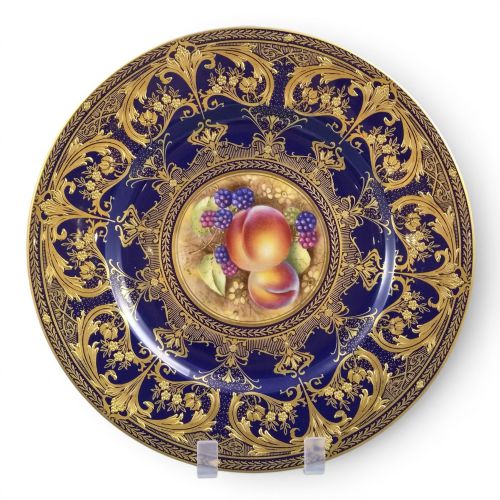
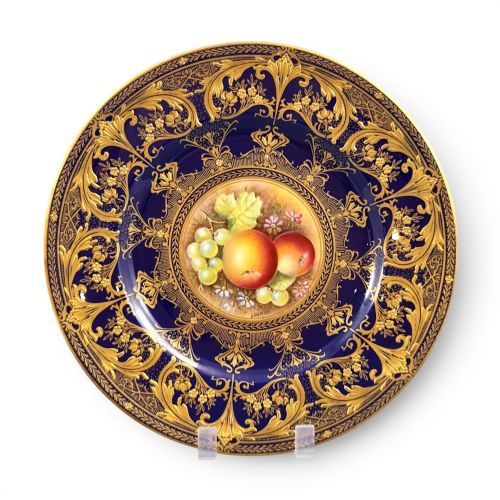
Cobalt Blue Gilded Plate
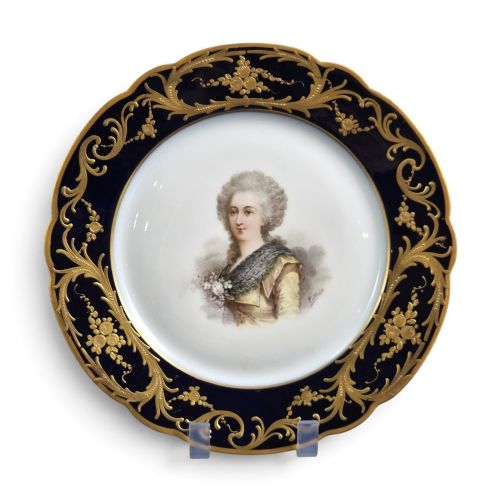
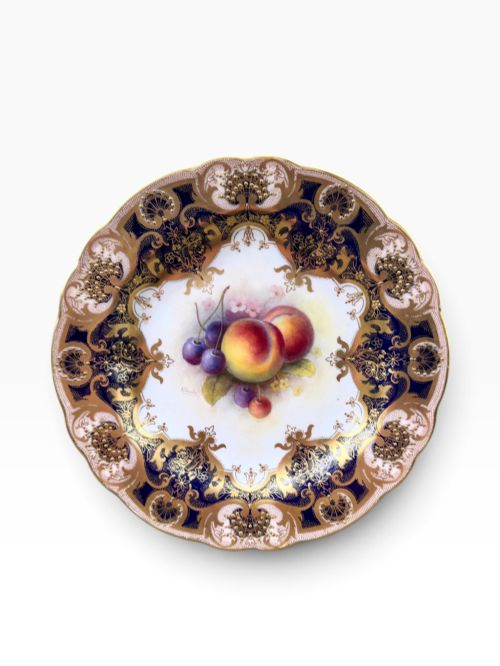
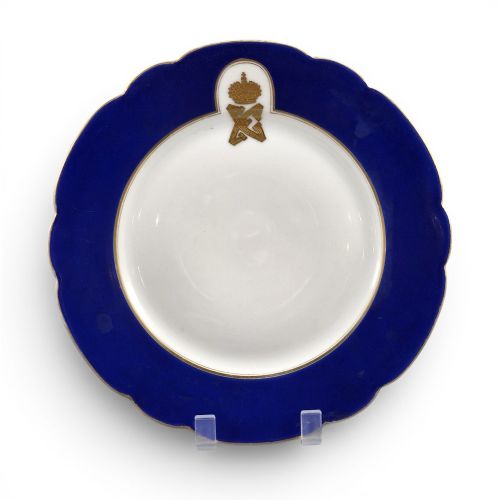
A cobalt blue gilded plate brings intense colour and rich metallic detail together on porcelain or bone china, making it a striking display piece.
Cobalt Blue Gilded Plate
A cobalt blue gilded plate combines deep ceramic pigment with metallic highlights, appearing in forms such as cabinet plates, decorative chargers, and dessert service dishes. These items span periods from the Georgian and Victorian eras through the early twentieth century, reflecting diverse international traditions.
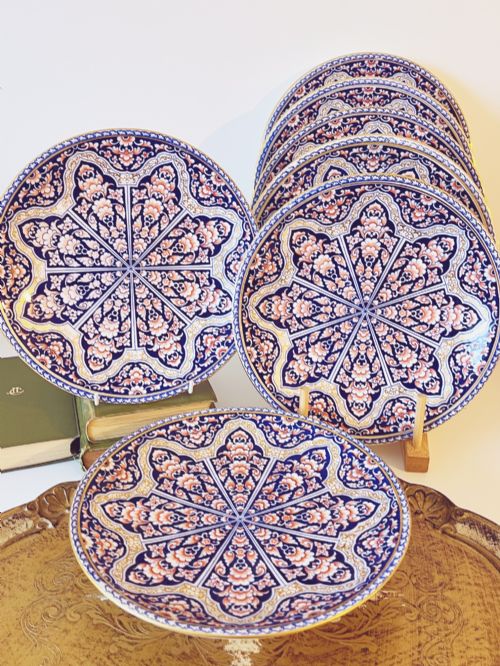
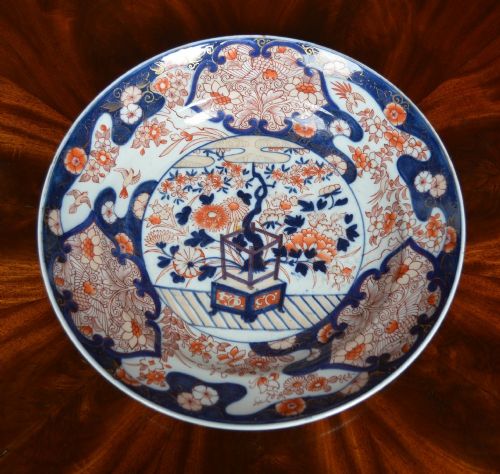
Makers represented on this page range from English potteries like Royal Crown Derby and Royal Worcester to continental factories including Meissen and Sèvres-style workshops, alongside Japanese Imari wares. Cabinet plates and large chargers dominate the selection, intended historically for visual impact rather than dining.
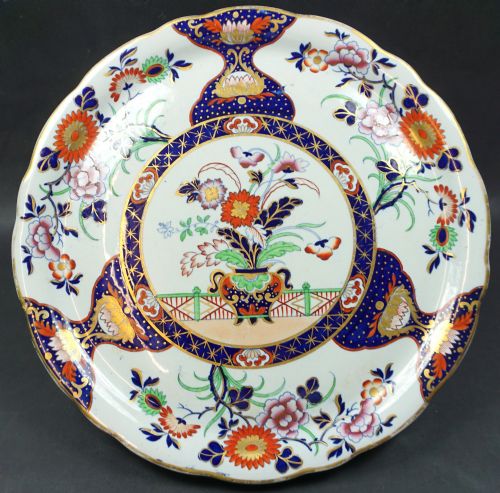
The aesthetic merges saturated blue glazes with gold leaf or gilt ornamentation, applied to porcelain, bone china, and soft-paste porcelain. Buyers encounter pieces shaped as round chargers, scalloped edges, and fan-like configurations.
Materials and manufacture
The foundation of these items relies on hard-paste porcelain, bone china, or soft-paste porcelain, shaped into plates, dishes, and chargers before undergoing initial firing. Cobalt glaze is applied beneath or over the glaze to achieve the characteristic deep blue hue.
Gilding and gold leaf are subsequently added to the surface, often requiring an additional firing to bond the precious metal to the ceramic glaze. Skilled painters frequently hand-painted botanical, figurative, or landscape scenes within the gilded borders.
Listings feature porcelain, bone china, and soft-paste porcelain decorated with cobalt glaze, enamel, and gold leaf across Victorian, Georgian, and twentieth-century periods.
Judging quality and execution
Quality in a cobalt blue gilded plate rests upon the precision of the hand-painting and the richness of the gilding. Superior examples display finely rendered portraits, landscapes, or classical motifs executed by named artists, whereas standard production relies on simpler patterns.
The depth and uniformity of the cobalt glaze also separate finer pieces from ordinary wares, alongside the crispness of moulded edges and the purity of the underlying porcelain body.
Royal Crown Derby·Royal Worcester·Coalport·New Hall·Meissen
The Cobalt Blue Gilded Plate Glossary
- Cabinet plate
- A decorative plate intended for display in a cabinet or on a wall rather than for practical table use. These pieces often feature elaborate painted scenes and heavy gilding.
- Charger
- A large decorative plate or dish, substantially wider than a standard dinner plate. They frequently serve as a visual centrepiece in a collection.
- Bone china
- A type of soft-paste porcelain incorporating bone ash, yielding a strong, translucent ceramic body. It provides a smooth white surface ideal for detailed enamel painting.
- Gilt
- A thin layer of gold applied to the surface of the porcelain. It enhances the decorative contrast against the deep cobalt glaze.
- Soft-paste porcelain
- An early ceramic composition fired at lower temperatures than hard-paste porcelain. It possesses a warm, slightly porous body often found in historic European wares.
Cobalt Blue Gilded Plate: Frequently Asked Questions
What is a cobalt blue gilded plate used for?
These pieces were created primarily for display in dining rooms and drawing rooms, serving as cabinet plates or large chargers rather than functional tableware.
Their striking combination of deep blue glaze and gold leaf made them ideal visual centerpieces for wealthy households during the nineteenth and early twentieth centuries.
How do I identify the period of a plate?
Dating relies on maker marks, backstamps, and the specific composition of the ceramic body, alongside stylistic clues such as Victorian florid gilding or Art Deco simplification.
Comparing the painting technique and pattern numbers with historical factory records helps narrow down the decade of manufacture.
Are these plates safe to use for food?
Most antique decorative plates and cabinet plates are intended strictly for display rather than culinary use. Historic glazes and heavy exterior gilding can wear down or react unfavourably with modern cleaning methods and acidic foods.
How should I display a heavy charger?
Large chargers require sturdy wall mountings or specialist cabinet stands designed to support their substantial weight safely. Placing them away from direct sunlight preserves the vibrancy of the cobalt glaze and prevents the gilding from fading over time.