

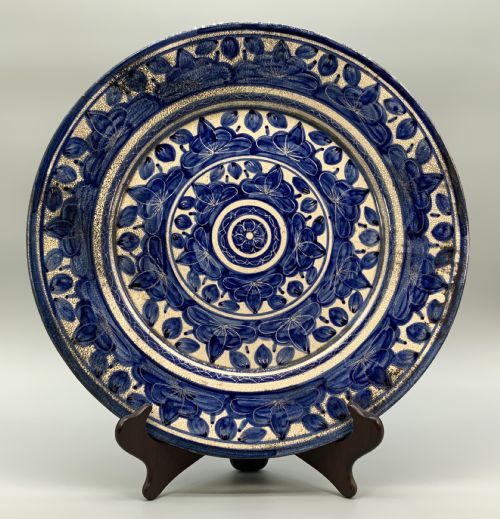
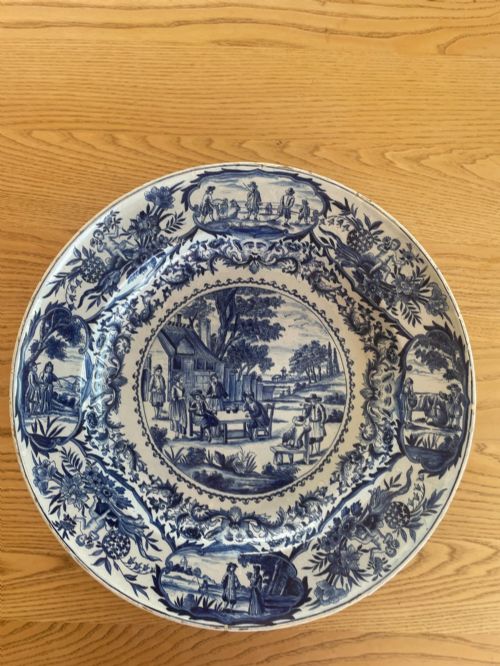


Cobalt Blue Delftware Plate
A cobalt blue delftware plate is a tin-glazed earthenware vessel carrying painted blue decoration, sought after for its historic blue-and-white palette and surface character.
Cobalt Blue Delftware Plate
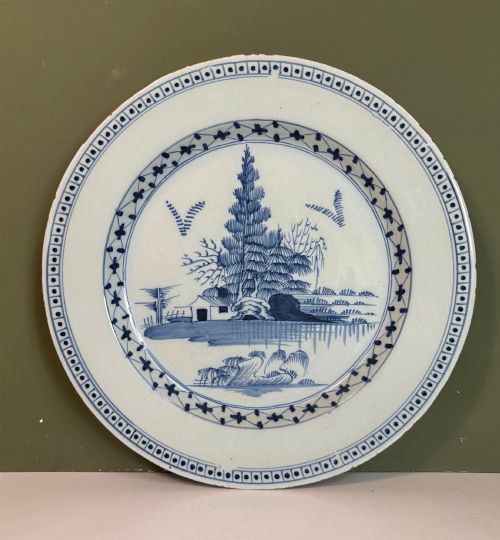
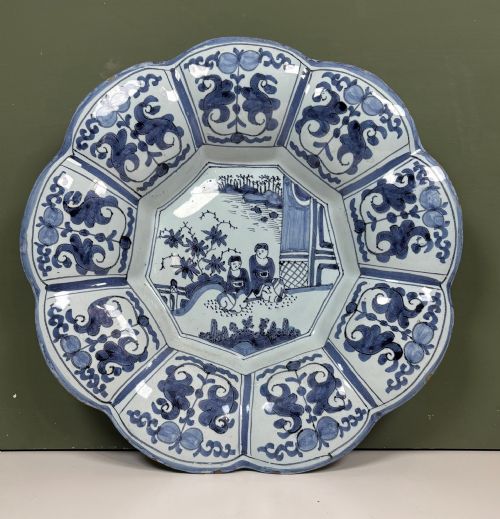
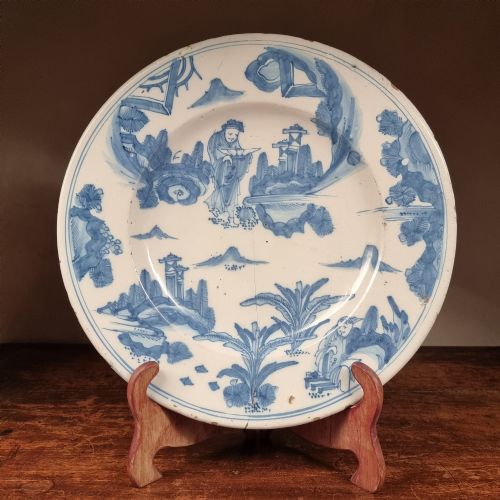
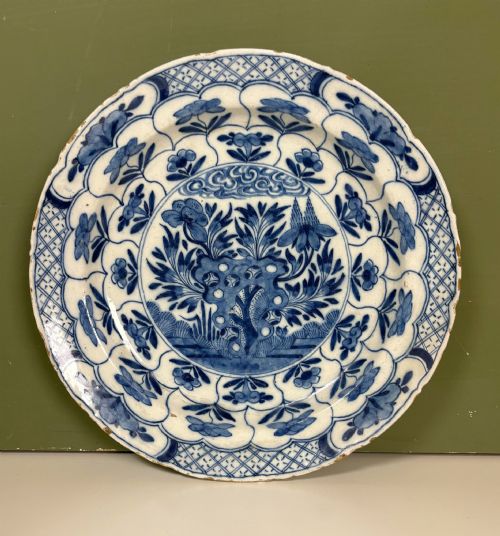
A cobalt blue delftware plate brings centuries of ceramic history to a collection, appearing primarily as chargers, shallow bowls, and decorative plates from the seventeenth, eighteenth, and nineteenth centuries.
The versions most commonly met on this page originate from English and Dutch potteries, spanning Georgian and Dutch Baroque styles alongside influences such as Moorish and Chinoiserie designs.
These pieces function as striking wall displays or cabinet centerpieces, carrying the characteristic blue pigments on a tin glaze that define the aesthetic of early earthenware.
How they were made
Potters shaped earthenware bodies before coating them in an opaque tin glaze that created a smooth, white canvas for the painting.
Cobalt pigment or cobalt oxide was then applied directly to the unfired or raw glaze, sinking into the surface during the firing process to produce the deep blue tones.
Listings span seventeenth-century works to nineteen-forties Moorish style pieces, executed primarily in earthenware with tin glaze and cobalt pigment.
What varies in quality
The finesse of the brushwork dictates the visual strength of the piece, ranging from hurried abstract flourishes to meticulously detailed botanical and figurative scenes.
The uniformity and coverage of the tin glaze across the earthenware body affect the overall lustre and depth of the finished surface.
De Witte Ster
The Cobalt Blue Delftware Plate Glossary
- Tin Glaze
- An opaque white ceramic glaze containing tin oxide, which provides the pale background essential for traditional delftware painting. This coating absorbs the cobalt pigment during firing to create soft, slightly blurred outlines.
- Charger
- A large decorative plate traditionally intended for display on a sideboard or wall rather than for everyday dining. These sizeable dishes often showcase the most ambitious painted scenes.
- Cobalt Oxide
- A mineral compound utilised by potters to achieve the intense blue coloration characteristic of these wares. It reacts with the tin glaze during the high-temperature kiln process.
- Earthenware
- A porous, low-fired ceramic body that forms the structural base of all delftware before the application of the glaze. It requires careful handling due to its softer composition compared to porcelain.
- Kraak
- A style of imported Chinese porcelain featuring panelled decoration that heavily influenced early European delftware painters. Dutch workshops frequently adapted these motifs for local plates and chargers.
Cobalt Blue Delftware Plate: Frequently Asked Questions
How do I hang a delft charger?
Displaying a large plate on a wall requires a properly fitted wire hanger that distributes the weight evenly across the rim without putting pressure on the earthenware body.
Ensure the wall fixing is secure, as these historic chargers carry significant weight compared to modern ceramics.
Can I use these plates for food?
Historic tin-glazed earthenware possesses a porous ceramic body and historic glaze layers that absorb liquids and are generally unsuited for modern culinary use.
These pieces are best reserved for visual appreciation, cabinet display, or wall mounting rather than dining.
How do I clean an old plate?
Dust the surface gently with a dry, soft cloth to remove everyday particles without introducing moisture to the porous earthenware beneath the glaze.
Avoid soaking or using abrasive cleaning agents, which can damage the historic tin-glazed finish.
How do I date a delft plate?
Dating relies on examining the thickness of the earthenware body, the tone of the tin glaze, and the style of the cobalt blue painting.
Earlier seventeenth-century examples often display heavier bodies and distinct pigment depths compared to later eighteenth-century Georgian productions.