

Cobalt Blue Ceramic Pair
These cobalt blue ceramic pair options unite matched dual forms across centuries of global pottery traditions, offering balanced visual symmetry for interior display.
Cobalt Blue Ceramic Pair
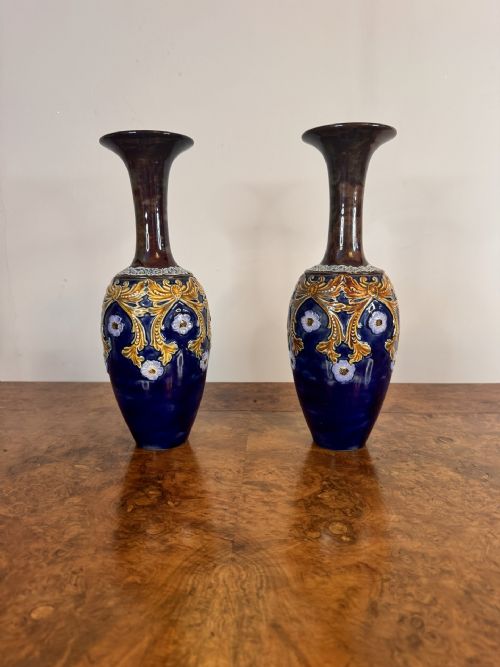
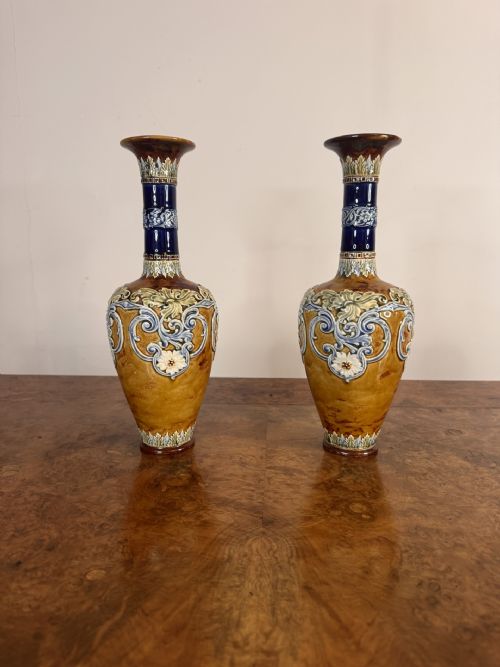
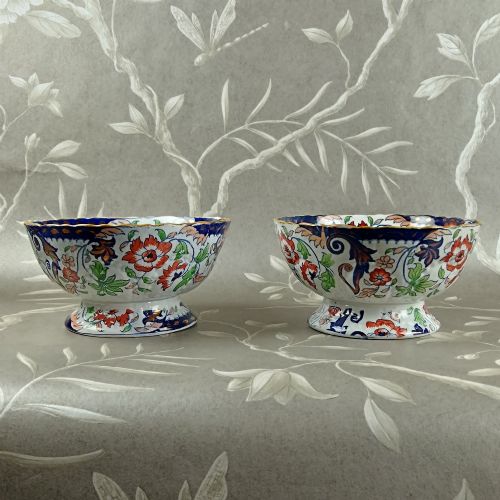
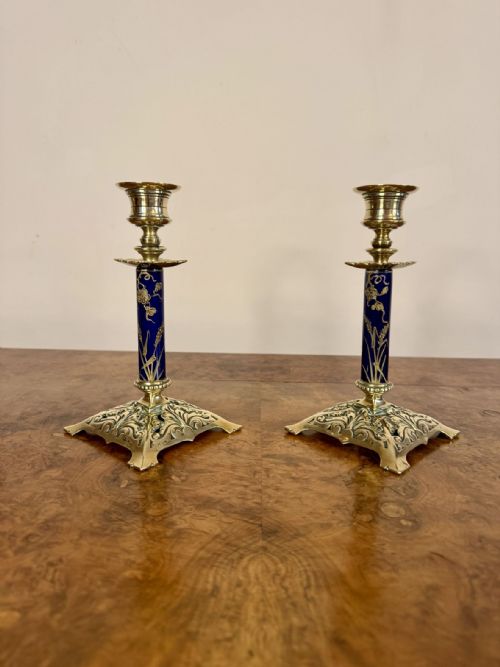
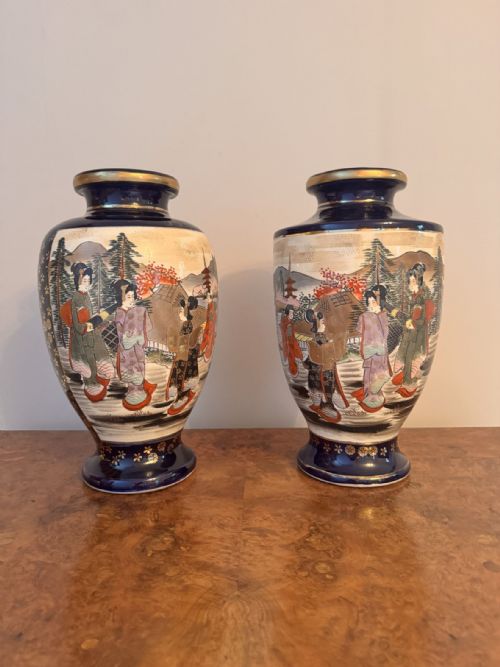
A cobalt blue ceramic pair brings together dual manufactured vessels or figures unified by striking deep blue pigments, frequently manifesting as matching vases, plates, jars, and table lamps. These matched items derive from diverse historical traditions spanning Georgian English factories, French porcelain workshops, and nineteenth-century Japanese kilns.
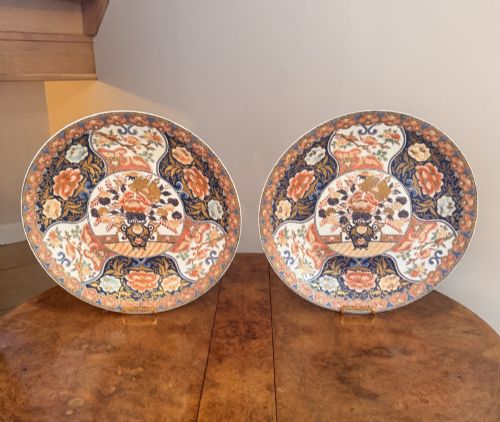
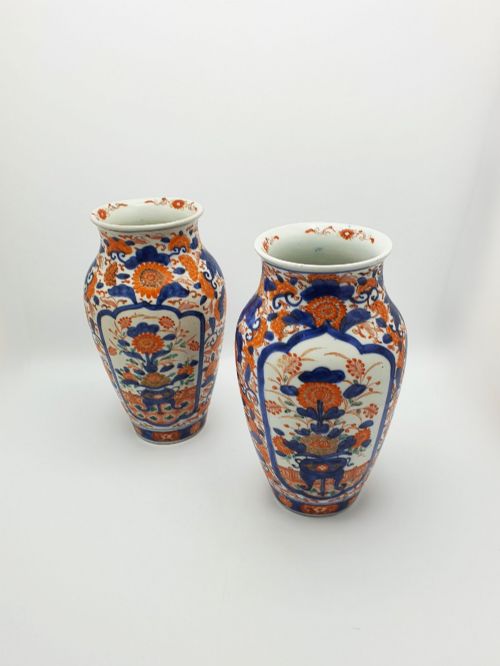
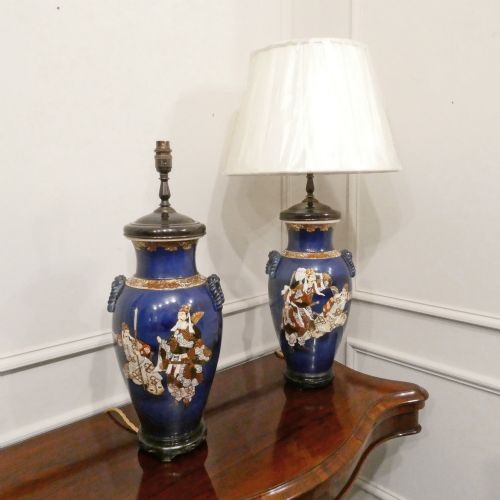
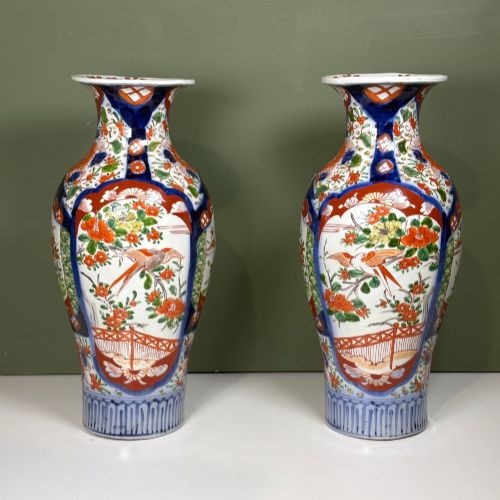
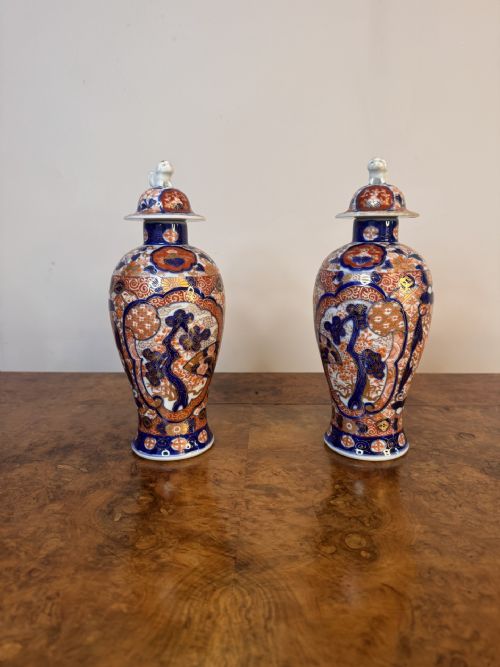
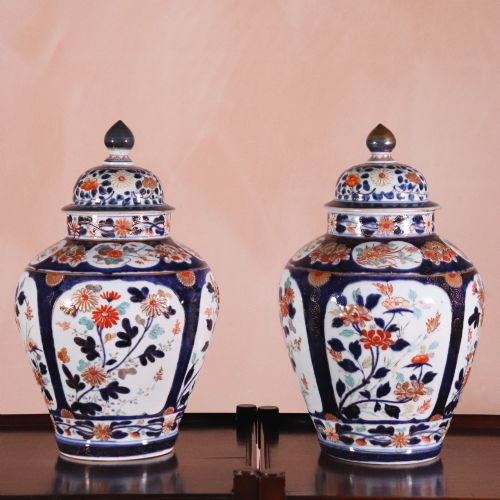
Japanese Imari and Arita pieces dominate the selections, alongside English earthenware figures, Staffordshire pottery, and French faience. Buyers encounter these matching sets configured as lidded jars, decorative chargers, ginger jars, and table lamps adapted for modern electrical wiring.
Dating ranges from the early eighteenth century through the Victorian era and into the early twentieth century, capturing distinct shifts in international ceramic decoration. Each matched set demonstrates the historical demand for symmetrical ornament across European drawing rooms and East Asian export markets.
Materials and production methods
Makers utilised porcelain, earthenware, and ironstone as structural bases, applying cobalt blue pigments beneath or over transparent glazes before high-temperature firing. This mineral oxide withstood intense kiln heat without losing its characteristic deep blue hue.
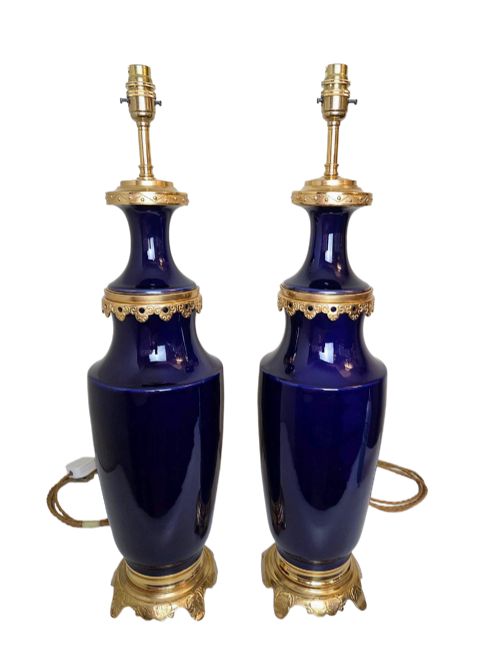
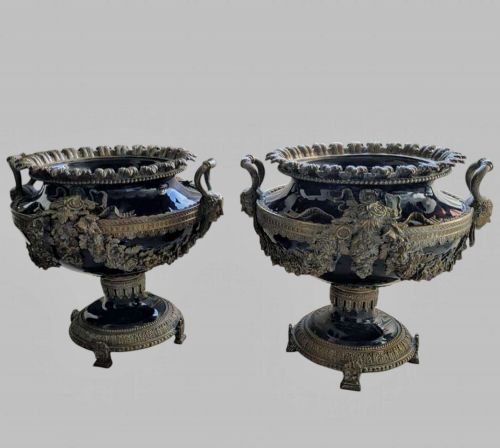
Gilding, gold leaf, and enamel additions frequently overlaid the fired ceramic surfaces to introduce contrasting metallic highlights and intricate floral panels. Brass mounts, gilt bronze trim, and fitted wooden lids completed many of the decorative table lamps, urns, and jars.
Cobalt Blue Ceramic Pair Retail Price Guide 2026
Typical asking prices for cobalt blue ceramic pair among the pieces listed under this phrase on Sellingantiques today, from the lower quarter to the upper quarter. They describe what is for sale here now, not the wider market.
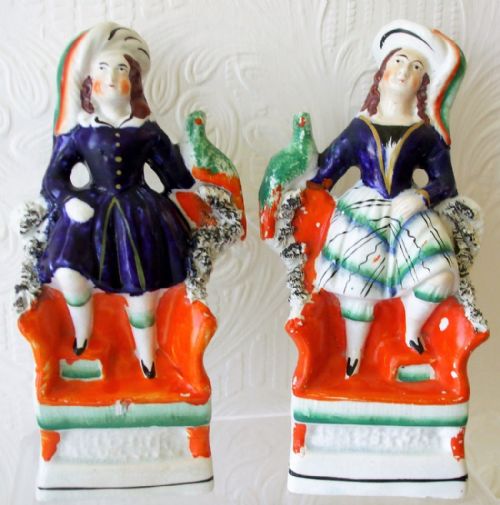
Staffordshire potters modelled spirited poodles with sculpted puppies alongside theatrical performers like Ben Backstay in bright cobalt blue.
Evaluating craftsmanship and execution
Hand-painted precision separates standard production from exceptional examples, observable in the crispness of floral panels, bird motifs, and figural scenes. Cobalt pigment saturation should remain deep and uniform across both matched items without muddy bleeding into surrounding glazes.
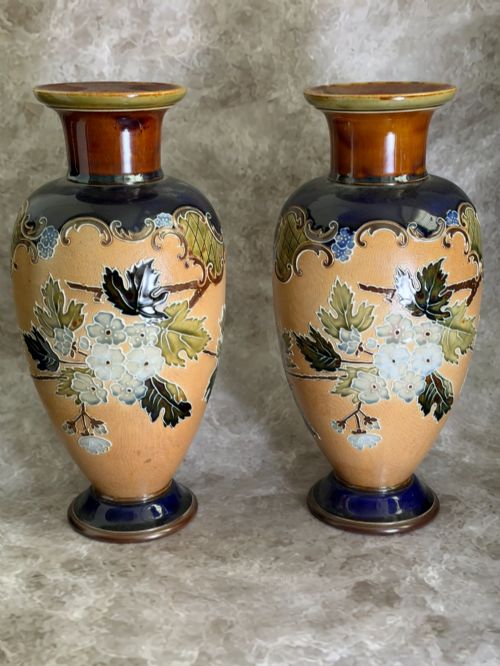
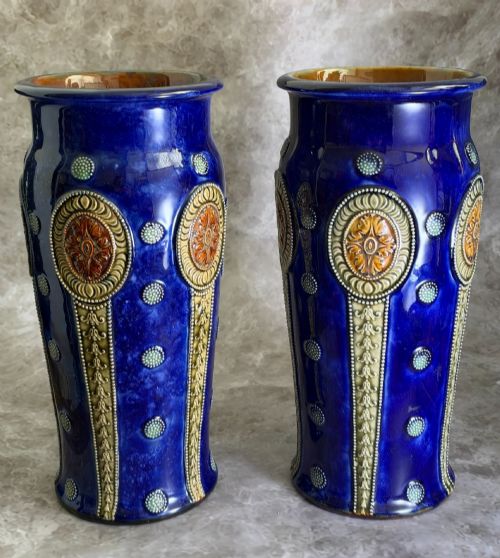
The integrity of secondary materials, such as fire-gilt bronze mounts, hand-tooled brass fittings, and intact original covers, distinguishes superior pairs from later replacements. Potteries known for rigorous standards, such as Doulton Lambeth or Worcester, exhibit superior potting weight and refined throwing techniques.
Doulton Lambeth·Flight Barr And Barr·Fourmaintraux Courquin·Jacob Petit
The Cobalt Blue Ceramic Pair Glossary
- Imari
- A style of Japanese porcelain decorated in underglaze blue, iron red, and gold, named after the port from which these goods were shipped. These designs feature intricate floral and geometric panels.
- Charger
- A large decorative plate intended for display on a wall or sideboard rather than for dining use. Many Japanese and English examples measure substantial diameters.
- Faience
- European tin-glazed earthenware, often produced in France and decorated with colourful enamel paints over an opaque white glaze. This technique creates a smooth canvas for painted scenes.
- Ironstone
- A type of durable commercial earthenware patented in the nineteenth century to imitate porcelain. It resists chipping heavily and supports rich underglaze blue printing.
- Bleu de Roi
- A deep, rich royal blue enamel ground colour developed at the Sèvres porcelain factory and later adopted by other European makers. It provides a dark, uniform backdrop for gilded highlights.
Cobalt Blue Ceramic Pair: Frequently Asked Questions
What defines an antique cobalt blue ceramic pair?
These pieces consist of two matching ceramic objects decorated in deep cobalt blue pigment, created as a coordinated set for symmetrical display.
They encompass diverse forms including vases, plates, candlesticks, and jars originating from English, French, and Japanese kilns.
How were these ceramic pairs used historically?
Historical interiors utilised matched pairs of vases, chargers, and urns to flank mantelpieces, anchor sideboard arrangements, or decorate formal drawing rooms.
Many surviving pieces have since been converted into functional table lamps while retaining their original decorative ceramic bodies.
How can I distinguish Japanese Imari from European pieces?
Japanese Imari porcelain typically combines underglaze cobalt blue with iron red enamel and gold detailing on a white porcelain body.
European factories often imitated these distinct East Asian export motifs upon local earthenware, ironstone, or soft-paste porcelain.
Are these ceramic pairs always identical?
Matched pairs from historical periods were hand-thrown and hand-painted, meaning minor variations in dimension, weight, and brushwork naturally occur between the two pieces.
Despite these small artisanal differences, the overall design, colour palette, and decorative scheme correspond precisely.