

Clear Glass Spirit Glass
These clear glass spirit glass pieces range from Georgian dram glasses to Edwardian decanters, prized for their weight and clarity.
Clear Glass Spirit Glass
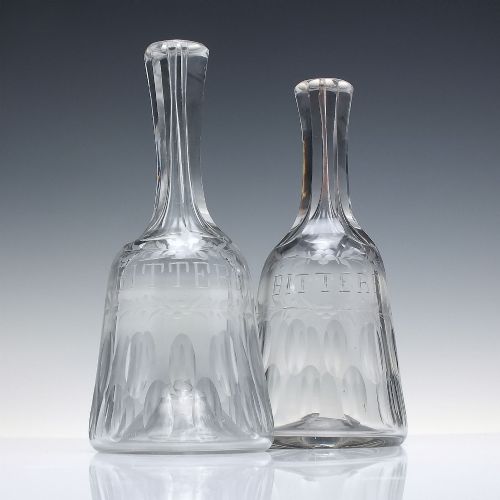
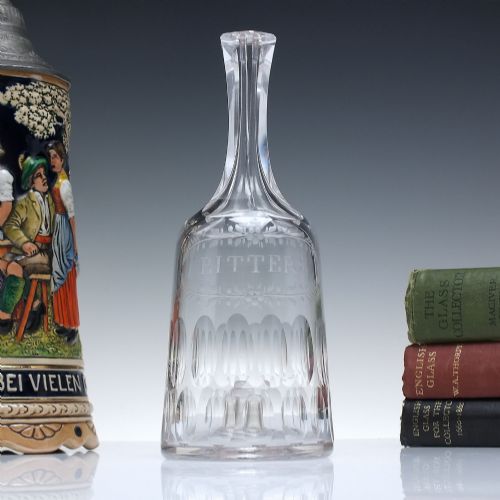
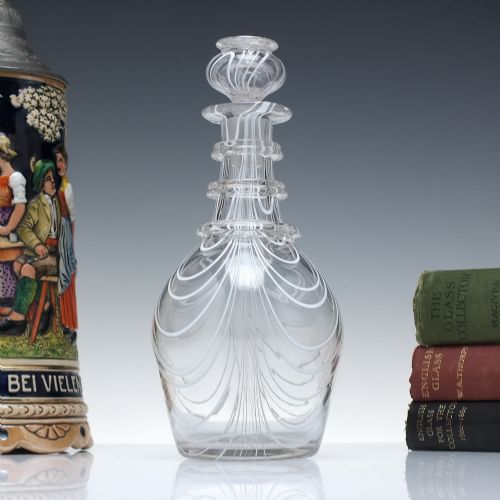
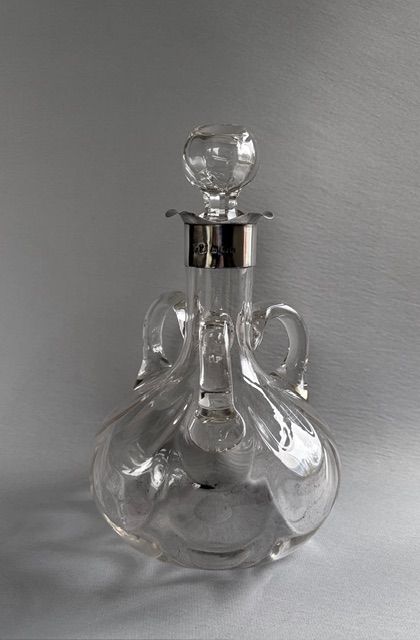
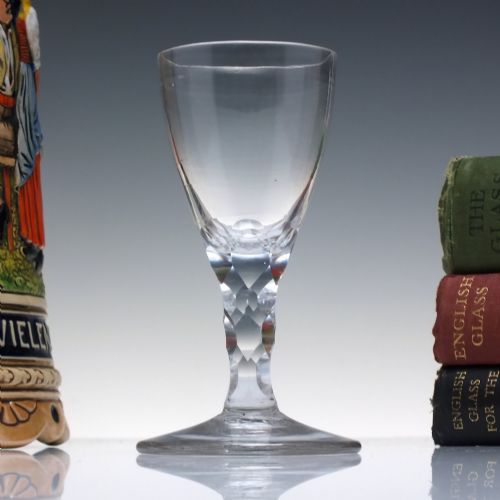
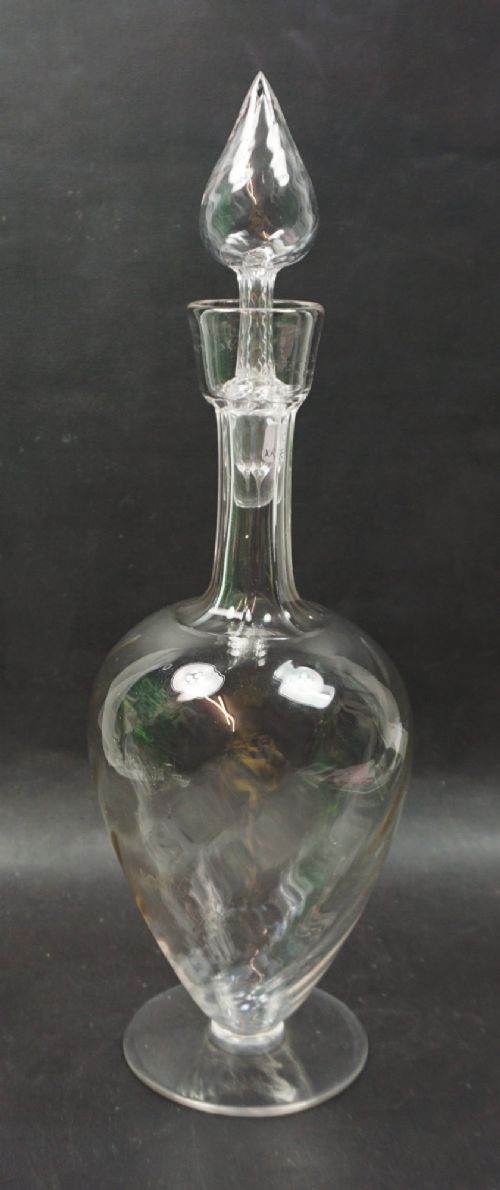
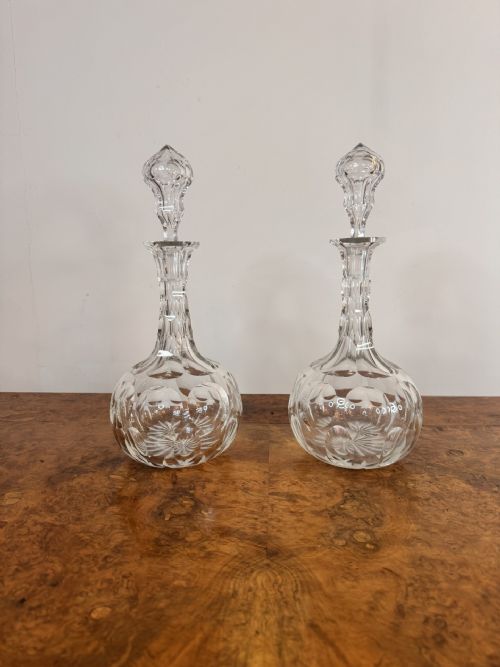
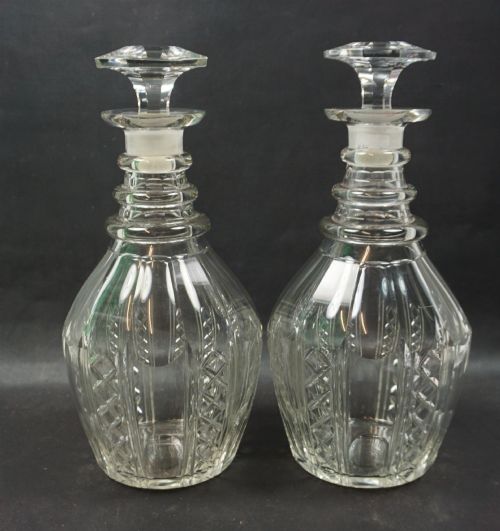
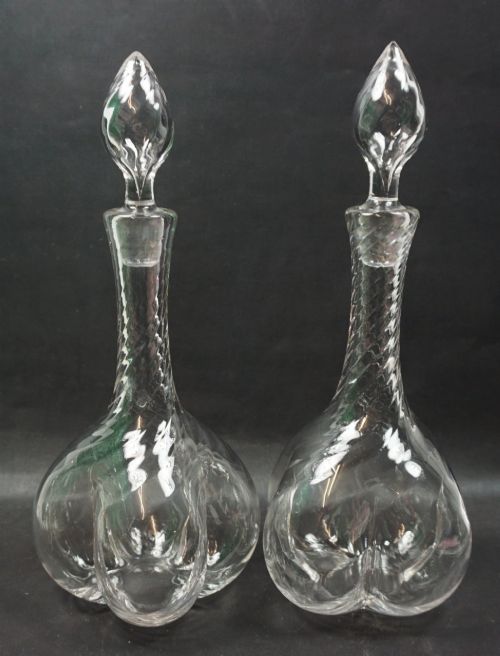
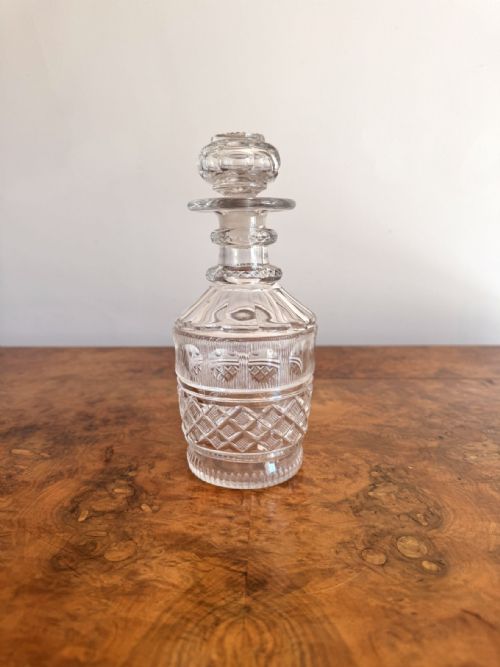
When you search for clear glass spirit glass, you encounter vessels designed for storing and serving spirits like whisky, gin, and bitters. The selection spans distinct forms, including small dram glasses, personal spirit decanters, and larger barware vessels.
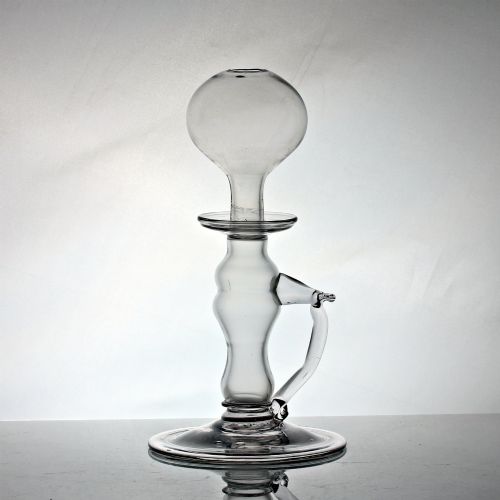
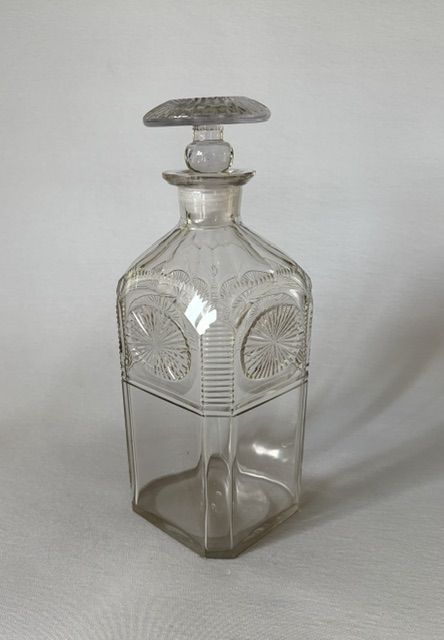
Georgian examples feature simple dram glasses and engraved sugar loaf bottles alongside tall oil lamps and heavy decanters. Later Victorian and Edwardian iterations introduce silver mountings, hip flasks, and coordinated decanter sets.
The objects derive from periods reaching back to the eighteenth century, extending through Regency, Victorian, and Edwardian eras into the early twentieth century. These drinking glasses and decanters reflect changing social habits around spirits and hospitality over two centuries.
How they were made
Makers utilised lead glass and crystal, shaping material through blowing into moulds or free-blowing by hand. Artisans incorporated lead oxide into the melt to increase density and refractive power, producing the characteristic brilliance of these vessels.
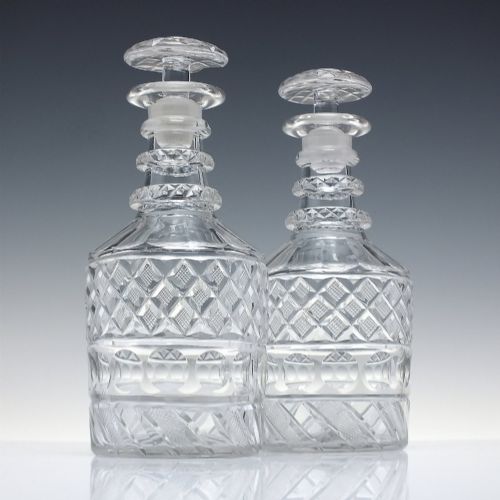
Decoration relied on wheel cutting, engraving, and facet cutting to exploit the material's thickness and clarity. Some pieces combine the clear glass with sterling silver mounts or silver plate collars, joining vitreous bodies with metalwork.
Clear Glass Spirit Glass Retail Price Guide 2026
Typical asking prices for clear glass spirit glass among the pieces listed under this phrase on Sellingantiques today, from the lower quarter to the upper quarter. They describe what is for sale here now, not the wider market.
Eighty-year-old gin still tastes remarkably bright when poured from an eighteenth-century sugar loaf bottle.
What varies in quality
The standard of a clear glass spirit glass rests upon the purity of the metal and the crispness of any wheel-cut decoration. Superior examples display high light refraction without cloudiness or heavy bubbles in the substance.
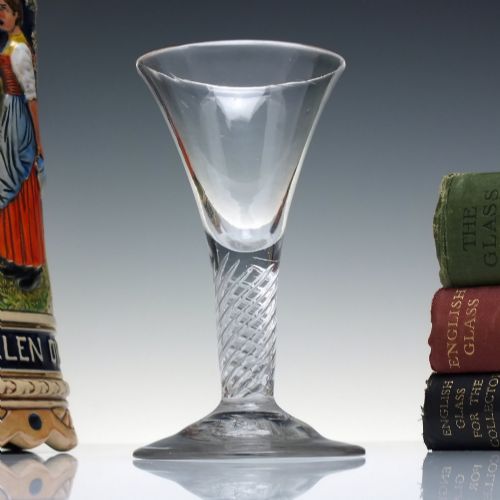
Hand-finished details, such as finely engraved botanical motifs or precise multi-spiral air twists within the stem, separate finer items from standard production. The integration of mounts, whether sterling silver or silver plate, also distinguishes the work.
James Powell·Walsh & Walsh·Atelier of James Giles·Baccarat·Rene Lalique
The Clear Glass Spirit Glass Glossary
- Dram glass
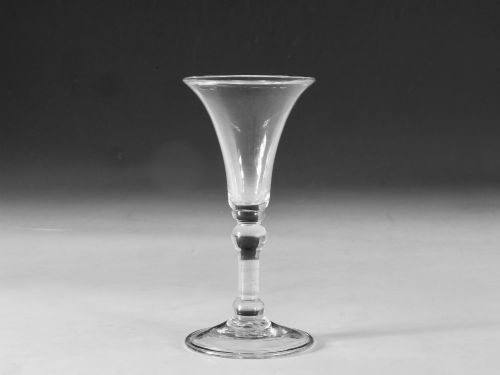
- A small drinking vessel intended for a single measure of whisky, gin, or other spirits. These often date to the Georgian period and sit on folded or heavy feet.
- Prussian decanter
- A form of spirit decanter characterised by a body that tapers wider toward the base. This shape provided stability on shipboard use and during carriage.
- Air twist
- A decorative optical effect inside a glass stem created by drawing out elongated air bubbles during pulling. This technique appears primarily in eighteenth-century drinking glasses.
- Bitters bottle
- A small container utilised for dispensing aromatic bitters to flavour cocktails and spirits. Eighteenth-century examples often adopt a sugar loaf silhouette.
Clear Glass Spirit Glass: Frequently Asked Questions
Can I still use these glasses?
Many people enjoy using these historical dram glasses and decanters for serving spirits on special occasions. The lead glass is durable enough for careful modern handling.
Examine each piece for internal residue or previous repairs before deciding to use it for beverage service.
How do I date a glass piece?
Inspect the base for pontil marks, where the glassblower's iron was snapped off, which often indicate earlier hand-blown manufacture. Pontil scars are typically ground and polished smooth on nineteenth-century and later work.
Stylistic cues, such as heavy cut glass patterns or silver hallmarks, provide reliable chronological markers for Victorian and Edwardian items.
What is lead crystal?
Lead crystal is glass containing a significant percentage of lead oxide, which adds weight, brilliance, and softness for easier cutting. This composition allows artisans to achieve deep, sharp facets.
Objects made from lead crystal ring clearly when struck gently and disperse light into spectral colours.