



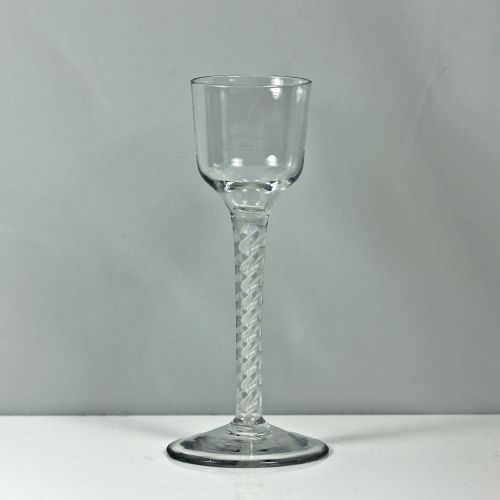
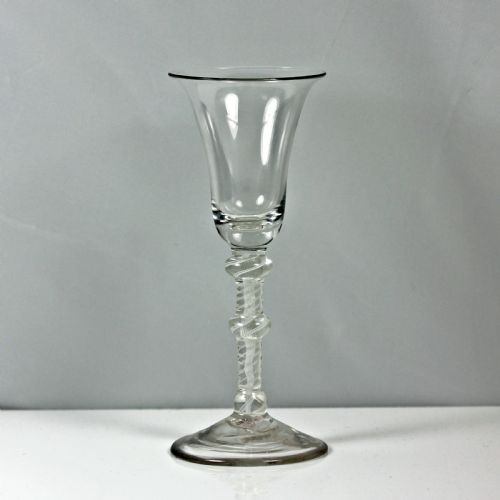


Clear Glass Cordial Stemware
Clear glass cordial stemware delivers the slender proportions and small bowls designed for potent spirits, spanning the eighteenth and nineteenth centuries.
Clear Glass Cordial Stemware
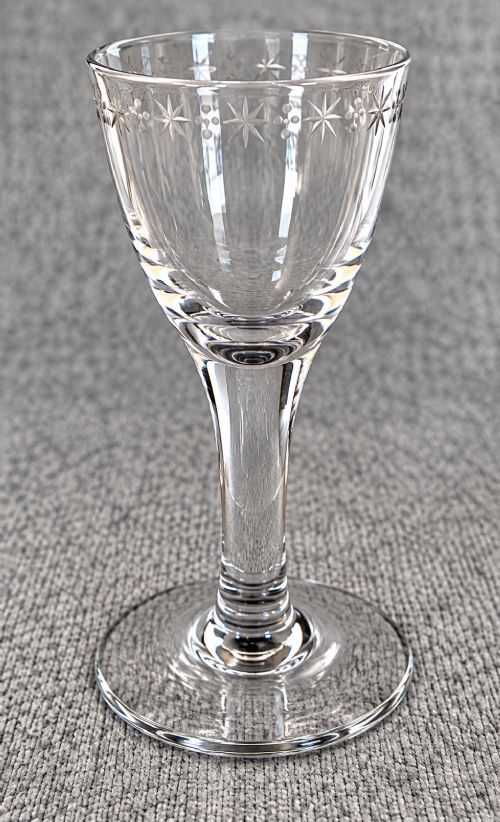
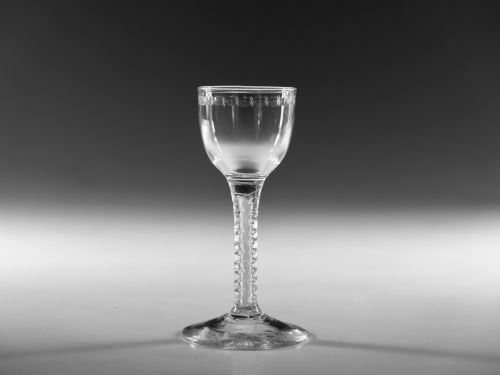
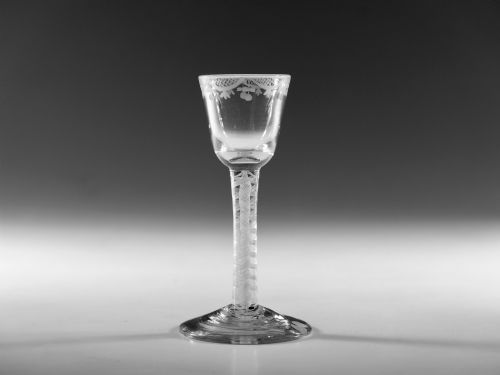
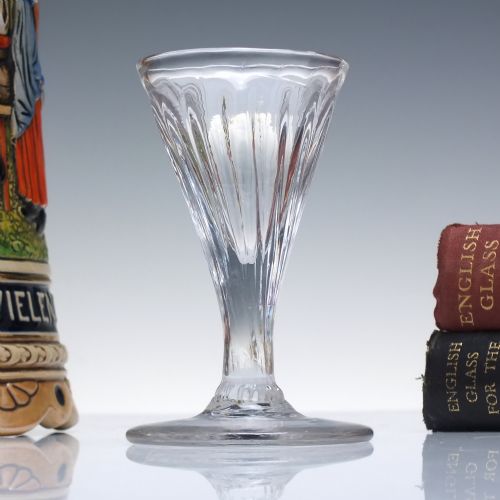
Clear glass cordial stemware encompasses small drinking vessels created for spirits, drams, gin, and ratafia across the eighteenth and nineteenth centuries. You encounter Georgian balusters, dram glasses, and Regency sherry flutes among these listings.
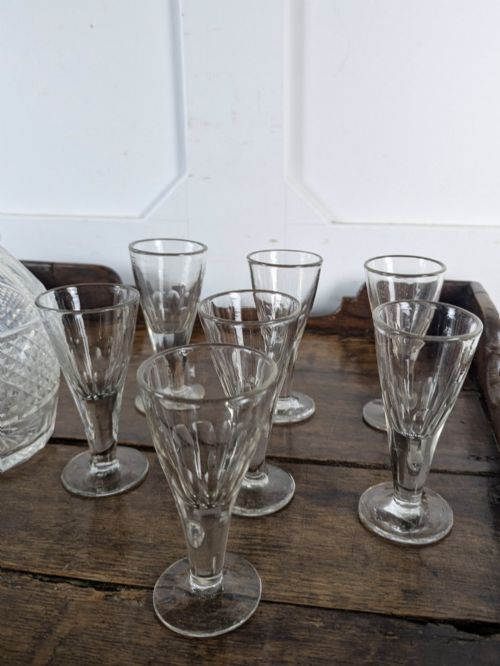
The eighteenth-century examples dominate the selection, featuring narrow bowls paired with heavy feet, folded bases, or complex internal stems. Victorian thumb-cut sherry flutes and nineteenth-century hand-blown glasses represent the later iterations on this page.
Materials and construction methods
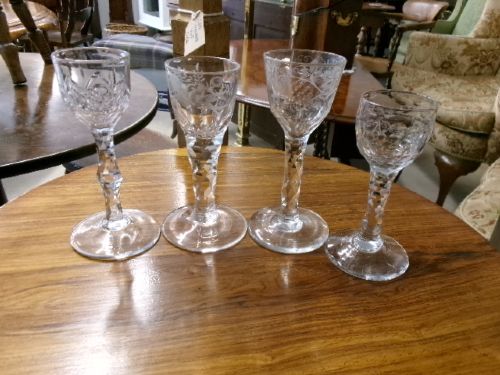
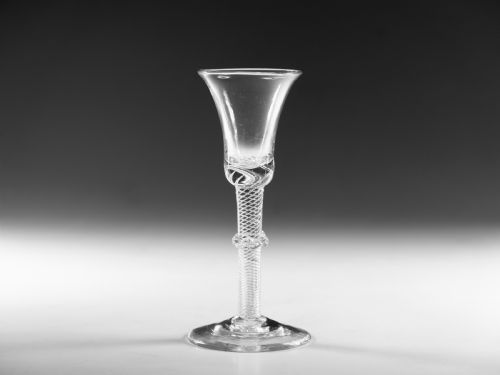
The pieces utilise lead glass, lead crystal, and flint glass, shaped by hand-blowing and rib-moulding techniques. Craftsmen formed internal twists by trapping air or white enamel threads inside the molten stem during fabrication.
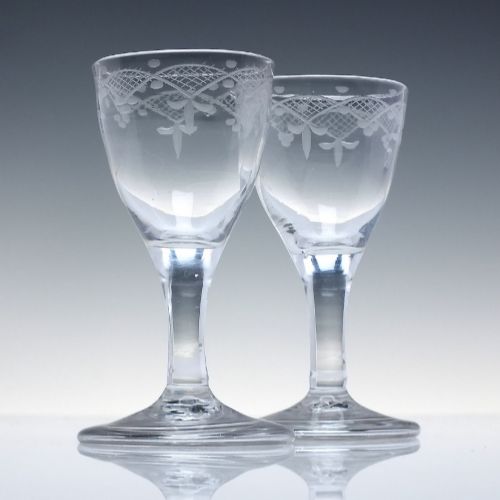
Makers added decorative detail through wheel engraving, etching, and facet-cutting directly onto the bowls and stems. Bases frequently incorporate folded feet to reinforce the rim against chipping during daily use.
Toastmaster glasses encouraged heavy drinking by omitting a foot, forcing guests to empty their dram in a single continuous gulp.
Distinctions in craftsmanship and form
Quality rests upon the precision of the stem formation and the balance of the vessel between bowl and foot. Complex double-series opaque twists and clean baluster profiles demonstrate superior execution by the glassblower.
The clarity of the metal and the crispness of the facet-cutting or engraved decoration distinguish finer items from simpler production pieces. Well-proportionate balustroid forms and intact folded feet elevate the integrity of individual glasses.
The Clear Glass Cordial Stemware Glossary
- Baluster stem
- A heavy, swelling stem shape derived from architectural supports popular in early eighteenth-century drinking vessels. This form provides substantial weight near the middle of the stem.
- Air twist
- A decorative stem feature created by drawing out elongated air bubbles trapped within the molten glass. These bubbles form spiralling threads running down the length of the stem.
- Opaque twist
- A stem containing threads of white enamel glass twisted into spiral patterns. Makers produced single and double series variations.
- Folded foot
- A base edge doubled over underneath to create a thickened, rounded rim. This technique adds structural strength to the perimeter of the foot.
- Ratafia glass
- A tall, extremely narrow glass designed for sweet fruit liqueurs. The slender bowl required minimal volume for potent contents.
Clear Glass Cordial Stemware: Frequently Asked Questions
What is clear glass cordial stemware?
These pieces comprise small historical drinking vessels intended for concentrated spirits, cordials, and fortified wines. The group centres on eighteenth-century dram and wine glasses alongside nineteenth-century sherry flutes.
Craftsmen shaped them from lead glass and flint glass with specialised stems designed for holding small volumes. Collectors prize their delicate proportions and varied internal stem formations.
How were these glasses used historically?
People utilised these vessels for consuming potent beverages such as gin, drams of spirits, ratafia, and sherry after meals. The compact bowl sizes suited the high alcohol content and expensive nature of these drinks.
Guests held them by the stem during formal gatherings and toasts. The sturdy feet and thick metal helped prevent tipping on polished wooden tabletops.
How do you date eighteenth-century stemware?
Dating relies on observing the combination of bowl shape, foot construction, and stem manufacturing technique. Baluster forms and folded feet typically point toward the earlier decades of the seventeen hundreds.
Air twists and opaque twists succeeded these heavier styles through the middle and later periods of the eighteenth century. Facet-cut stems emerge predominantly toward the end of that century.
How should I live with antique glass?
Display these glasses in stable cabinets away from direct sunlight and heavy vibrations. Hand wash them carefully in lukewarm water without harsh detergents to protect the historic metal.
Avoid extreme temperature changes when cleaning or handling the glass. Proper placement allows you to appreciate the optical qualities and tactile weight of the material daily.