
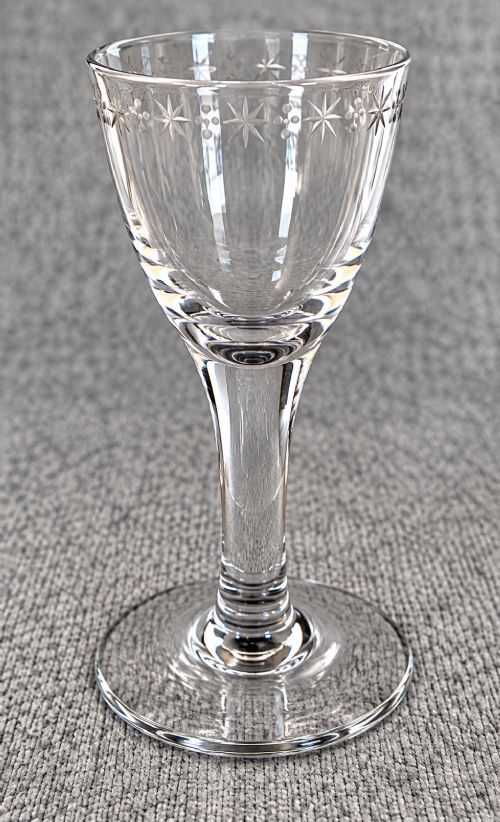
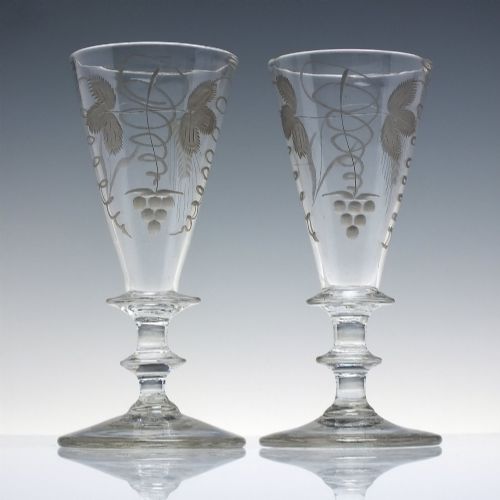
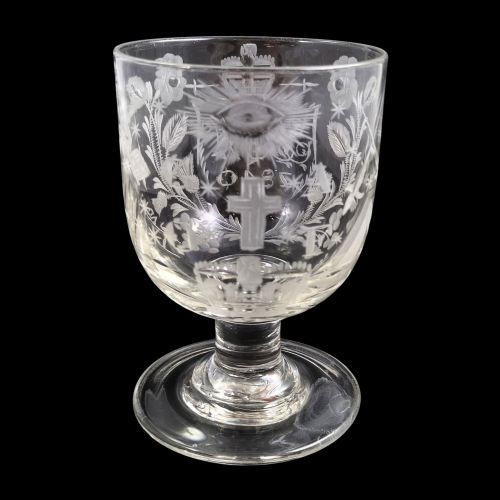
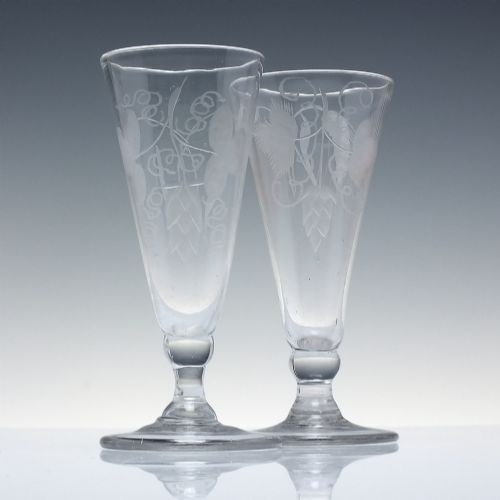
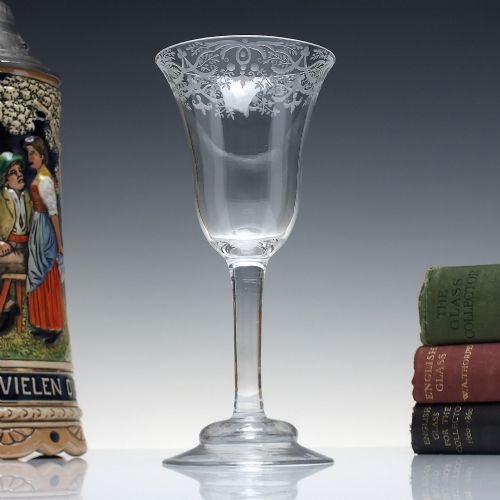
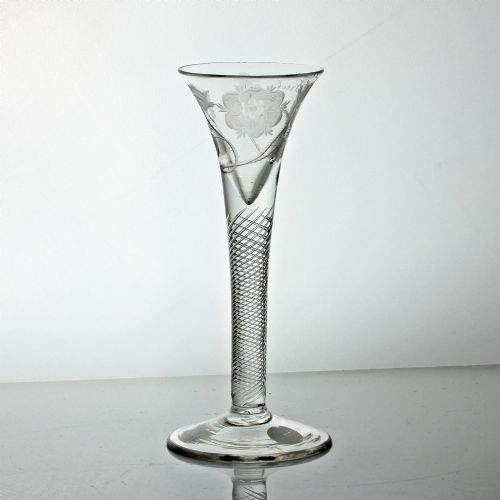


Clear Engraved Glass Goblet
A clear engraved glass goblet brings weight and a tactile presence to a table, offering a direct link to eighteenth and nineteenth-century social rituals.
Clear Engraved Glass Goblet
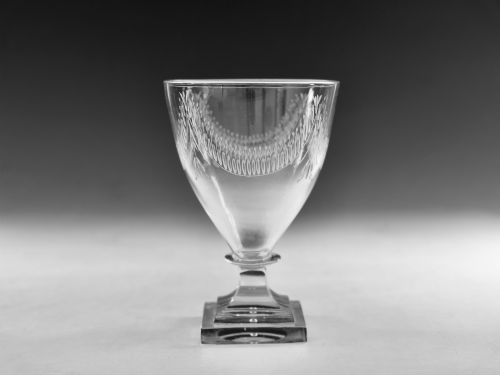
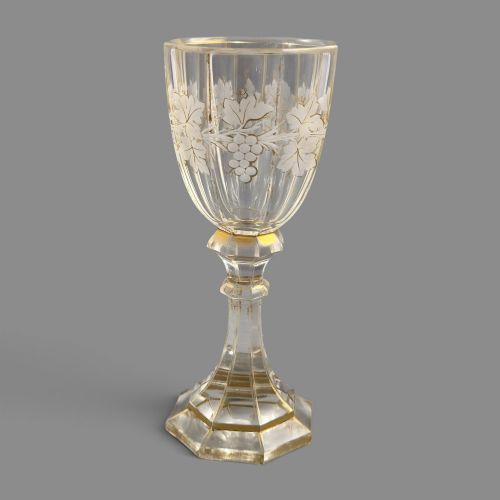
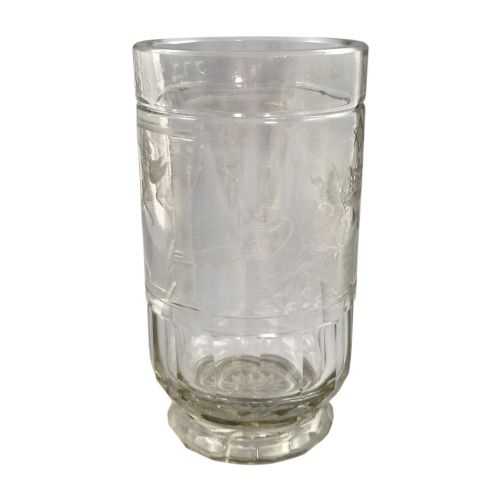
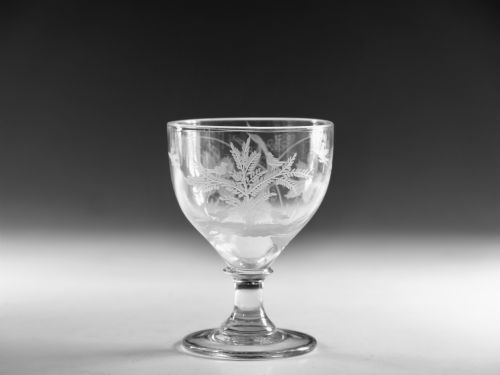
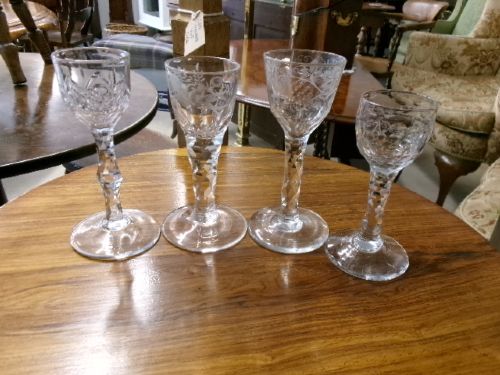
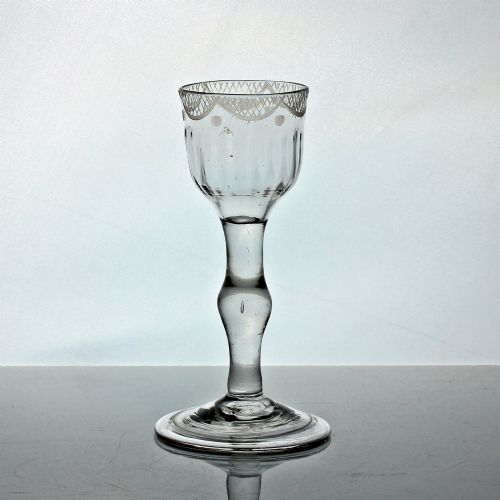
A clear engraved glass goblet encompasses drinking vessels spanning the Georgian, Victorian, and Edwardian periods, including heavy rummers, dram glasses, and ceremonial beakers. The selections here range from eighteenth-century baluster stems and twist stems to nineteenth-century ceremonial armorial pieces and robust ale glasses.
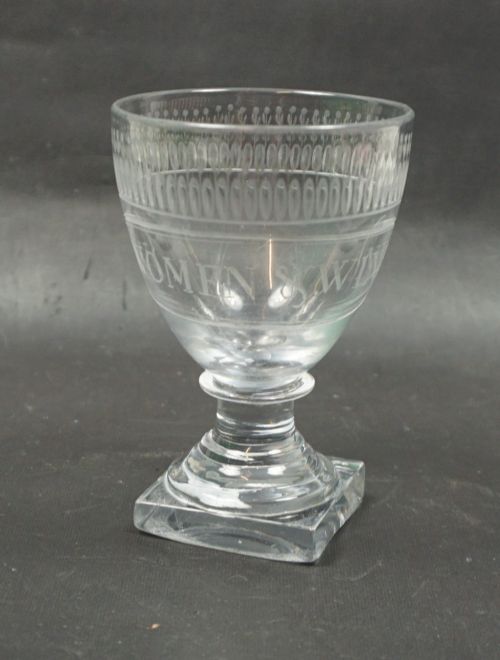
Buyers encounter variations such as square-based rummers, faceted stemmed drinking glasses, and large serving vessels decorated with hops and barley. English and Bohemian origins dominate the selection, showing distinct regional approaches to wheel-engraving and cutting.
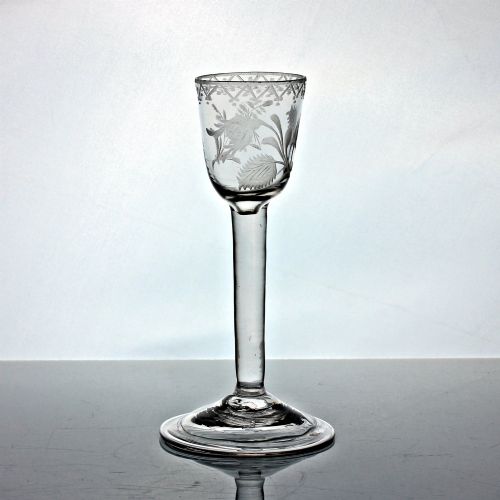
The form functions equally well as a decorative object or a usable vessel, carrying detailed inscriptions, armorial bearings, and floral motifs that reflect the social habits of past centuries.
Materials and Technique
The pieces are formed from lead glass, lead crystal, and flint glass, providing the heavy refractive quality necessary for crisp wheel-engraving. Artisans utilised techniques including air twists, opaque twists, and faceted stems to support bowls decorated with wheel-cut motifs, gilding, and enamel.
Moulding and free-blowing methods established the basic forms, such as ogee bowls and nut-moulded stems, before skilled hands applied detailed pictorial or botanical engravings.
The selection includes lead glass and flint glass items spanning from the mid-eighteenth century through the Edwardian era.
Factors of Quality
Quality rests upon the clarity of the metal and the crispness of the wheel-cut engraving, where sharp detail distinguishes superior work from softer, worn execution. The proportion between bowl, stem, and foot dictates the visual balance of each piece.
The complexity of the manufacturing technique, such as multi-spiral air twists or intricate armorial designs, marks the distinction between standard utilitarian glassware and workshop pieces made for specific commissions.
Moser·Webb Corbett
The Clear Engraved Glass Goblet Glossary
- Rummer
- A large, sturdy drinking glass popular in the Georgian and Victorian periods, often used for ale, wine, or spirits. These vessels typically feature a short stem and a capacious bowl.
- Baluster stem
- A heavy, swelling stem shape found on eighteenth-century drinking glasses, often divided by nodes or collars. This form derived from contemporary furniture and silver design.
- Air twist
- An internal decorative spiral of tiny air bubbles trapped within the glass stem during manufacture. Makers created these by drawing and twisting heated glass rods.
- Ogee bowl
- An S-profile bowl shape curving outward at the rim and inward toward the base. This contour appeared frequently on eighteenth-century wine and ale glasses.
- Armorial engraving
- Heraldic crests or coats of arms wheel-engraved onto the surface of a glass. Such decoration usually denoted the commissioning family or a significant political alliance.
Clear Engraved Glass Goblet: Frequently Asked Questions
How were these glasses used historically?
These vessels served various social functions, from formal toasts involving armorial and commemorative goblets to everyday consumption of ale, wine, and spirits in domestic settings. Larger rummers and serving vessels occupied the centre of the table for communal pouring.
Specific designs corresponded to specific drinks, such as narrow ale glasses designed to preserve effervescence and heavy rummers built for robust toasts.
Can I use antique goblets for daily dining?
Many buyers choose to use sturdy lead crystal rummers and goblets for special dinners, as the heavy glass handles modern use well when washed by hand. Care must be taken to avoid thermal shock and abrasive cleaning materials.
Delicate eighteenth-century twist stems are better reserved for careful occasional use or display due to their age and slender construction.
How do I date a clear engraved glass goblet?
Dating relies on a combination of form, metal composition, and engraving style, such as the baluster stems of the early eighteenth century or the heavy square bases of the regency period. Pontil marks on the underside and the weight of the lead glass also offer clues to the era of manufacture.
Comparing stem construction, such as air twists versus faceted cutting, narrows the manufacturing window considerably.
What does Jacobite engraving signify?
Jacobite glasses feature secret symbols, portraits, or flora such as roses and oak leaves intended to show clandestine support for the exiled Stuart dynasty. These motifs allowed drinkers to voice political allegiance covertly during the eighteenth century.
Such pieces represent specific political factions and command particular interest from collectors of historical glassware.