



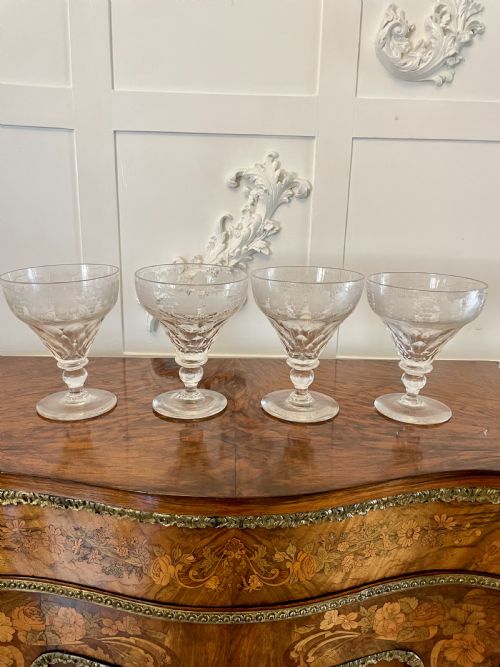

Engraved Wheel Cut Glass
Engraved wheel cut glass brings tactile depth to crystal, turning decanters, goblets and vases into miniature sculptures through patient abrasive work.
Engraved Wheel Cut Glass
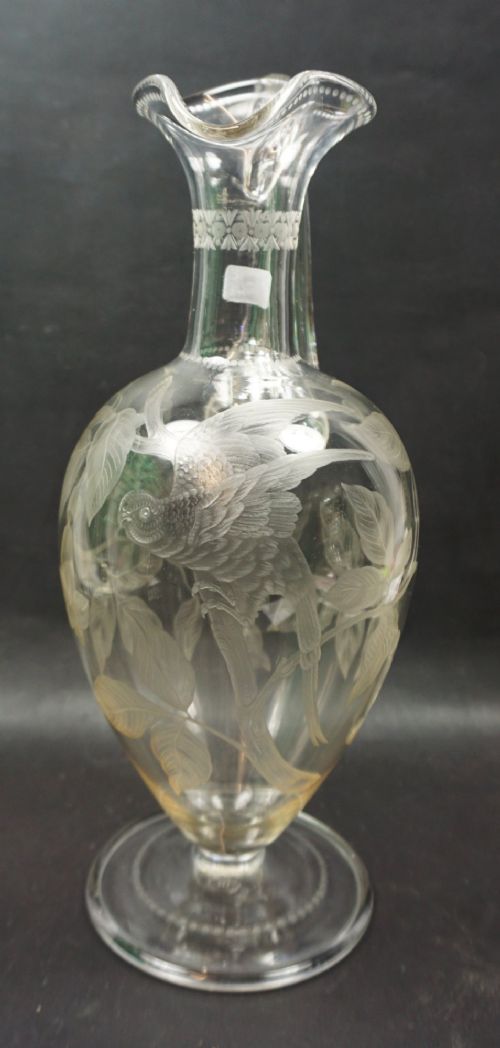
Engraved wheel cut glass comprises items shaped by rotating abrasive wheels against the surface to create sunken motifs, flutes and detailed scenes. These pieces range from eighteenth-century wine glasses and rummers to Victorian ewers, decanters and substantial Bohemian beakers.
You will frequently encounter Victorian and Edwardian examples on this page, alongside earlier Georgian plain stem and facet stem wine glasses. Forms span useful tableware like jugs and drinking services to decorative vases and ceremonial vessels.
Origins stretch across English workshops and continental centres, notably Bohemia, bringing together diverse regional tastes in cutting and intaglio decoration.
How they were made
Craftsmen used rotating small stone or copper wheels fed with abrasives and oil or water to grind away sections of glass. This technique allowed for deep facets, crisp linear cuts and softer intaglio imagery depicting figures, crests and florals.
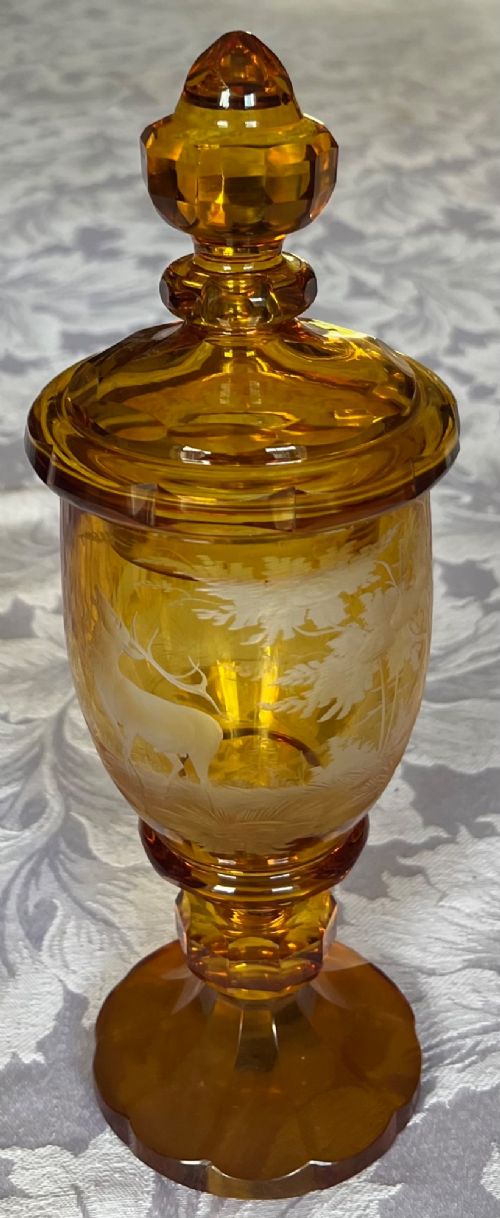
The material itself shifts between clear lead glass, heavy crystal and flash glass items where a thin layer of ruby or amber sits over a clear core. Wheel engraving on flash glass exposes the contrasting clear layer beneath, creating sharp definition.
Engraved Wheel Cut Glass Retail Price Guide 2026
Typical asking prices for engraved wheel cut glass among the pieces listed under this phrase on Sellingantiques today, from the lower quarter to the upper quarter. They describe what is for sale here now, not the wider market.
Listings include clear lead glass, ruby flash glass, and amber glass across Victorian, Edwardian, Georgian, and eighteenth-century periods.
What varies in quality
Quality rests on the crispness of the cutting and the stability of the vessel's form, separating hurried commercial output from ambitious studio work. Superior wheel engraving exhibits absolute control over depth and shading, transforming hard crystal into convincing drapery, flora or heraldry.
The weight and purity of the metal dictate the tactile feel of a piece, with high lead content allowing for sharper facets and a resonant ring. Surface polish within the cut grooves also marks the distinction; dull, unpolished troughs separate lesser items from finished exhibition pieces.
Stevens and Williams·Webb Corbett
The Engraved Wheel Cut Glass Glossary
- Intaglio
- A design carved into the surface of the glass rather than raised in relief. This technique creates a sunken, frosted appearance that catches light from behind.
- Wheel cut
- A method using rotating abrasive wheels to grind deep grooves, facets, and patterns into the vessel. It produces sharp edges and bright optical refractions.
- Flash glass
- A base glass dipped in a bath of coloured glass while molten to form a thin outer coating. Cutting through this outer layer reveals the contrasting clear glass beneath.
- Rummer
- A large, heavy-stemmed drinking glass popular in the eighteenth and nineteenth centuries. They were typically used for ale, cider or punch.
- Facet stem
- A stem featuring multiple flat, polished planes ground into the glass. This style was particularly favoured on English wine glasses during the eighteenth century.
Engraved Wheel Cut Glass: Frequently Asked Questions
How can I tell Georgian glass from Victorian?
Georgian drinking vessels often feature simpler, hand-drawn stems, lighter metal, and subtle, worn pontil marks underneath. Their engraving tends to be finer and shallower, executed with diamond points or light wheel work.
Victorian and later pieces usually feel heavier due to higher lead content, with deeper facet cutting and bolder, more mechanically precise wheel engraving across a wider array of colours.
Were these items meant for daily use?
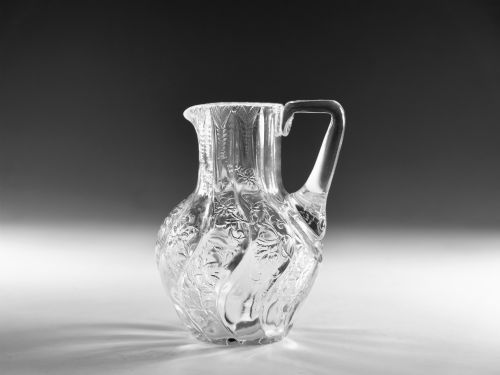
Many items on this page, such as pint-sized jugs, decanters and wine glasses, were produced for active dining and entertaining in their respective eras. Their thick lead glass construction offered genuine durability for the table.
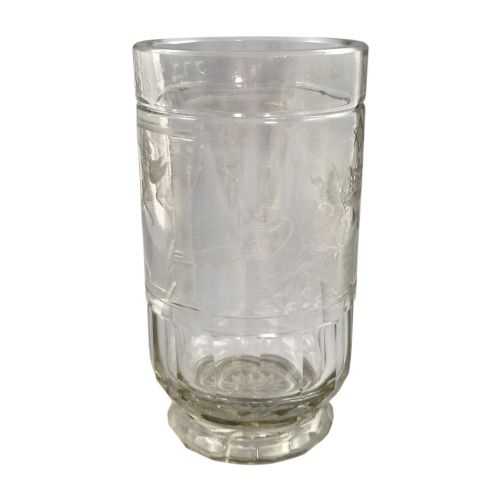
Larger ceremonial beakers, exhibition vases and flashed glass pieces, however, served primarily as display items or presentation pieces to mark significant occasions.
What is Jacobite engraving on glass?
Jacobite engraving refers to secret symbolic motifs applied to eighteenth-century drinking glasses in support of the exiled Stuart kings. You will often spot hidden portraits, roses with two buds, or oak leaves denoting allegiance.
These symbols allowed sympathizers to toast the king over the water during clandestine political gatherings without drawing open suspicion from authorities.