




Claw and Ball Stool
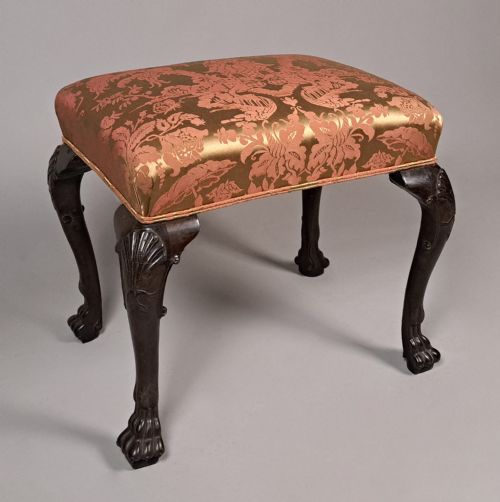
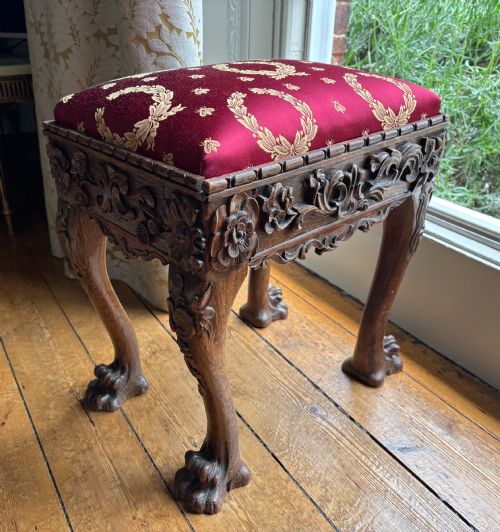
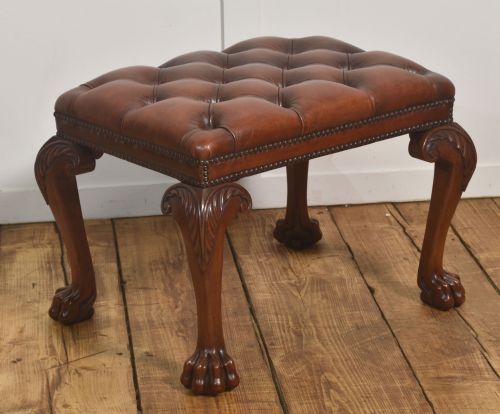
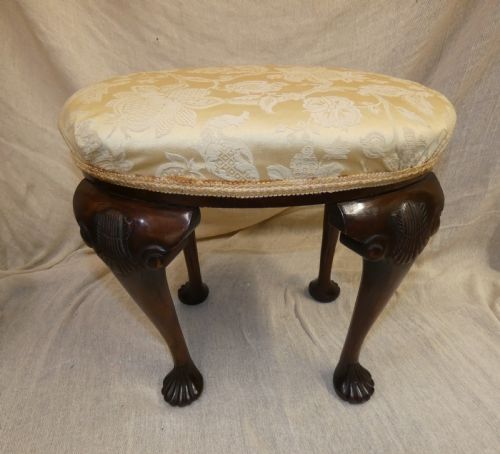
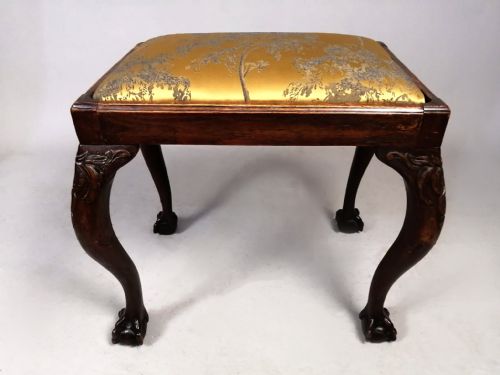
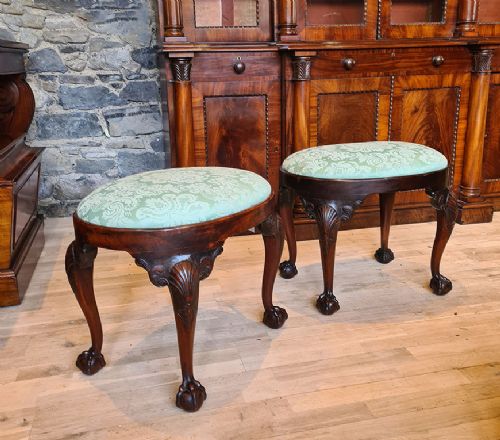
When you search for a claw and ball stool, you are looking at substantial seating supported by carved talon grips.
Claw and Ball Stool
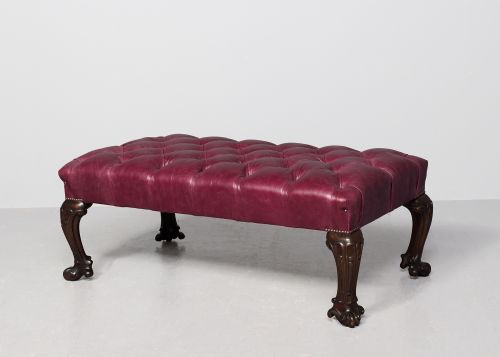
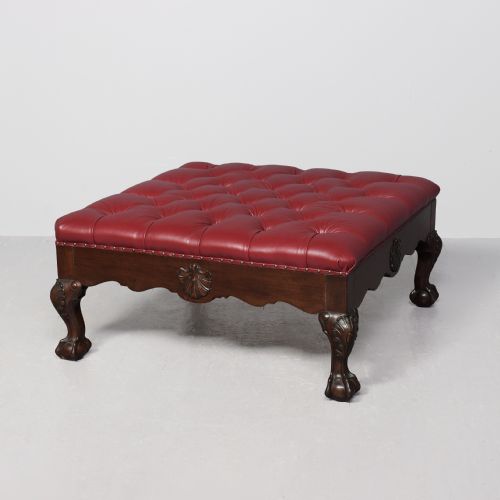
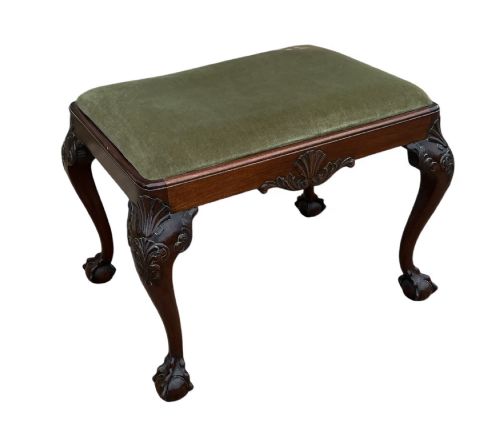
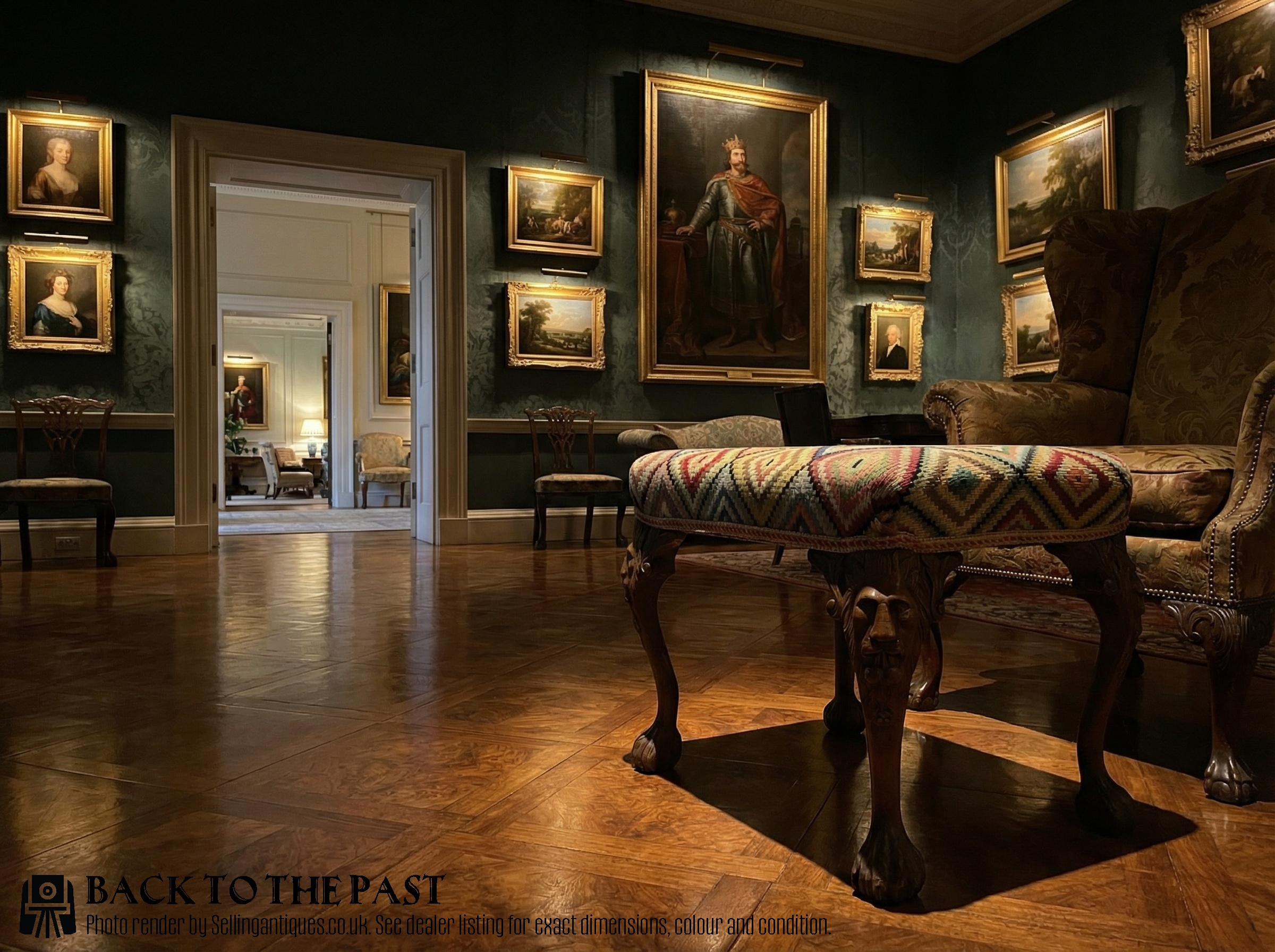
A claw and ball stool is a low seat designed for drawing rooms and dressing areas, typically resting upon distinctive carved cabriole supports. These pieces range from compact footstools to expansive window seats and piano benches, serving both functional resting places and decorative elements within traditional interiors.
The version you are most likely to meet on this page is the mahogany or walnut framed Chippendale or George II revival piece dating from the nineteenth or early twentieth century. These later interpretations draw heavily upon eighteenth-century proportions, featuring substantial timber frames and elaborate leg carvings.
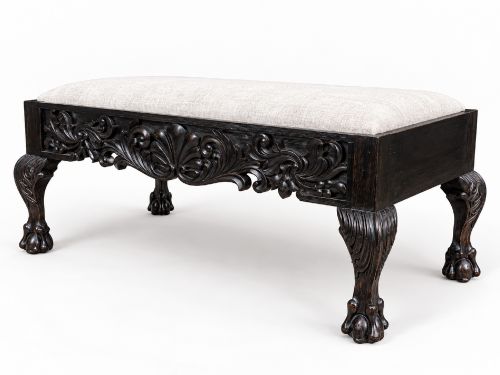
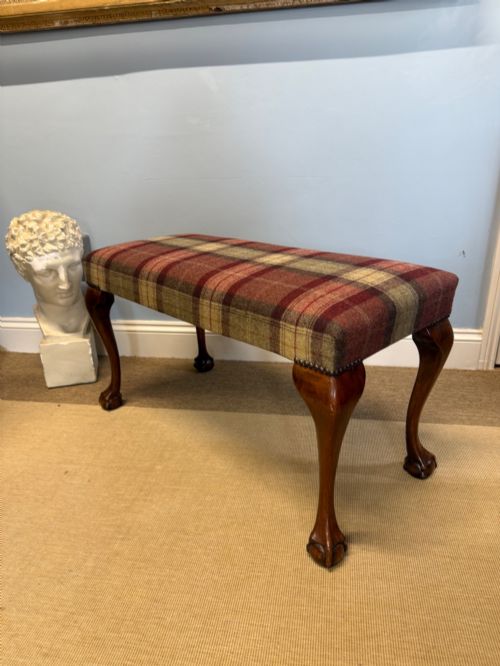
Beyond the standard footstool format, the selection includes long benches, duet seats, and occasional forms upholstered in leather, tapestry, needlework, or heavy textile. Originating from distinct periods spanning the eighteenth century through to the Edwardian era, each variation reflects the enduring appeal of the talon and sphere foot design.
How they were made
Makers constructed these frames predominantly using dense hardwoods such as mahogany, walnut, oak, and elm, selecting timber capable of supporting deep carving on the cabriole legs. Artisans shaped the wooden frames by hand, defining the curvature of the knees and executing the intricate details of the talons grasping the sphere.
Upholstery techniques varied widely according to the intended function of the seat, incorporating traditional stuffing methods beneath top layers of leather, velvet, wool, or embroidered needlework. Some examples incorporated brass tack detailing along the borders, while others featured buttoned hide or intricate textile panels secured directly to the wooden rails.
Claw and Ball Stool Retail Price Guide 2026
Typical asking prices for claw and ball stool among the pieces listed under this phrase on Sellingantiques today, from the lower quarter to the upper quarter. They describe what is for sale here now, not the wider market.
Listings feature mahogany, walnut, oak, and elm frames paired with leather, velvet, needlework, and wool upholstery.
What varies in quality
The standard of a claw and ball stool rests primarily upon the depth and precision of the wood carving, particularly the articulation of the talons and the roundness of the gripped ball. Superior examples exhibit crisp undercut details on the knuckles and feathers of the leg, whereas lesser versions display softer, more generalized shaping.
Timber selection and structural joinery also dictate the grade of the piece, with finely figured mahogany and rich walnut commanding greater presence than plain or secondary woods. The integrity of the frame construction and the quality of the upholstery materials further separate standard production pieces from exceptional workshop creations.
Morris and Co.·Whytock and Reid
The Claw and Ball Stool Glossary
- Cabriole leg
- A furniture leg that curves outward at the knee and tapers inward toward the ankle, mimicking the natural shape of an animal's limb. This form typically terminates in a carved foot.
- Claw and ball foot
- A decorative foot carved to resemble a bird's talon or animal's paw clutching a spherical orb. This motif appeared frequently on eighteenth-century seating and later revival pieces.
- Needlework
- Hand-stitched textile work utilised for upholstery, often featuring floral or geometric patterns. It provides a traditional decorative top surface for period footstools and ottomans.
- Window seat
- A long, narrow bench designed to fit within a window recess, occasionally featuring arms or upholstered ends. These pieces function as supplementary seating in principal rooms.
- Chippendale style
- A design aesthetic drawing from eighteenth-century cabinet-making traditions, characterised by carved cabriole supports and substantial timber frames. Revival iterations reproduce these classical proportions.
Claw and Ball Stool: Frequently Asked Questions
What periods do these stools date from?
The pieces span from the mid-eighteenth century through the nineteenth century and into the early twentieth century. Many examples represent revival periods inspired by earlier Georgian designs.
Craftsmen across these eras reinterpreted classical cabinet-making traditions, resulting in both authentic period seating and faithful later reproductions.
How were these stools used historically?
These seats served multiple domestic functions, operating as dressing table stools, footrests before armchairs, or long window benches. Their sturdy construction accommodated daily seating needs in principal rooms.
Larger double forms provided companion seating near fireplaces or windows, combining utility with decorative presence.
How do I identify a revival piece?
Revival pieces often exhibit timber characteristics, tool marks, and construction methods typical of the late nineteenth or early twentieth century. Examining the underside and joinery reveals the manufacturing era.
Stylistic proportions and the sharpness of the carved ball and foot help distinguish original eighteenth-century work from later interpretations.
What timber types are most common?
Mahogany and walnut form the majority of the wooden frames seen in these listings, offering dense surfaces suitable for deep carving. Elm and oak appear in specific regional or earlier pieces.
These hardwoods provided the structural strength required for cabriole legs and detailed foot carvings without splitting under weight.