

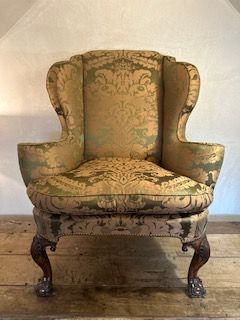
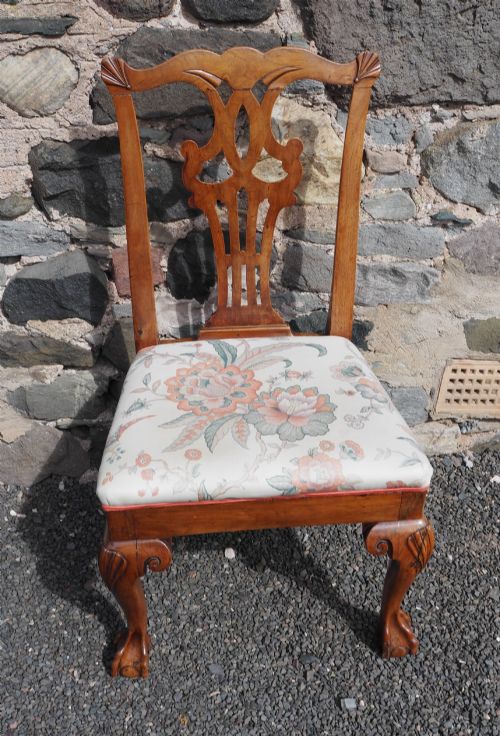
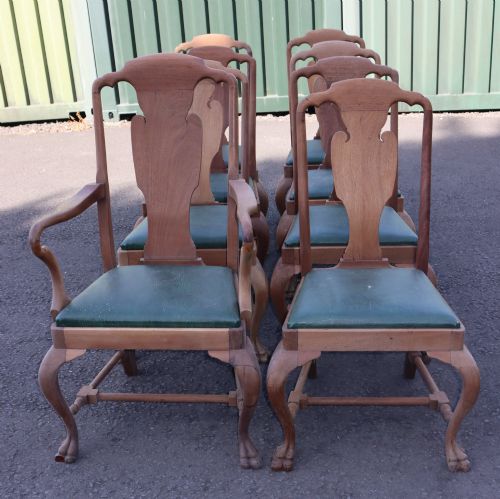
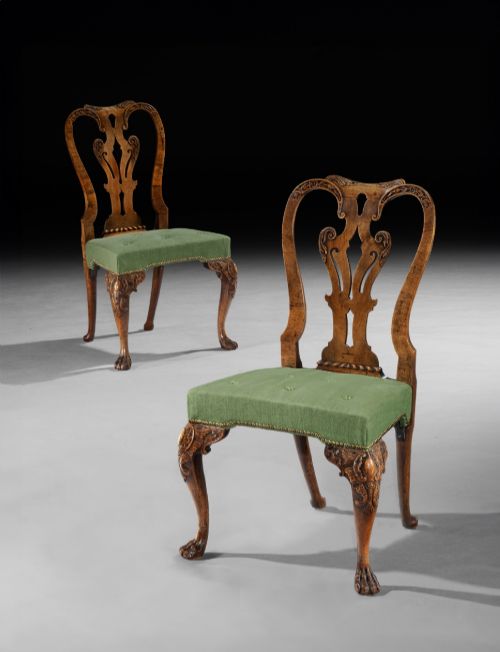
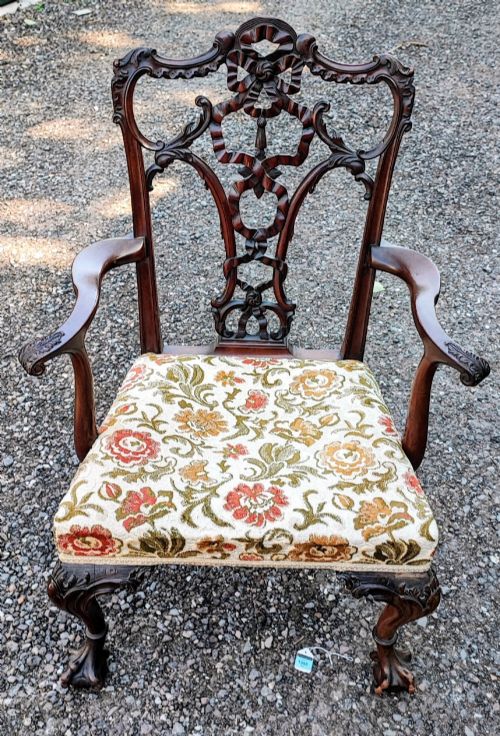
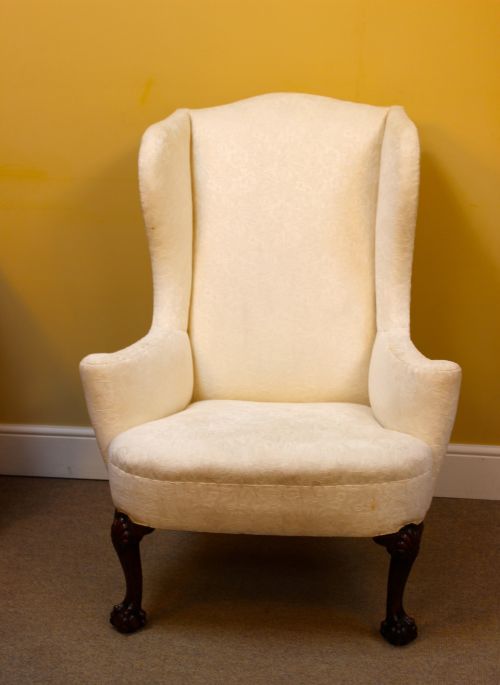
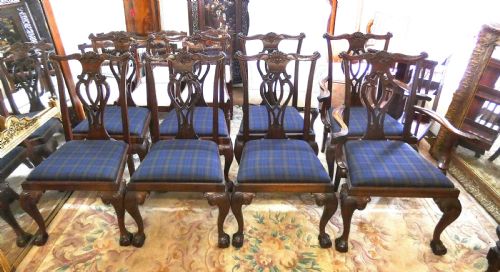
Claw and Ball Chair
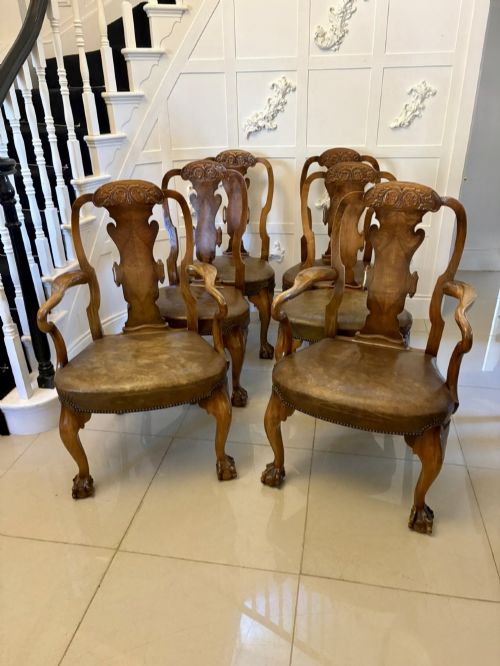
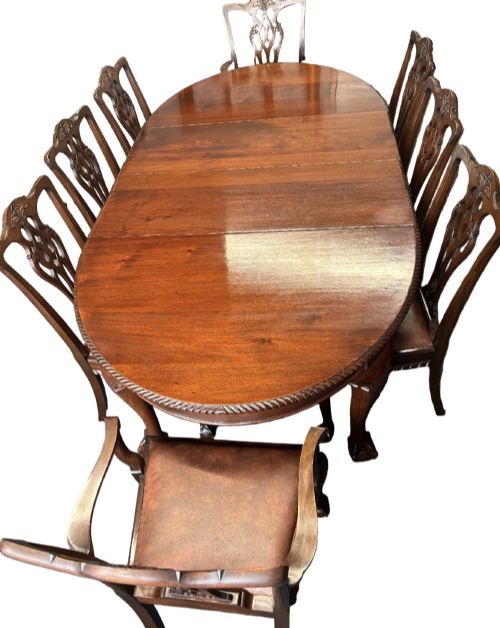
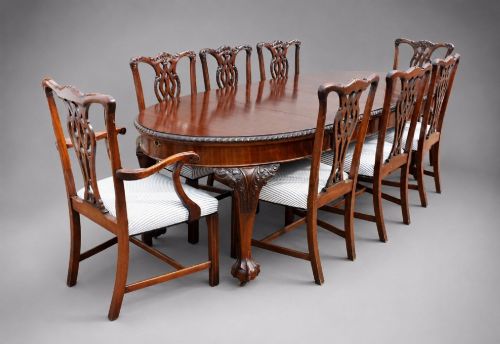
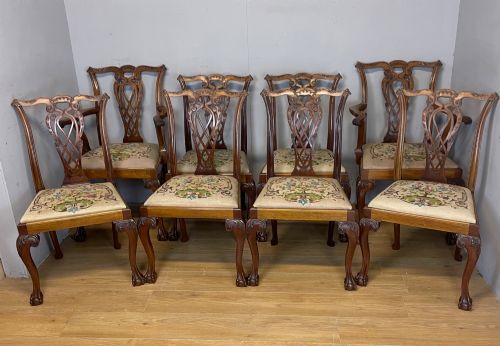
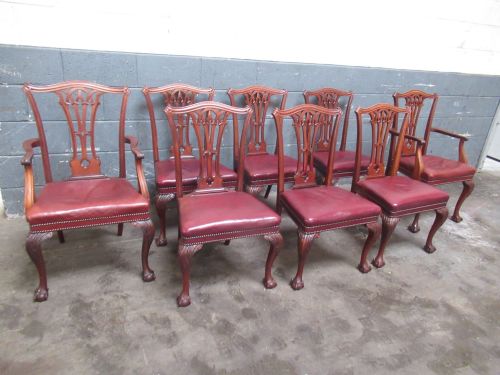
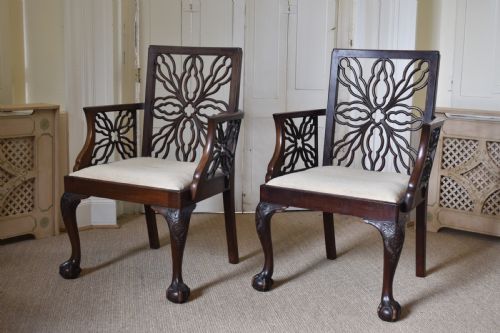
A claw and ball chair anchors any traditional room with carved footing and substantial timber presence.
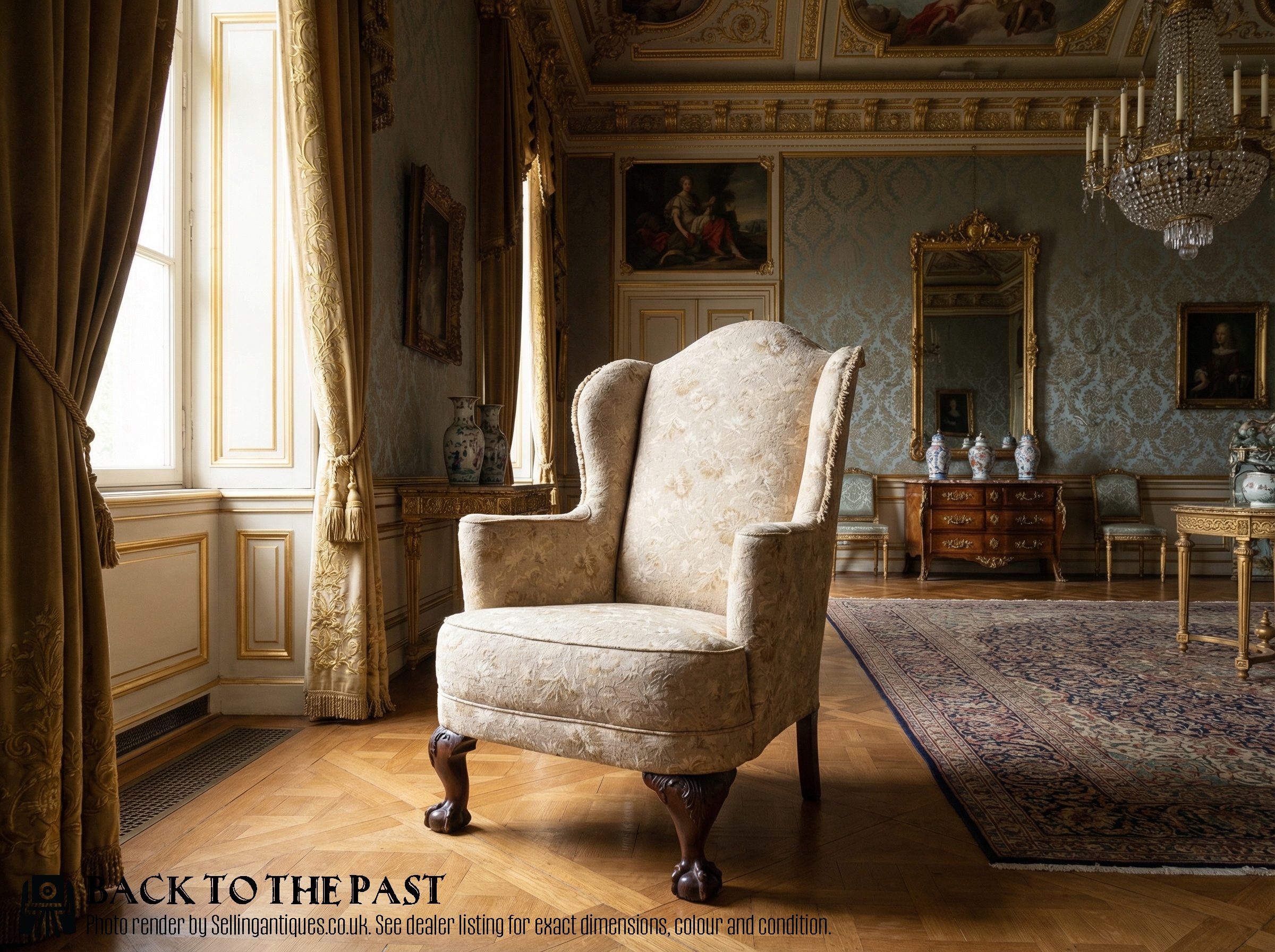
Claw and Ball Chair
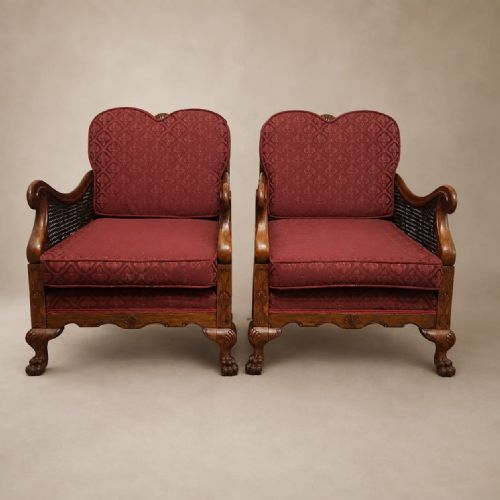
The selections here range from eighteenth-century walnut and mahogany examples to nineteenth-century Chippendale revivals and twentieth-century upholstered seating. These pieces serve as both functional seating and focal points of historical cabinetry.
Buyers encounter regional interpretations, including Dutch marquetry elbow chairs and Irish desk chairs alongside standard Georgian and Victorian forms. Such diversity reflects the enduring appeal of the carved foot across different eras of furniture making.
How They Were Made
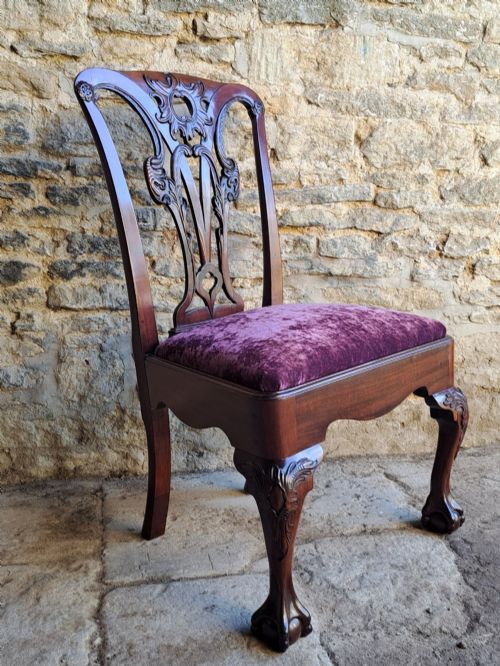
Cabinetmakers constructed these frames primarily in mahogany, Cuban mahogany, and walnut, often applying elaborate carving directly to the timber. Selected pieces incorporate brass elements or specific upholstery fabrics such as velvet and leather.
The distinctive feet require skilled hand-carving to shape the talons grasping a spherical ball. Frames utilise traditional joinery methods suited to each period, from eighteenth-century constructions to later revival interpretations.
Claw and Ball Chair Retail Price Guide 2026
Typical asking prices for claw and ball chair among the pieces listed under this phrase on Sellingantiques today, from the lower quarter to the upper quarter. They describe what is for sale here now, not the wider market.
Listings feature woods such as walnut, mahogany, and Cuban mahogany alongside upholstered variants in leather and velvet.
What Varies in Quality
Quality rests upon the crispness of the timber carving, particularly the articulation of the claws and the proportion of the ball. Finer examples display deep, deliberate chisel work rather than soft or generalized shaping.
The choice of primary wood dictates much of the character, with dense Cuban mahogany and figured walnut sitting at the upper end of the scale. Structural integrity of the cabriole legs and the retention of original timber surfaces further separate standard production from superior pieces.
HOWARD & SON'S
The Claw and Ball Chair Glossary
- Cabriole leg
- A furniture leg that curves outward at the knee and tapers inward toward the ankle, ending in a foot such as a claw and ball. This shape derives from ancient animal forms and became prominent in eighteenth-century design.
- Marquetry
- The art of applying pieces of veneer to a structure to form decorative patterns and pictures. Dutch examples frequently employ this technique on elbow chairs.
- Wing chair
- An upholstered armchair with side panels or wings attached to the back, designed to shield the sitter from drafts. Many examples in the records stand upon ball and claw feet.
- Chippendale style
- A furniture design movement originating from the mid-eighteenth-century pattern books of Thomas Chippendale. Pieces in this style often incorporate ornate carving and cabriole legs.
- Carver chair
- An armchair, typically designed as part of a set of dining chairs for the head of the table. These often feature more elaborate arms and legs than the corresponding side chairs.
Claw and Ball Chair: Frequently Asked Questions
How do I date a claw and ball chair?
Dating relies on timber selection, joinery methods, and stylistic cues unique to periods like the eighteenth century or Victorian era. Cuban mahogany and specific walnut treatments often point toward earlier origins, while revival pieces show nineteenth- or twentieth-century manufacturing traits.
Examining the underside and construction joints reveals how the frame was put together. Comparing the carved foot details against known period styles helps clarify whether a piece is an eighteenth-century original or a later revival.
Are these chairs suitable for daily dining?
Many dining and side chairs are built for regular use, provided the timber joints remain solid and secure. Armchairs and wing chairs offer sturdy seating for living spaces and studies.
Upholstered versions may require modern interior webbing or textile updates to support daily sitting. Checking the structural stability of the cabriole legs ensures safe everyday use.
What is the difference between a side chair and a carver?
Side chairs lack arms and were made to sit compactly around a dining table or against a wall. Carver chairs feature armrests and traditionally served as the main seat at the head of the dining table.
Both forms can feature the characteristic claw and ball foot within the same set. Carvers generally display more ornamental carving on the arms and crest rails.
How should I care for antique mahogany and walnut?
Maintain timber surfaces by dusting regularly with a soft cloth and avoiding direct sunlight or excessive heat. This prevents the wood from drying out or splitting over time.
Treat leather and fabric upholstery according to their specific material needs, keeping moisture away from antique frames. Professional conservation is recommended for structural repairs.