


Classical Relief Vase
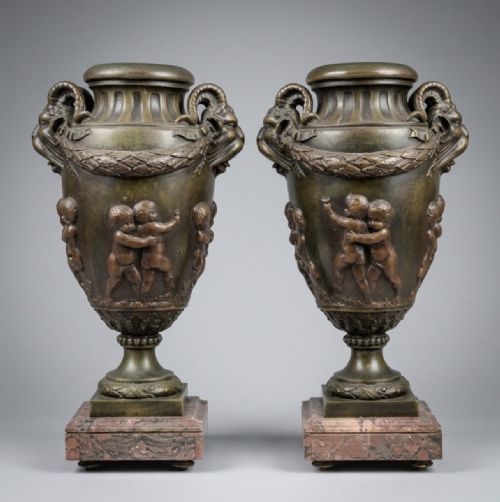
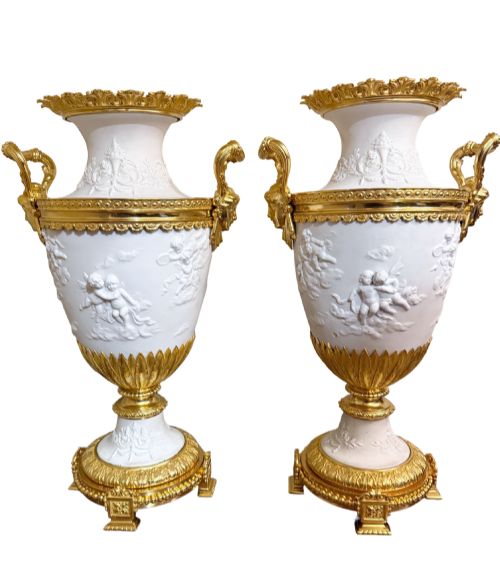
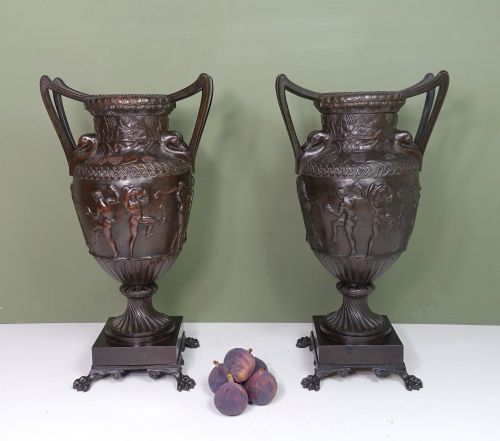
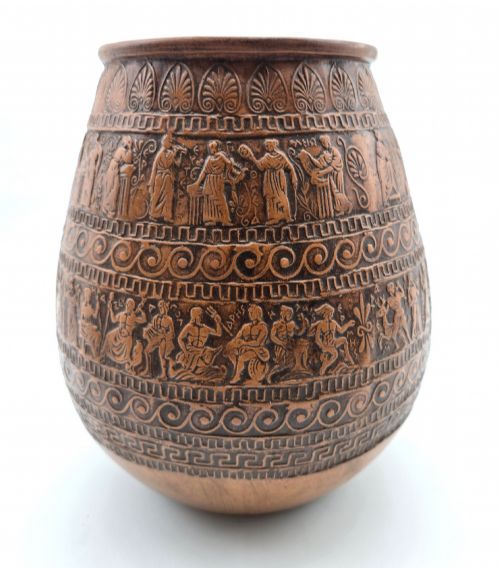
These classical relief vases draw the eye with their sculptural figures and enduring ancient forms, offering a dignified focal point for a period interior.
Classical Relief Vase
When you search for a classical relief vase, you encounter decorative urns, ornamental ewers, and table lamps shaped by nineteenth-century revivals. These vessels frequently display neoclassical, Greek revival, and Grand Tour styles drawn from antique prototypes.
The selections on this page span the Victorian era, bringing together bronze, marble, porcelain, and jasperware into stately forms. Campana urns and pedestal vessels dominate the types, often bearing moulded or cast figures in high relief.
What varies in quality
The finesse of the relief work separates the finest vessels from standard production, as crisp detailing in the figures and drapery reflects a higher standard of modelling. Superior castings exhibit clean chiselling and careful finishing on secondary surfaces rather than soft edges.
Material selection and structural weight also dictate the grade of a piece, with heavy bronze castings and finely potted porcelains holding greater presence. The harmony between the vessel body, its handles, and any supporting marble plinth reveals the maker's discipline.
Thorvaldsen's angel finds quiet repose in biscuit porcelain here, watching over nineteenth-century rooms with neoclassical calm.
Sevres·Wedgwood·P Ipsens Enke·Barbedienne
The Classical Relief Vase Glossary
- Campana urn
- A bell-shaped vessel with a flared lip and foot, commonly associated with classical garden and table ornaments. This form provides a broad surface ideal for figural friezes.
- Bas-relief
- A sculptural technique where the figures project only slightly from a flat background. This shallow depth creates subtle play of light across classical scenes.
- Grand Tour
- A traditional trip through Europe undertaken by upper-class scholars and collectors to study antiquity. Souvenirs from these journeys included small-scale bronzes and decorative vases.
- Ormolu
- Gilt bronze work produced by applying a finely ground gold-mercury amalgam to a bronze base. This technique yields a rich, warm metallic lustre on decorative mounts.
Classical Relief Vase: Frequently Asked Questions
Where should I display a heavy bronze vase?
These substantial vessels require a sturdy surface such as a heavy timber sideboard, a marble console, or a dedicated pedestal that can safely bear the weight of metal and stone.
Position the piece away from high-traffic walkways where it might be inadvertently struck, allowing the patinated surfaces to catch indirect light.
How do I clean marble and bronze safely?
Dust the bronze regularly with a soft, dry cloth to prevent the accumulation of grit in the recesses of the relief figures. Avoid commercial metal polishes, which can strip historic patinas and damage the underlying alloy.
Clean marble bases using a slightly damp cloth with mild soap, drying the stone immediately to prevent water staining.
What is the difference between a campana urn and an ewer?
A campana urn takes a symmetrical bell shape with wide, upturned rims and loop handles, designed primarily for display or cooling wine. It emphasises classical proportion and frieze decoration.
An ewer functions as a pitcher with a spouted lip and a single curved handle, tracing its lineage back to ancient pouring vessels used in libations.
How can I tell nineteenth-century pieces apart?
Nineteenth-century revival pieces often combine classical motifs with the manufacturing techniques of the period, such as machine-tooled threads or cast spelter rather than hand-chiseled bronze. Examining the underside and mounting hardware reveals the age of the construction.
Stylistic shifts between early Victorian Grand Tour bronzes and later aesthetic movements also guide dating, as does the presence of factory stamps or foundry marks.