
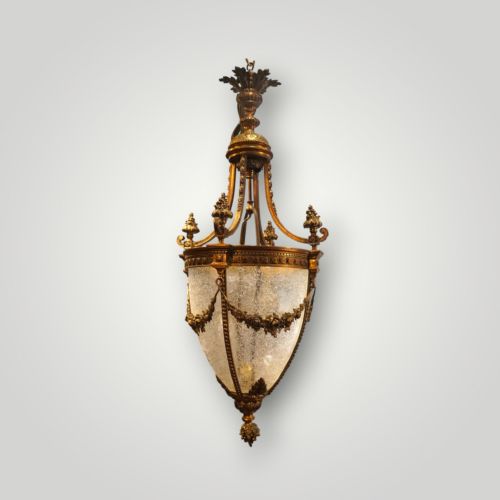


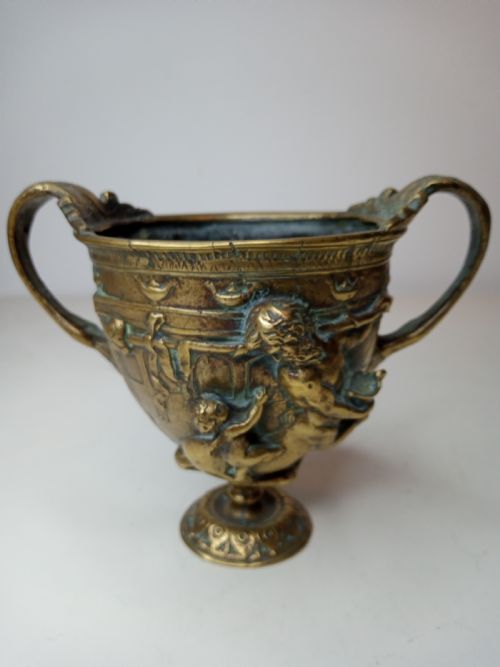

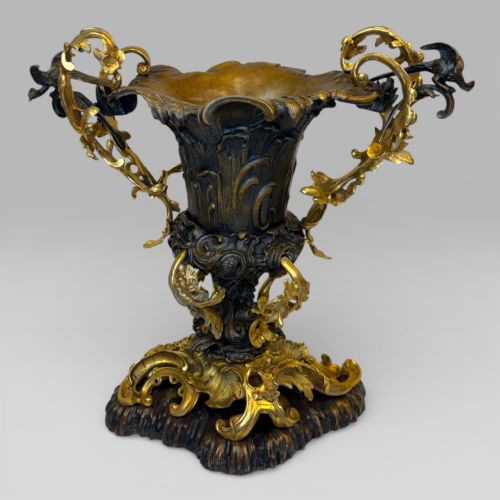
Ornate Bronze Vessel
These ornate bronze vessel examples bring heavy classical presence to a room, offering rich chased detail and grand sculptural form.
Ornate Bronze Vessel
When you search for an ornate bronze vessel, you encounter a striking range of heavy metalwork designed for display rather than utility. These decorative pieces take the form of jardinieres, ewers, urns, and centrepiece bowls originating primarily from the nineteenth century. They draw heavily on historical revivals, bringing classical architectural lines and figurative elements straight into domestic interiors.
The selection on this page leans strongly towards nineteenth-century European production, alongside Japanese-style items and later interpretations. You will find pieces finished with gilt bronze, ormolu, and patinated surfaces, sometimes paired with glass, alabaster, or cloisonne enamel. Forms vary from towering classical urns to squat jardinieres decorated with mythological figures and foliage.
How they were made
Makers produced these decorative objects using traditional casting methods in bronze, brass, and gilt bronze, often applying hand-chasing to sharpen the surface details after casting. Ormolu mounts and handles were cast separately and attached securely to the main body, while patinated finishes were achieved through chemical treatments on the metal. Some vessels integrate contrasting media, setting cloisonne enamel panels or carved alabaster directly into the metal framework.
Surface embellishment defines the group, ranging from cast figural handles featuring dolphins and mythological figures to intricate enamel wirework. Workshops employed skilled gilding techniques to apply gold leaf or mercury gilt to the bronze surfaces, creating brilliant reflective highlights. The construction relies on sturdy mechanical joints and threaded fixings to support heavy components like marble bases or auxiliary metal fittings.
Bacchus and various friendly dolphins frequently supervise the water pouring from nineteenth-century ewer handles.
What varies in quality
The weight and purity of the metal structure also dictate overall quality, alongside the integration of secondary materials like alabaster or enamel. Finer vessels demonstrate secure, precise assembly where mounts sit flush against the body without excess solder or visible gaps. The richness and durability of the original gilding or patination remain key indicators of the maker's initial investment in materials and time.
Barbedienne Paris·Henry Dasson
The Ornate Bronze Vessel Glossary
- Ormolu
- Gilded bronze, typically produced by applying a mercury and gold amalgam to a bronze base and heating it. This technique creates a brilliant, durable golden surface seen on many nineteenth-century French decorative objects.
- Cloisonne
- An enamelling technique where metal wire is soldered to a metal base to create compartments, which are then filled with coloured glass paste and fired. Pieces featuring this method display vibrant, patterned surface designs.
- Ewer
- A large jug with a wide spout and a decorative handle, historically used for pouring water but later collected purely as an ornamental vessel. Nineteenth-century examples often feature elaborate classical figures and mythological motifs.
- Jardiniere
- An ornamental pot or stand designed to hold plants or floral arrangements indoors. These vessels frequently incorporate heavy bronze mounts and classical motifs to complement formal interior schemes.
- Patinated bronze
- Bronze that has been treated with chemicals to produce a stable coloured surface coating, ranging from dark brown to green. This finish protects the metal and highlights sculptural relief details.
Ornate Bronze Vessel: Frequently Asked Questions
What is an ormolu jardiniere used for?
These decorative containers served primarily as centrepieces on dining tables or sideboards in nineteenth-century formal interiors. They held potted plants or floral arrangements, adding a layer of metallic lustre and sculptural weight to the room.
Today, they function well as standalone decorative objects on side tables, mantels, or entrance halls. Their substantial metal construction makes them durable focal points in traditional or eclectic room schemes.
How do I date a bronze ewer?
Dating relies on examining the casting quality, the style of the chasing, and the specific historical revival movement influencing the design. Nineteenth-century pieces frequently draw on Neoclassical, Louis XIV, or Renaissance styles, employing distinct patination and gilding methods.
Inspect the construction methods, such as the type of fixings used on the handles and base. Machine-threaded screws and modern alloys generally point towards later twentieth-century production, whereas hand-cut pins and heavy sand-cast bronze indicate nineteenth-century origins.
What is the difference between bronze and brass?
Bronze is an alloy composed mainly of copper combined with tin, yielding a heavy, durable material that accepts patination and gilding exceptionally well. Brass is an alloy of copper and zinc, which tends to have a brighter, yellower natural tone and was often used for less costly decorative items.
In antique decorative objects, bronze permitted finer casting and sharper detail retention under the chaser's tools. Many nineteenth-century vessels combined a bronze body with cast ormolu mounts to achieve varied surface textures and tones.
Where should I place a heavy bronze urn?
These heavy vessels require stable, sturdy surfaces such as solid wood sideboards, marble console tables, or low pedestals. Their substantial weight means they anchor a room visually, making them ideal for corner tables or centrepiece arrangements.
Keep them away from damp environments and direct heat sources to protect any applied patination, gilding, or secondary materials like alabaster and enamel. Dust them gently with a dry microfibre cloth to maintain the surface finish without using abrasive cleaners.