
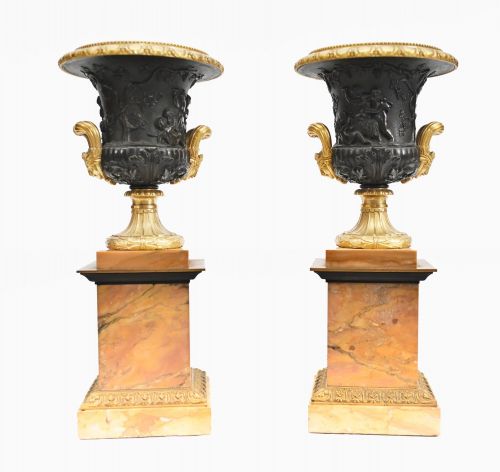


Classical Bacchic Urn
A classical bacchic urn brings the sculptural drama of antiquity straight into a nineteenth-century interior through richly cast metal and carved stone.
Classical Bacchic Urn
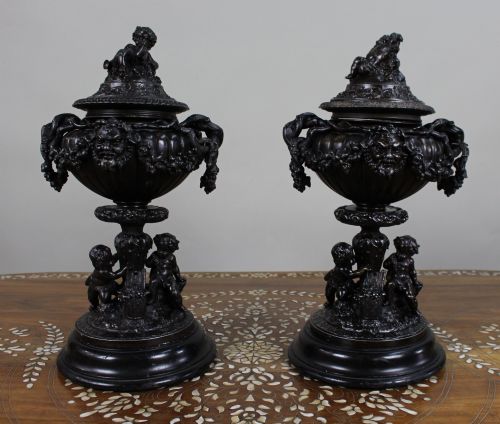
A classical bacchic urn draws on ancient Roman and Greek forms, specifically monumental vessels associated with Dionysian revels and classical architecture. When searching for a classical bacchic urn, collectors encounter decorative vessels produced during the nineteenth century as Grand Tour souvenirs and classical revival ornaments.
The pieces appearing on this page take the form of decorative urns, vases, and planters executed in bronze, gilt bronze, patinated bronze, and bronzed spelter. Makers also employed white and green marble to construct heavy, architectural bases and bodies that imitate ancient statuary.
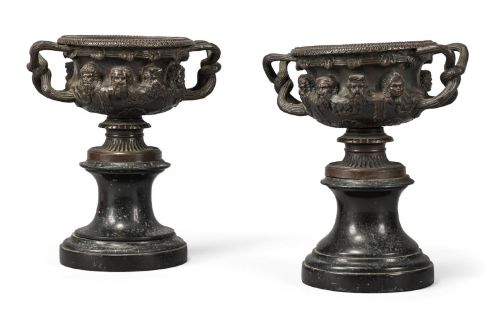
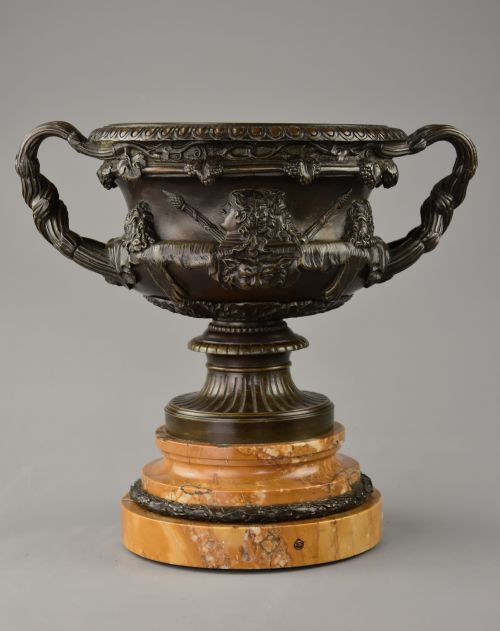
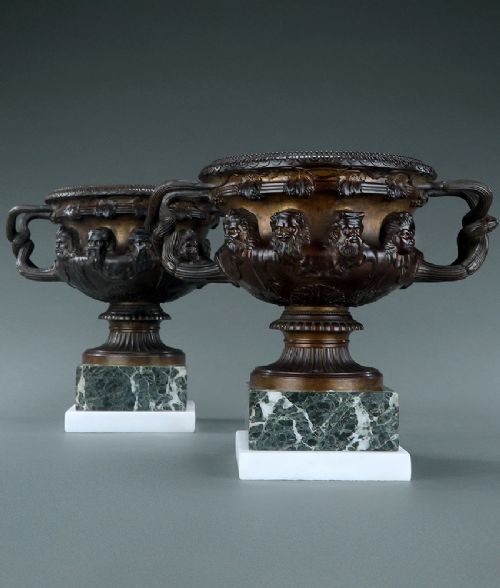
Most examples date from the Victorian era, specifically around eighteen eighty, eighteen sixty, and eighteen ninety. These nineteenth-century interpretations frequently replicate famous ancient prototypes such as the Warwick Vase and the Albani Vase.
How they were made
Foundry workers utilised traditional lost-wax or sand-casting methods to produce bronze and spelter reductions of monumental antiquities. These metal vessels received patination treatments, ranging from deep dark tones to bright gilt finishes, to simulate ancient metalwork.
Carvers shaped white and green marble into smooth bodies and plinths, combining stone with cast metal mounts. Details such as bacchic masks, putti, and grapevine motifs were chased by hand into the metal surfaces after casting.
The site listings feature nineteenth-century materials including green marble, white marble, gilt bronze, and patinated bronze.
What varies in quality
Quality rests in the crispness of the cast ornament and the depth of the metal chasing. Superior nineteenth-century reductions display sharply defined facial expressions on bacchic masks and intricate detailing in the hair and foliage.
The choice of materials dictates the substance of the piece, with heavy patinated bronze and solid marble achieving greater presence than lighter bronzed spelter alternatives. Signed foundry work further distinguishes the finest pieces from anonymous workshop output.
Barbedienne
The Classical Bacchic Urn Glossary
- Grand Tour
- A cultural journey undertaken by wealthy young Europeans in the eighteenth and nineteenth centuries to study classical art and architecture. Souvenirs purchased on these travels included small bronze and marble reductions of famous vases.
- Warwick Vase
- A colossal Roman marble crater discovered at Tivoli and later housed at Warwick Castle, widely copied in bronze during the nineteenth century. These reductions often feature bacchic masks, vine leaves, and interwoven handles.
- Albani Vase
- A celebrated antique krater associated with the Villa Albani in Rome, reproduced by nineteenth-century foundries as a decorative souvenir. It typically presents classical figures and ornamental relief work around the body.
- Spelter
- An alloy of zinc and lead used as a cheaper alternative to bronze in nineteenth-century manufacturing. It was frequently painted or patinated to resemble solid bronze.
- Campana
- A bell-shaped vessel form derived from ancient pottery and metalwork types found in Italy. These urns feature flared rims and mounted handles.
Classical Bacchic Urn: Frequently Asked Questions
What is a bacchic urn?
A bacchic urn is a decorative vessel adorned with imagery related to Bacchus, the Roman god of wine, typically featuring motifs like grapes, vines, masks, and putti.
These designs derive from ancient Roman and Greek ceremonial vessels and were revived during the nineteenth century as interior ornaments.
How were these urns used?
Nineteenth-century interiors utilised these urns strictly as decorative mantelpiece ornaments, table centrepieces, or small planters.
Their substantial weight and classical proportions allowed them to anchor formal Victorian library and drawing room displays.
What are grand tour souvenirs?
Grand tour souvenirs are art objects and scaled-down bronze or marble replicas purchased by travellers visiting historical sites in Italy and Greece.
These objects allowed collectors to bring the aesthetic of ancient monuments back to British homes.
How do you distinguish bronze from spelter?
Bronze is a heavier, harder copper alloy that accepts patination deeply and rings clearly when struck, whereas spelter is softer and lighter.
Spelter objects often show wear on the surface where the patinated coating has rubbed away to reveal the greyish metal underneath.