



Classical Pedestal Tazza
A classical pedestal tazza brings ancient architectural proportion and monumental presence to a table, combining carved stone and cast metal.
Classical Pedestal Tazza
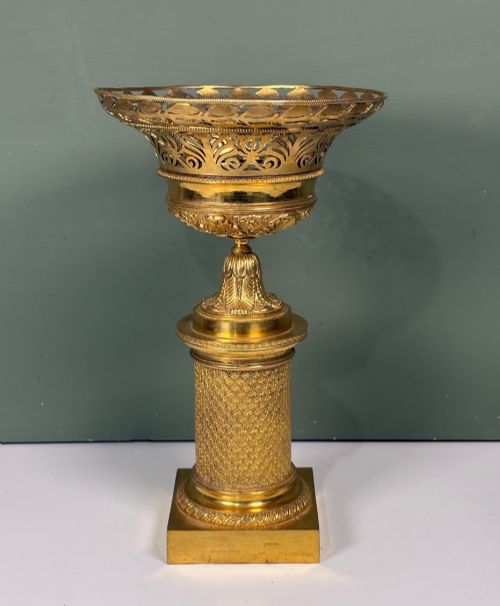
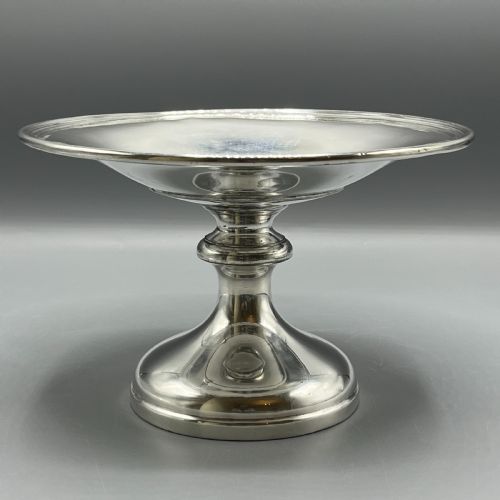
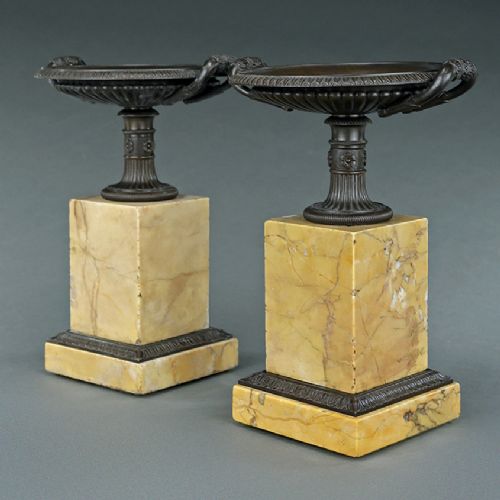
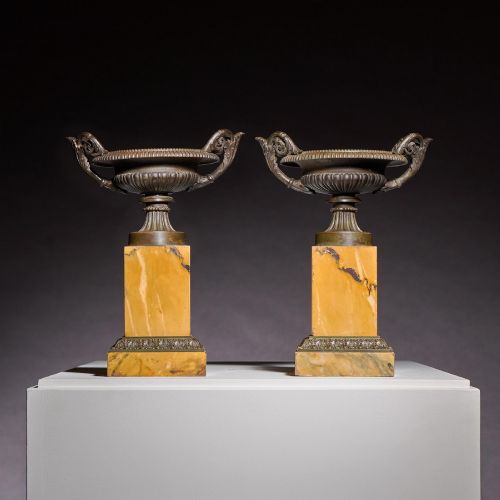
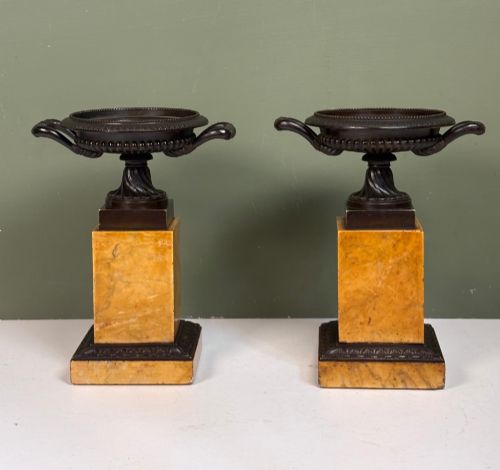
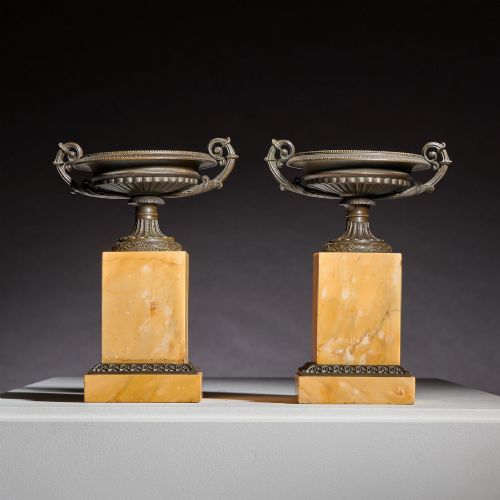
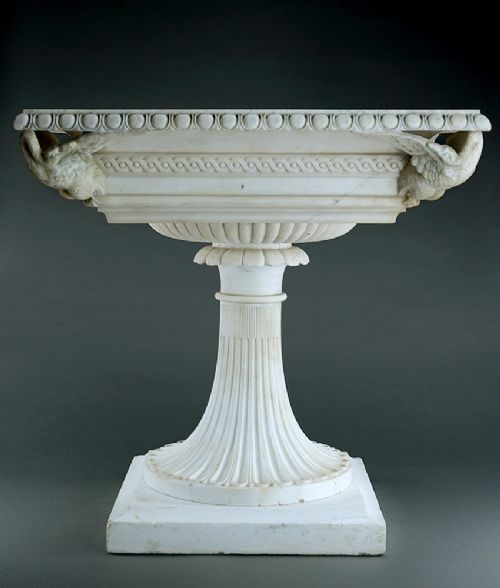
A classical pedestal tazza stands as a shallow decorative bowl or dish raised on a distinct column and base, echoing forms found in ancient architecture and archaeological finds. When exploring these pieces, collectors encounter grand tour souvenirs, table centrepieces and decorative vessels designed to elevate interior spaces.
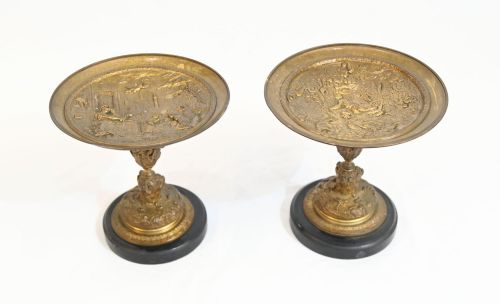
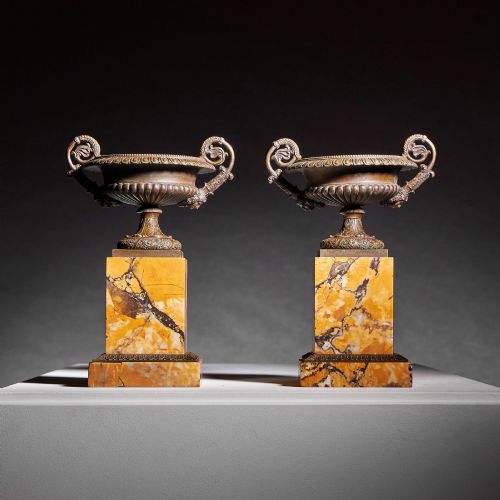
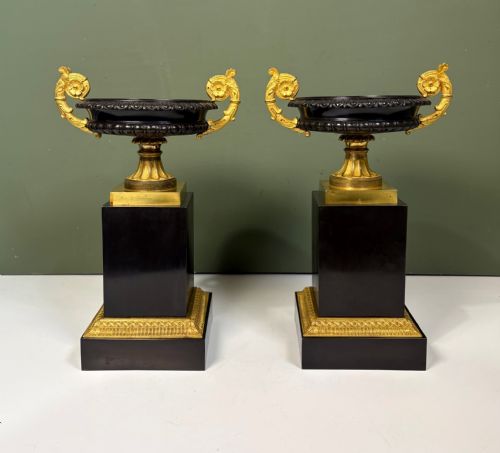
The versions most commonly met on this page date from the nineteenth century, drawing heavily on Regency, French Empire and Neoclassical styles. They frequently appear as pairs, combining sculptural metal bowls with contrasting stone pedestals.
Forms range from compact cabinet pieces to monumental proportions, utilising traditional shapes that recall ancient Roman and Greek vessels. Their primary purpose has historically been decorative display rather than utility.
Materials and construction
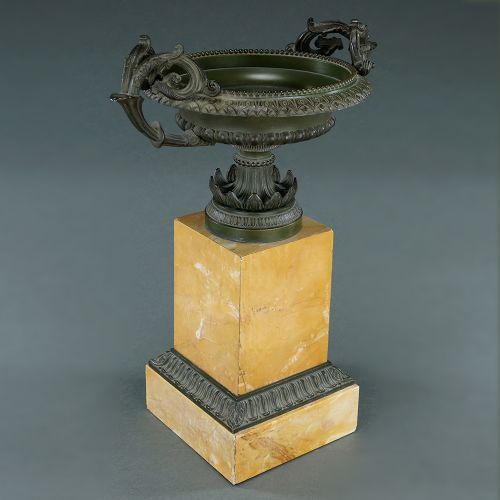
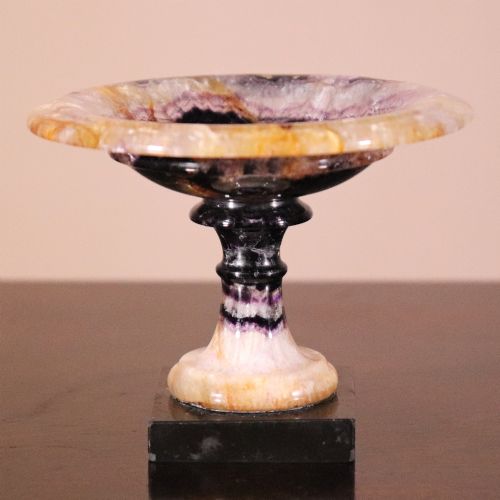
Maker's workshops combined cast metals such as bronze, brass and ormolu with natural stones including white marble, black marble and sienna marble. Certain examples incorporate decorative minerals like Blue John and malachite, alongside silver plating and carved timbers.
Metal components were cast and often chased to achieve crisp surface detail, while stone bases and columns were turned on lathes and polished by hand. The components were then joined securely, frequently using threaded central rods or hidden pins.
Classical Pedestal Tazza Retail Price Guide 2026
Typical asking prices for classical pedestal tazza among the pieces listed under this phrase on Sellingantiques today, from the lower quarter to the upper quarter. They describe what is for sale here now, not the wider market.
Listings feature nineteenth-century pieces spanning Regency, Neoclassical and Aesthetic Movement styles, created in bronze, marble, ormolu and carved timber.
Assessing quality and craftsmanship
The distinction between standard examples and the finest works lies in the crispness of the metal chasing and the selection of the stone. Superior pieces display intricate cast detail in the ormolu or bronze alongside richly figured, flawless marble or semi-precious mineral inserts.
Proportion and weight also dictate quality, with better examples demonstrating balanced architectural harmony and substantial, high-density materials rather than hollow or thin construction.
The Classical Pedestal Tazza Glossary
- Tazza
- A shallow bowl or cup mounted on a stem and foot, historically used for display or serving. The plural form is tazze.
- Ormolu
- Gilt bronze produced by applying finely ground gold mercury amalgam to cast bronze, creating a rich golden surface. It was widely utilised in French and Regency decorative arts.
- Grand Tour
- A cultural journey undertaken by wealthy young Europeans through France and Italy to study classical antiquities. Souvenirs such as marble and bronze tazzas were frequently brought home as mementoes.
- Sienna Marble
- A highly decorative yellow marble quarried in Italy, featuring deep purple and dark grey veining. It was favoured by craftsmen for its striking contrast against patinated bronze.
Classical Pedestal Tazza: Frequently Asked Questions
What is a classical pedestal tazza used for?
These vessels were created primarily for display, serving as striking centrepieces on tables, consoles or mantelpieces during the nineteenth century. Their elevated profile allowed them to catch the eye and anchor a decorative scheme.
Today, they function in much the same way, bringing architectural gravity and historical character to modern interiors without needing any practical function.
How do I distinguish a Grand Tour tazza?
Grand Tour pieces typically date from the nineteenth century and are characterised by their classical motifs, referencing ancient Roman and Greek artefacts seen by travellers in Italy. They frequently combine patinated bronze with coloured marbles like sienna.
Look for the quality of the stone turning and the depth of the metal casting, which reflect the high standards of nineteenth-century European workshops catering to affluent tourists.
Are these tazzas made of real marble?
The majority of stone tazzas from this period utilise genuine natural marbles, including white, black, and sienna varieties, as well as decorative mineral specimens like Blue John. Craftsmen turned these heavy stones on lathes to achieve smooth columns and bowls.
Examining the underside or interior surfaces often reveals the natural veining and crystalline structure characteristic of quarried stone.
How should I care for bronze and marble?
Bronze and ormolu surfaces benefit from gentle dusting with a soft, dry cloth to prevent the accumulation of grit. Avoid using chemical polishes or abrasive cleaners, which can strip the patination or gilt.
Marble and stone sections should be wiped with a damp cloth and dried immediately, taking care to protect polished surfaces from acidic spills or moisture.