


Silver Plated Tazza
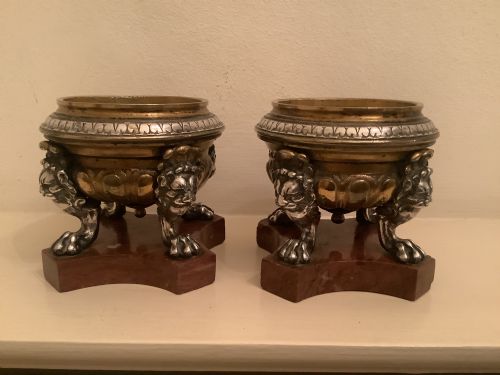
These silver plated tazza pieces bring elevated display to the table, offering footed service in silver plate, bronze and cut glass.
Silver Plated Tazza
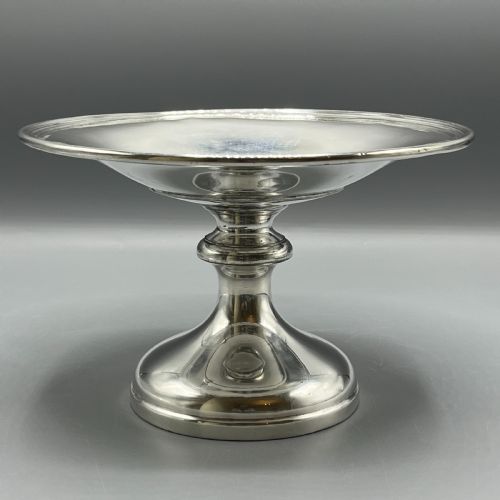
A silver plated tazza stands as a raised decorative dish or pedestal centrepiece, designed to elevate fruit, sweets, and small cakes upon tables. The form appears across the nineteenth century and into the twentieth century, shifting from ornate Victorian designs towards cleaner Edwardian and Art Deco lines.
The versions most commonly met on this page combine silver plate or EPNS with cut glass, bronze, and Britannia metal. Examples range from modest bon bon dishes and sweet dishes to substantial pairs of pedestal fruit comports and centrepieces.
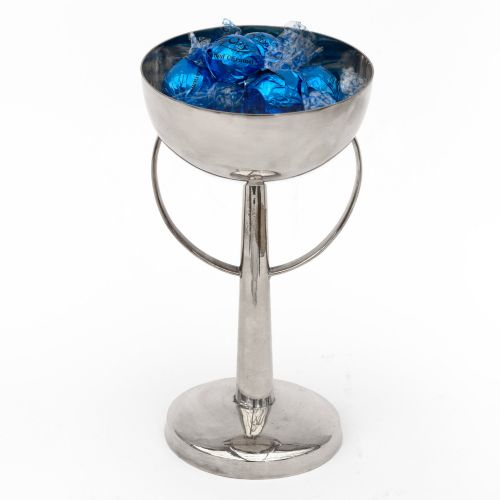
Makers and styles span English traditional work, neoclassical motifs, flowing art nouveau curves, and geometric art deco forms. Collectors encounter these objects in formats such as cake stands, pedestal bowls, and oval stands.
How they were made
The construction of these pieces relies on silver plating or silvering applied to base metals such as bronze, Britannia metal, and EPNS. Skilled metalworkers cast or spin the pedestals and bowls, applying decorative chased or embossed borders by hand.
Many examples incorporate heavy cut glass or crystal bowls fitted directly into metal mounts. The combination of reflective silver plate and deeply faceted glass creates the characteristic sparkle expected from these display vessels.
Sweet dishes and bon bon holders prove that Victorians took their confectionery display just as seriously as their architecture.
What varies in quality
Quality reveals itself in the weight and substance of the metalwork, where heavier bronze or solid silver plating shows superior heft over lighter base metals. The crispness of chased ornament and the depth of cut glass detailing distinguish standard production from exceptional work.
The harmony of assembled parts, such as secure seating between glass bowls and pedestal mounts, separates well-engineered pieces from lesser items. Recognition of established makers adds another layer of distinction to surviving examples.
Mappin and Webb·WMF·Christofle et Cie
The Silver Plated Tazza Glossary
- Tazza
- A shallow bowl or dish mounted on a stem and foot, used for serving fruit or sweetmeats. This form serves as the primary pedestal vessel across the listed periods.
- EPNS
- Electroplated Nickel Silver, a common base metal process for silver plating developed in the nineteenth century. This material provides the durable core for many Edwardian and later serveware pieces.
- Britannia Metal
- A tin-based alloy used as a base metal for silver plating and holloware. This compound allows for intricate casting seen in turn-of-the-century decorative bowls.
- Comport
- A large shallow dish or bowl raised on a high foot, often used alongside tazzas for dessert service. These pieces frequently feature cut glass bowls paired with silver plated stands.
- Bon Bon Dish
- A small decorative dish designed to hold sweets, nuts, or small confections. These items often showcase distinct stylistic periods like art nouveau or art deco.
Silver Plated Tazza: Frequently Asked Questions
What is a silver plated tazza used for?
These elevated vessels served primarily for presenting fruit, cakes, and sweetmeats during formal dining and afternoon tea. Their raised pedestal design created height and visual interest on the dining table.
Today, they function as decorative centrepieces or serving dishes for display purposes in domestic interiors.
How do I date a silver plated tazza?
Dating relies on identifying stylistic markers such as neoclassical motifs, organic art nouveau curves, or geometric art deco lines. The choice of materials, including Britannia metal or EPNS, also points toward specific manufacturing eras.
Maker marks and stamps stamped into the metal base provide the most reliable evidence for narrowing down the decade of production.
What is the difference between a tazza and a comport?
While both share a footed pedestal form, a comport often refers to a larger vessel intended specifically for fruit service. A tazza can be smaller and more decorative, functioning as a sweet dish or bon bon holder.
In practice, historical descriptions often use the terms interchangeably for similar raised pedestal serveware.
How should I care for silver plated tazzas?
Gentle cleaning with a soft cloth and a specialised silver polish helps maintain the finish without wearing away the plating. Avoid harsh abrasive cleaners that can damage delicate surfaces on both the metal and any paired cut glass.
Displaying pieces away from direct moisture and handling them by the sturdy pedestal base preserves their condition over time.