







Classical Painted Cabinets
Classical painted cabinets bring together fine timber and delicate brushwork, offering both practical storage and striking visual presence.
Classical Painted Cabinets
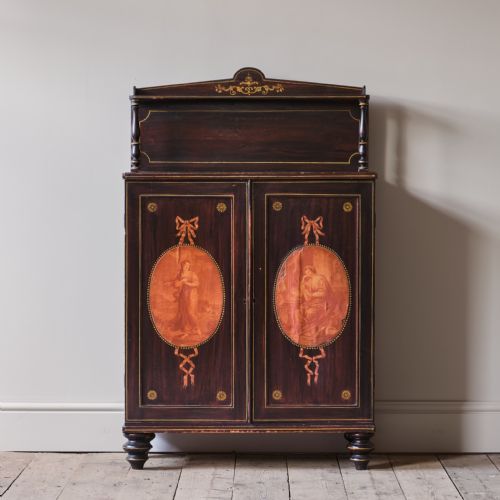
Classical painted cabinets encompass a varied group of timber furniture pieces featuring hand-painted panels, motifs, and decorative surfaces. These pieces draw heavily on neoclassical design principles, often displaying symmetry, classical figures, and floral garlands.
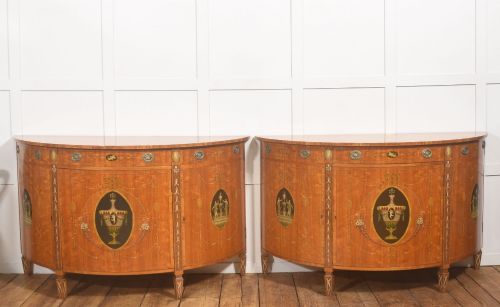
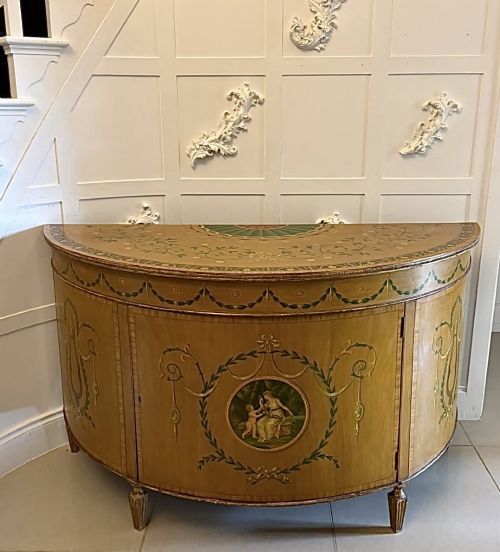
The version you are most likely to encounter on this page is the satinwood demi-lune cabinet or side cabinet dating from the nineteenth or early twentieth century. These items frequently combine figured satinwood with painted classical panels, echoing earlier Georgian and Regency tastes.
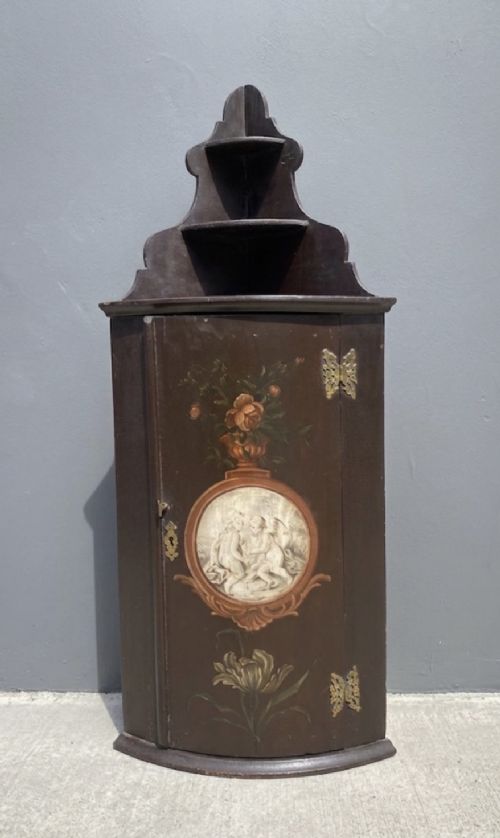
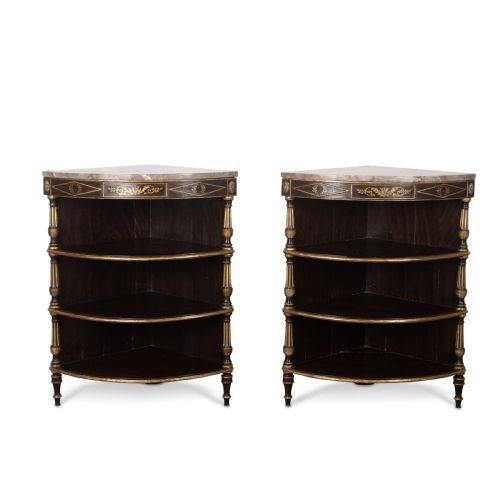
Alongside larger sideboards and commodes, the selection includes smaller bedside cupboards, corner cabinets, and occasional pieces. Many incorporate simulated paint finishes, gilding, and brass details to emulate luxurious materials.
Materials and construction methods
Cabinetmakers relied heavily on satinwood as a primary timber for finer pieces, often pairing it with mahogany, walnut, or pine carcasses. Surfaces were carefully prepared to receive detailed hand-painted decoration, sometimes enhanced with enamel or porcelain plaques set into the wood.
Decorative techniques involved meticulous brushwork executed directly onto the timber or onto applied panels, frequently finished with gold leaf or gilding. Brass hardware, including handles and key escutcheons, completed the construction of these refined storage items.
Classical Painted Cabinets Retail Price Guide 2026
Typical asking prices for classical painted cabinets among the pieces listed under this phrase on Sellingantiques today, from the lower quarter to the upper quarter. They describe what is for sale here now, not the wider market.
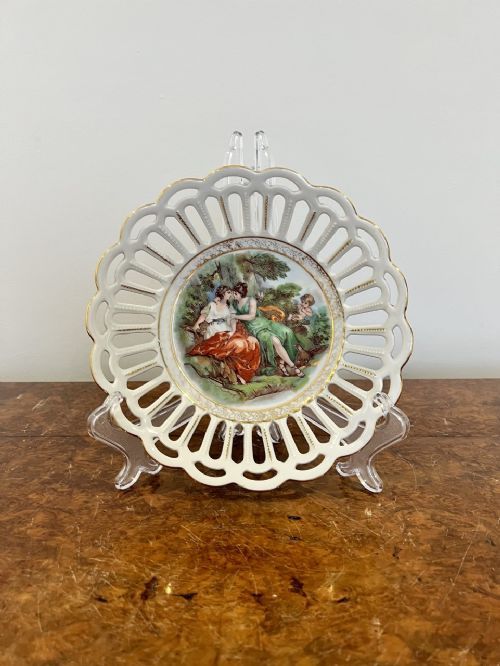
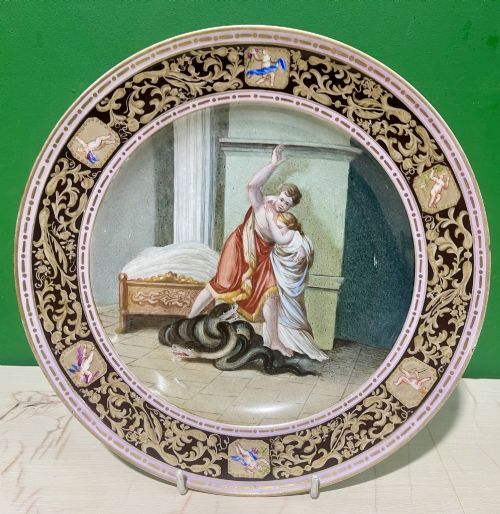
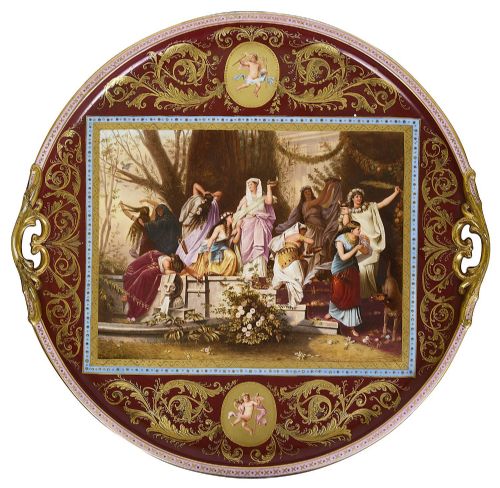
Several porcelain items depict classical figures such as Bacchus and Ariadne, proving that ancient deities enjoyed occasional refreshment.
Judging the quality of painted furniture
Quality rests significantly on the precision and artistry of the painted decoration rather than the complexity of the cabinetwork alone. Finer examples display fluid, highly detailed brushwork on classical figures and floral motifs, executed by skilled hands.
The choice of underlying timber and veneer selection dictates the baseline standard of the piece. Superior items utilise highly figured satinwood with careful grain matching, whereas lesser pieces rely on simpler painted finishes over pine or secondary woods.
Royal Vienna·Meissen·Kaufman
The Classical Painted Cabinets Glossary
- Satinwood
- A durable hardwood with a natural golden sheen and fine grain, prized for eighteenth and nineteenth-century decorative furniture. It provides an ideal pale ground for hand-painted motifs.
- Demi-lune
- A half-moon shape characteristic of commodes and side cabinets designed to sit flat against a wall. This form gained popularity during the neoclassical revival periods.
- Neoclassical
- A style spanning the eighteenth and nineteenth centuries that revived classical Greek and Roman motifs. It relies on straight lines, symmetry, and mythological scenes.
- Enamel
- A glassy substance fused to metal surfaces through firing, used for decorative plaques and small cabinets. It offers brilliant, lasting colour that resists fading.
Classical Painted Cabinets: Frequently Asked Questions
What periods do these cabinets come from?
These items originate primarily from the nineteenth century, alongside later revival pieces produced around nineteen-ten to nineteen-thirty. Earlier Georgian and Regency influences heavily shape the design of these later interpretations.
Buyers will also find Edwardian pieces that continue the neoclassical satinwood tradition, reflecting sustained interest in painted decorative furniture.
How were these painted cabinets used?
Owners utilised these cabinets in principal rooms to display decorative objects while offering concealed storage for household items. Side cabinets and commodes held tableware or linens, while smaller bedside versions served private chambers.
Corner cupboards and architectural bookcases maximised room layouts, combining open shelving or glazed display areas with lower enclosed storage.
How do I care for painted wooden surfaces?
Protect delicate painted finishes and gilding by keeping pieces away from direct sunlight and maintaining stable room humidity. Gentle dusting with a dry, soft cloth prevents surface accumulation without harming the paint.
Avoid chemical polishes or abrasive cleaners entirely, as these substances can strip historical paint layers and lift delicate gold leaf.
How can I distinguish original Georgian from revival pieces?
Examine the construction methods, secondary timbers, and ageing characteristics of the timber to determine age. Eighteenth-century examples display construction details and wear patterns consistent with period tools and usage.
Revival pieces, common from the late nineteenth and early twentieth centuries, often employ machine-prepared timbers and display revival stylistic traits characteristic of that later era.