



Golden Wood Credenza
A golden wood credenza brings warmth and refined figure to a room, offering both display space and concealed storage.
Golden Wood Credenza
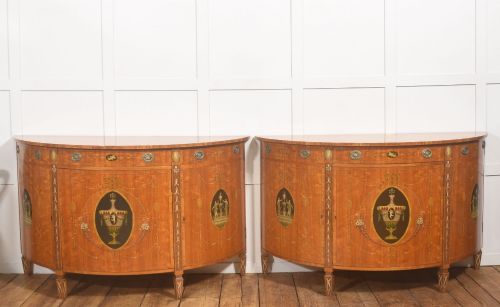
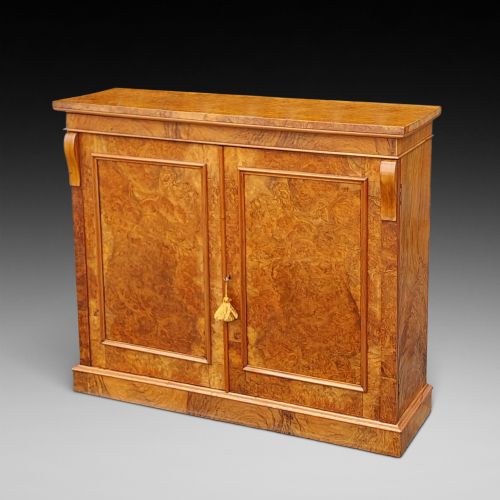
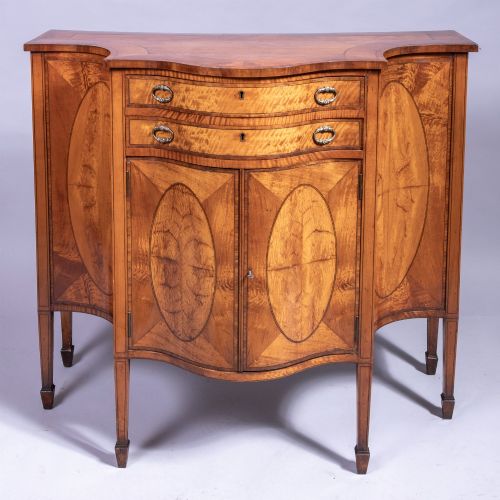
You are most likely to meet Victorian burr walnut credenzas and painted satinwood cabinets on this page, alongside sideboards and side cabinets in burr yew, amboyna, and birch. Forms vary from demi-lune cabinets and mirror-back sideboards to glazed credenzas mounted with porcelain panels.
The regional origins of these pieces stretch across Britain, France, Scandinavia, and Sweden, reflecting diverse cabinetmaking traditions. Whether you choose an 18th-century George III commode or a 1930s cocktail cabinet, each item utilises figured woods to create visual depth.
Materials and construction
Cabinetmakers select highly figured veneers such as burr walnut, satinwood, burr elm, and amboyna to cover carcases of firmer secondary timbers. These decorative veneers are matched and laid to create symmetrical patterns across doors and panels, highlighting the natural grain.
Gilt bronze mounts, brass galleries, and glazed door panels frequently complement the woodwork, particularly on nineteenth-century French and Victorian pieces. Surface finishes are hand-applied to protect the timber while enhancing its natural lustre and colour.
Golden Wood Credenza Retail Price Guide 2026
Typical asking prices for golden wood credenza among the pieces listed under this phrase on Sellingantiques today, from the lower quarter to the upper quarter. They describe what is for sale here now, not the wider market.
Several cabinets on this page hide their contents behind painted flora, mirror glass, or porcelain plaques.
Judging the quality
The quality of a golden wood credenza lies in the selection and matching of the timber veneers across the primary surfaces. Finer examples display continuous, balanced grain patterns that demonstrate careful planning by the maker.
The integration of secondary elements such as hand-painted floral motifs, fire-gilt bronze mounts, and original glass panes separates standard production from superior craftsmanship. Joinery methods, including dovetailed drawer construction and solid timber framing, dictate the structural integrity and longevity of the cabinet.
Edmond Poteau
The Golden Wood Credenza Glossary
- Satinwood
- A durable hardwood with a natural golden sheen and fine texture, frequently utilised in Sheraton Revival and eighteenth-century furniture. It accepts painted decoration well.
- Burr walnut
- Timber taken from a growth on a walnut tree, producing swirling knot formations and rich patterning. It forms highly decorative surfaces on Victorian salon cabinets and credenzas.
- Demi-lune
- Half-moon shape in plan, describing cabinets and commodes with a curved front and flat back designed to sit flush against a wall.
- Amboyna
- An exotic southeast Asian timber yielding a rich, golden-brown burr with distinctive eyes and speckling. Cabinetmakers reserve it for premium panels and banding.
- Gilt bronze
- Copper alloy cast and finished with a gold-toned mercury amalgam or electroplating, applied to mounts and decorative trims on nineteenth-century pieces.
Golden Wood Credenza: Frequently Asked Questions
What is a golden wood credenza?
A golden wood credenza is a low cabinet designed for storage and display, constructed from timbers that exhibit warm yellow and amber tones.
These pieces often feature decorative veneers like satinwood, burr walnut, and birch, alongside glass doors or brass mounts.
How do I date a timber cabinet?
Dating relies on observing construction methods, hardware types, and the prevailing style of the period, such as Victorian or Art Deco.
Secondary woods inside drawers and the specific way veneers are laid also provide clues to the decade of manufacture.
Where should I place a credenza?
These cabinets suit dining rooms, hallways, and living spaces where they can function as sideboards or display surfaces for decorative objects.
Placing them away from direct sunlight protects the delicate wood veneers and painted details from fading.
How do I care for figured wood?
Maintenance involves dusting with a soft, dry cloth and avoiding harsh chemical polishes that can degrade the historic finish.
Maintaining stable room humidity prevents the timber veneers from drying out and lifting over time.