





Neoclassical Console Cabinets
Neoclassical console cabinets bring classical symmetry and refined timberwork to a room, offering elegant surface space and concealed storage.
Neoclassical Console Cabinets
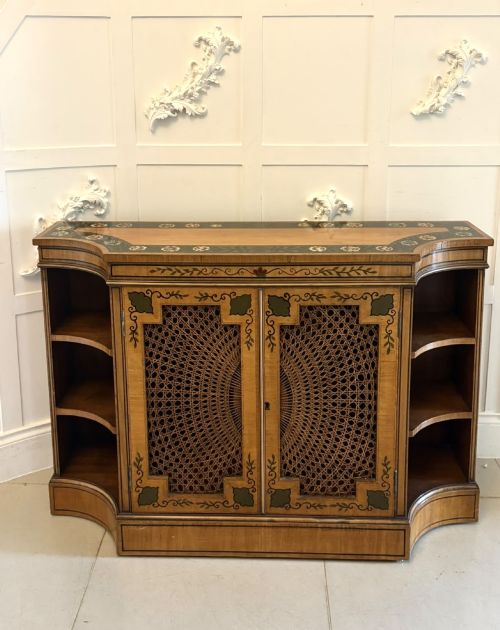
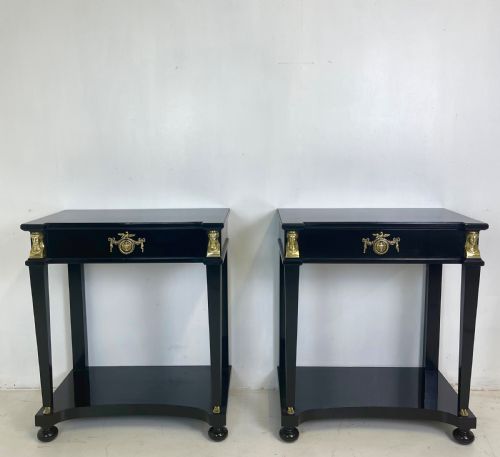
Neoclassical console cabinets encompass side pieces, demi-lune commodes, and marble-topped tables designed with strict classical proportions. When searching for neoclassical console cabinets, buyers encounter forms ranging from Sheraton Revival satinwood pieces to French Empire marble-topped designs.
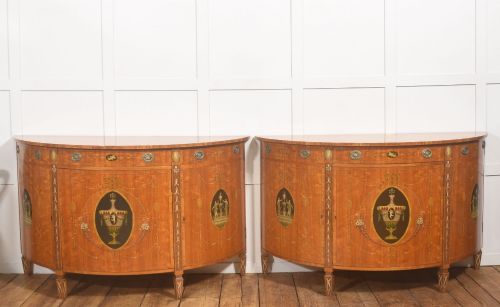
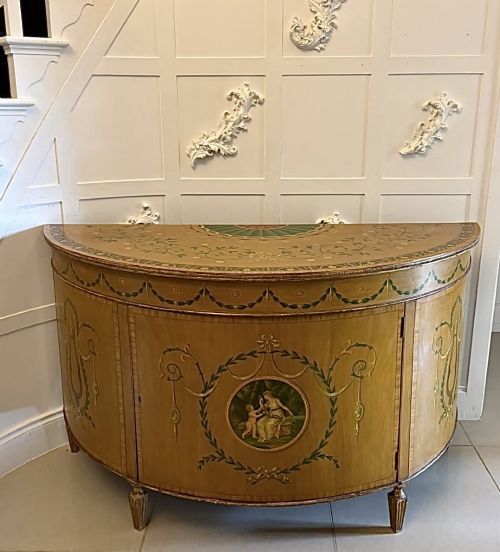
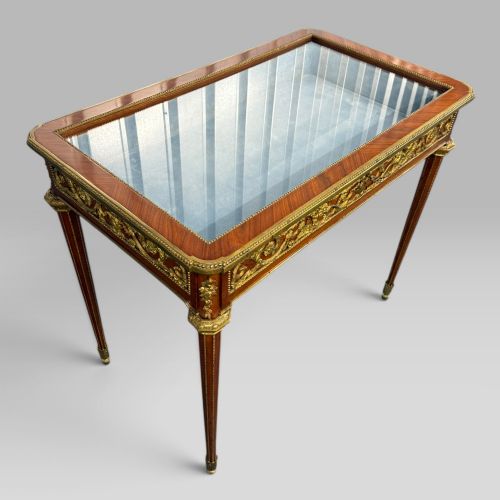
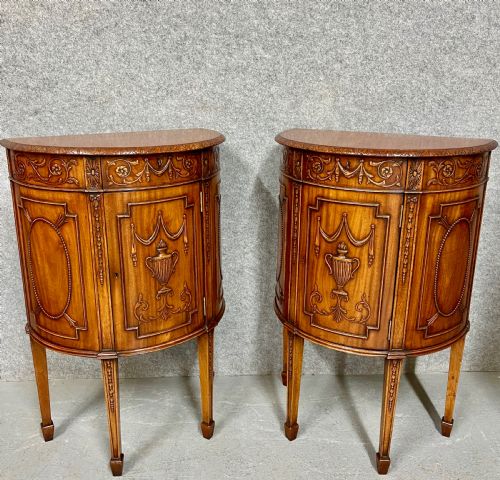
The selection includes demi-lune side cabinets, bow-front cupboards, and display tables originating from various periods including the Victorian era, the nineteenth century, and the early twentieth century. Many examples display semi-circular or curved footprints intended to sit flush against a wall.
English, French, Italian, and Dutch influences appear across the inventory, demonstrating diverse regional interpretations of classical motifs. Pieces span styles such as Louis XVI Revival, Adam, and Directoire, utilising distinct regional cabinet-making traditions.
Materials and construction methods
Cabinet makers constructed these pieces primarily using mahogany and satinwood, frequently applying intricate painted details, marquetry, and inlaid veneers to the primary surfaces. Carved parcel gilding and brass feet provide decorative contrast to the timber frames.
Heavy fossil marble and plain marble slabs form the upper surfaces on numerous console tables and side cabinets, supported by wooden carcasses. Ormolu mounts and brass hardware accent key structural points on French and Italian examples.
Joinery techniques accommodate curved elements such as tambour fronts and demi-lune doors, requiring precise shaping of timber. Hand-painted floral motifs and classical urns adorn satinwood panels on revival pieces from the early twentieth century.
Neoclassical Console Cabinets Retail Price Guide 2026
Typical asking prices for neoclassical console cabinets among the pieces listed under this phrase on Sellingantiques today, from the lower quarter to the upper quarter. They describe what is for sale here now, not the wider market.
One diminutive cabinet rests upon tiny brass feet, proving that even eighteenth-century sideboards appreciated good footwear.
Assessing craftsmanship and finish
The refinement of hand-painted decoration and the crispness of marquetry inlay distinguish finer examples from standard production. Superior pieces feature balanced composition in their painted satinwood details and precise execution of classical motifs.
The integration of heavy marble tops and the quality of ormolu or brass mounts indicate the tier of manufacture. Exhibition-quality items demonstrate superior timber selection and more elaborate joinery in curved components like demi-lune doors.
François Linke·Pietro Ferrario
The Neoclassical Console Cabinets Glossary
- Demi-lune
- A half-moon shape characteristic of console tables and side cabinets designed to stand against walls. This footprint allows the furniture to project minimally into a room while providing functional surface area.
- Satinwood
- A durable, yellowish timber native to Ceylon and India, prized for its natural sheen and pale hue. Cabinet makers frequently used it as a fine veneer ground for painted neoclassical decorations.
- Ormolu
- Gilded bronze mounted onto furniture as decorative feet, keyhole surrounds, or corner accents. The technique involves applying a mercury and gold amalgam to cast bronze.
- Marquetry
- The art of applying pieces of veneer to a structural structure to form decorative patterns and pictorial designs. Craftsmen utilise various tinted woods to achieve tonal shading.
- Bijouterie
- A glazed display table or cabinet designed to showcase small valuable items and curiosities. These pieces often feature velvet-lined interiors and hinged glass lids.
Neoclassical Console Cabinets: Frequently Asked Questions
Where should I place a console cabinet?
Console cabinets suit hallways, living rooms, and dining spaces where surface display and slim proportions are beneficial. Their shallow depth prevents obstruction in narrow thoroughfares.
Pairing them with a wall mirror or artwork creates a traditional focal point in an interior.
How do I identify Sheraton Revival pieces?
Sheraton Revival furniture typically dates from the late nineteenth or early twentieth century, emulating late eighteenth-century English designs. They often showcase pale satinwood and hand-painted floral swags.
These cabinets reflect an Edwardian penchant for lighter, refined classical aesthetics.
Are marble tops original to these cabinets?
Many French and Italian console tables and side cabinets were manufactured with fitted marble tops to provide a durable, cool surface. Fossil marble and white varieties are common on continental examples.
Checking the fit against the wooden frame helps determine whether the stone belongs to the piece.