


Classical Mythology Figurine
A classical mythology figurine brings antique deities and heroes into a room, cast in bronze or carved from marble.
Classical Mythology Figurine
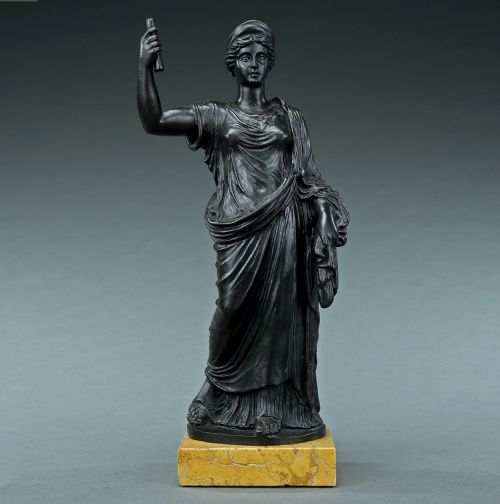
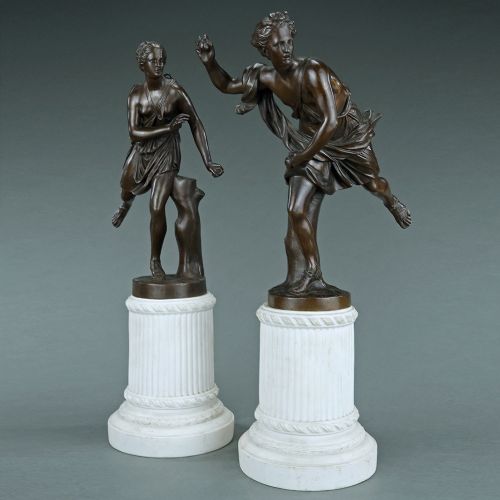
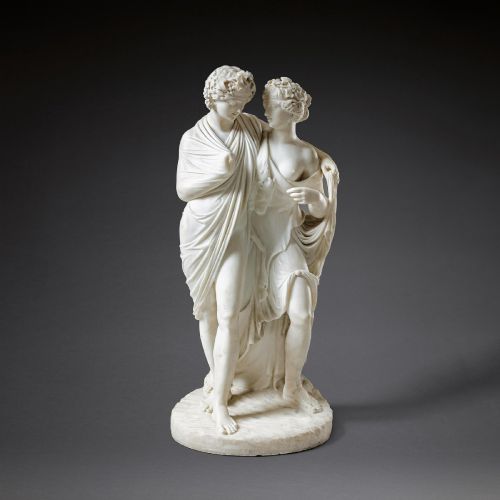
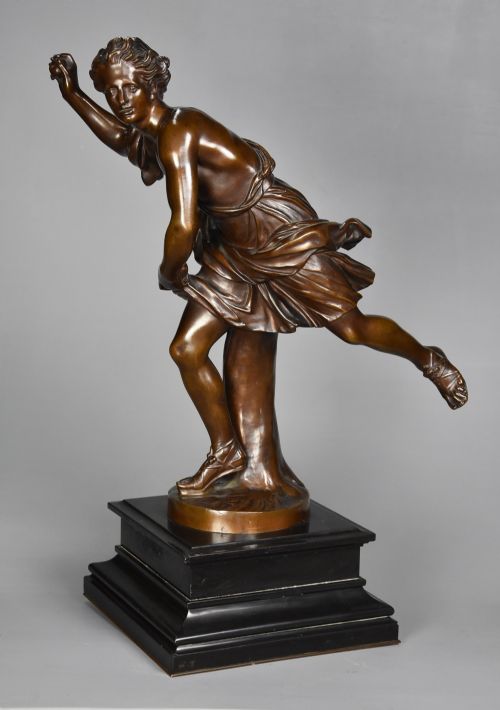
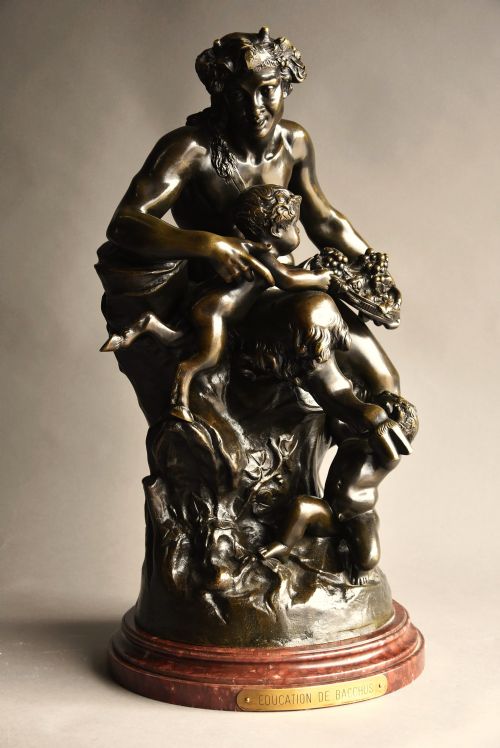
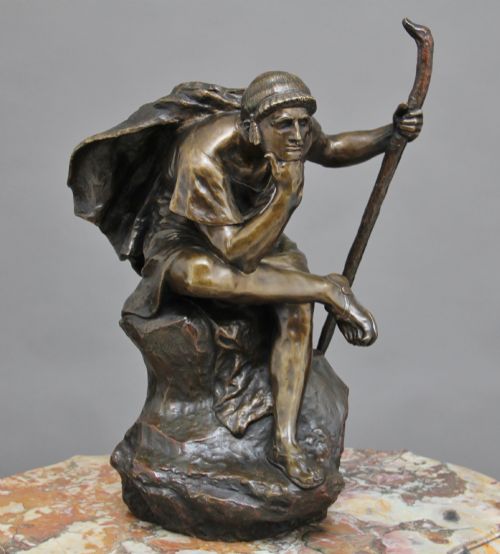
A classical mythology figurine represents figures from ancient legend, from gods like Zeus and Bacchus to heroes such as Perseus and Ajax. These sculptures take the form of individual statuettes, pairs, and group compositions cast in metal or formed in porcelain.
Most pieces seen here belong to the nineteenth century, particularly from the Grand Tour tradition where travellers brought home bronzes and marbles modelled on famous antiquities. Alongside these, earlier porcelain figures and later twentieth-century interpretations appear.
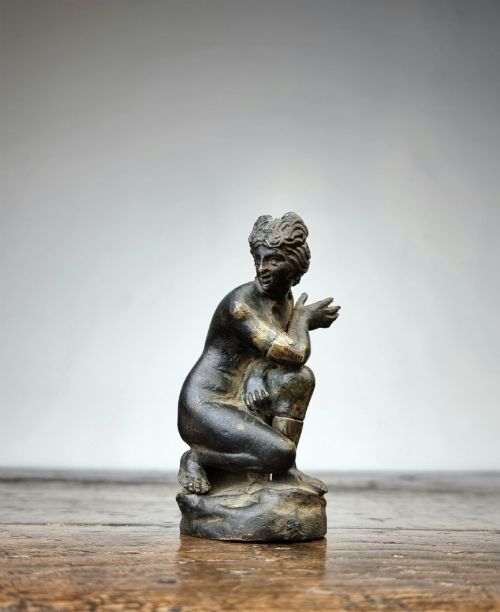
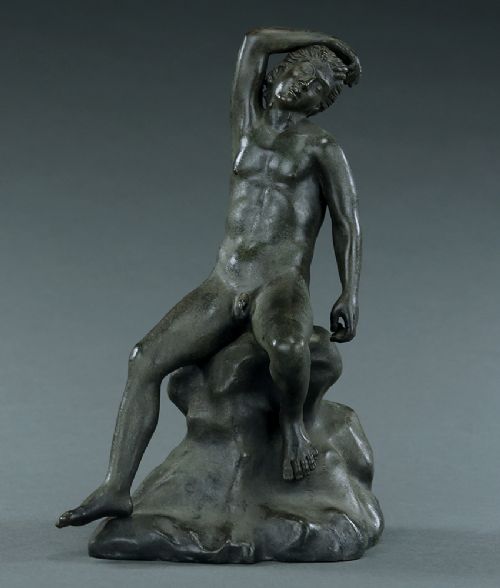
Subjects range from sleeping fauns and crouching Venuses to dramatic groupings like Father Time clipping Cupid's wings. The scale varies from small cabinet pieces to large statues designed for prominent display.
Materials and technique
Foundry bronze forms the majority of these pieces, frequently given a dark patination, verdigris, or green finish to echo excavated antiquities. Casts are often produced using the lost-wax method, capturing fine details of drapery and anatomy.
Carved white marble and Carrara marble provide another primary medium, sometimes mounted on ebonised wood bases. Biscuit porcelain appears in Georgian works, offering a matte, unglazed surface suited to classical figure groups.
Materials span patinated bronze, Carrara marble, biscuit porcelain, and ebonised wood across several centuries.
Judging the work
Quality rests in the crispness of the casting or the depth of the carving, distinguishing a sharp rendering of muscle and fabric from a soft copy. The fidelity to the ancient source material and the subtlety of the patina or surface finish dictate the standing of a piece.
Signatures from established founders or sculptors separate standard workshop output from works of ambition. The integration of marble bases and the weight of the bronze contribute to the overall presence of the object.
Barbedienne·Carlo Albacini·Claude Michel Clodian·Antonio Frilli·Albert Hussmann·Aug. Moreau·R Henn·Franz Iffland
The Classical Mythology Figurine Glossary
- Grand Tour
- A traditional trip through Europe undertaken by upper-class scholars and collectors to study classical art. Objects acquired on these journeys were typically small bronzes or marbles copied from ancient sculptures.
- Patination
- The chemical or natural coloration of a bronze surface resulting from age or deliberate treatment. A green or dark brown finish often mimics the appearance of buried antiquities.
- Biscuit porcelain
- Unglazed ceramic fired to a matte, marble-like finish that highlights sculptural detail. It was widely utilised for eighteenth-century figure groups.
- Verdigris
- A green patina formed on copper or bronze by atmospheric oxidation. In nineteenth-century bronzes, this finish is often applied artificially to simulate antiquity.
Classical Mythology Figurine: Frequently Asked Questions
What is a Grand Tour bronze?
A Grand Tour bronze is a nineteenth-century small-scale sculpture copied from classical antiquity, bought by travellers touring Italy and Greece.
These pieces allowed collectors to display representations of famous museum sculptures in private homes.
How do I identify the subject of a figure?
Subjects are typically identified by their traditional attributes, such as a bow for Diana, grapes for Bacchus, or wings for Cupid.
Inscriptions on the base or comparisons with known ancient sculptures also reveal the identity of the deity or hero.
Where should I display a heavy marble or bronze?
These dense materials require sturdy furniture such as a strong sideboard, pedestal, or low table.
Keep them away from direct heat sources and ensure marble is placed on a stable, level surface.
Are these figures solid bronze?
Many nineteenth-century bronzes are hollow casts produced to reduce weight and cost while maintaining structural strength.
Larger figures and groups are often assembled from multiple cast components joined together.