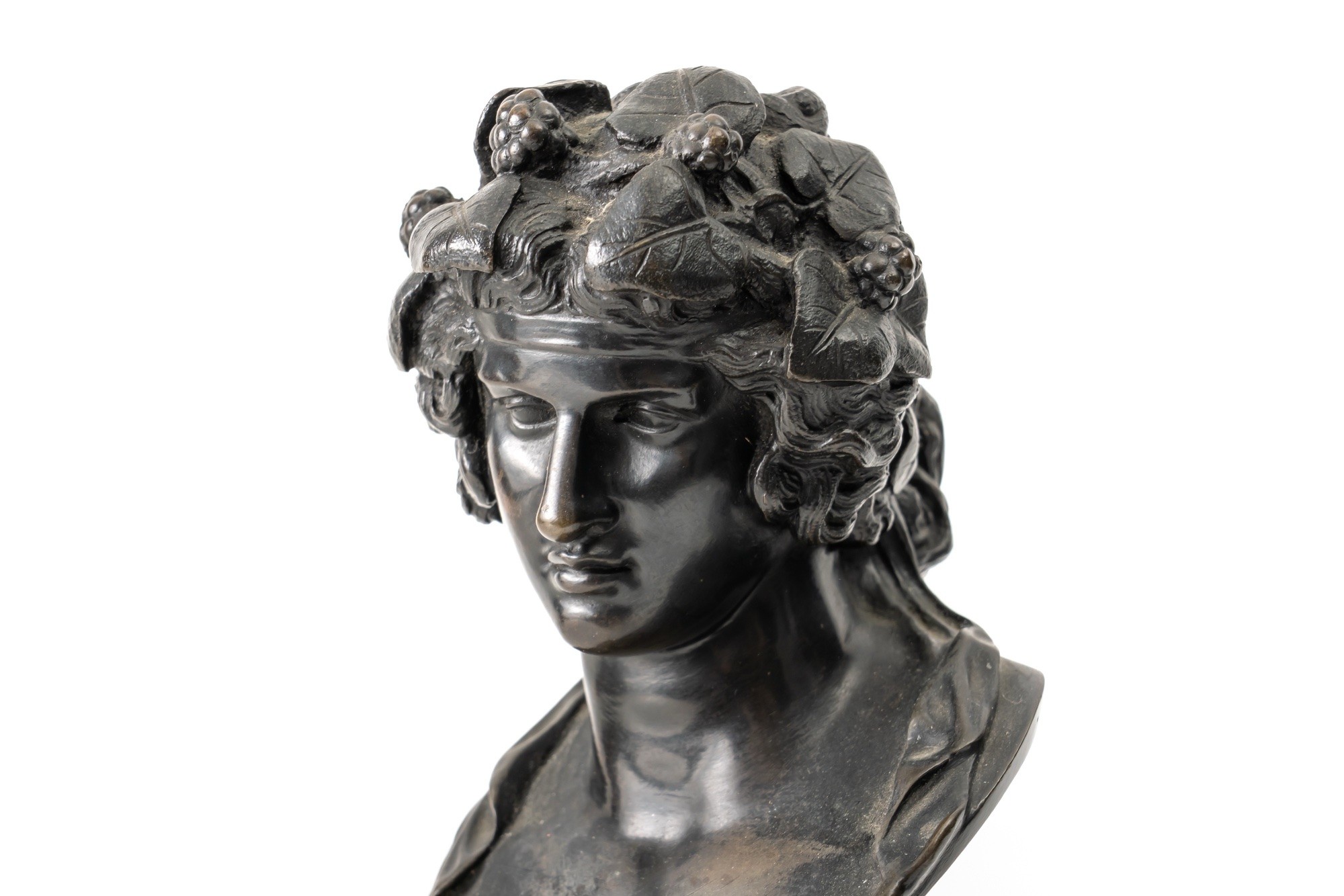
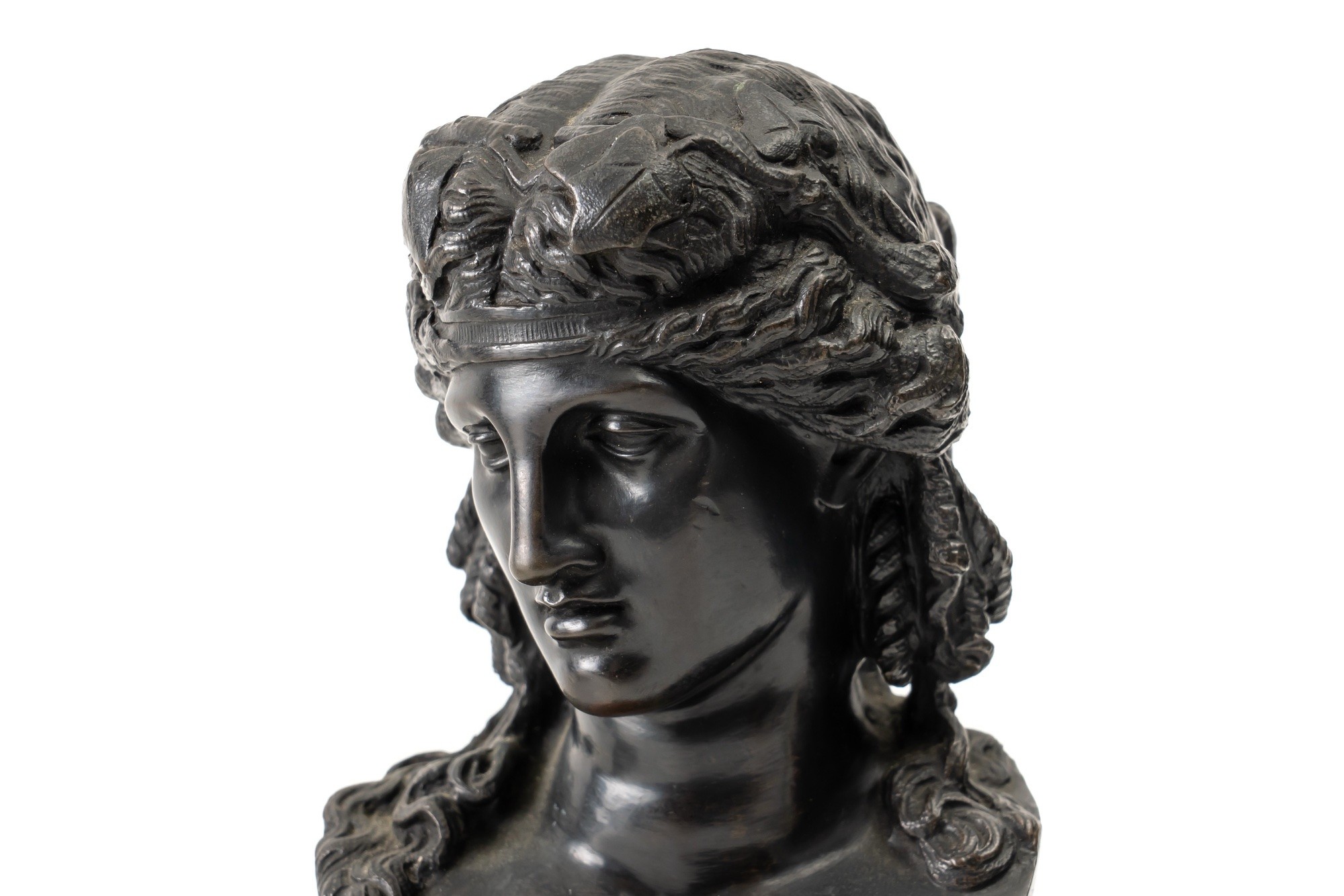
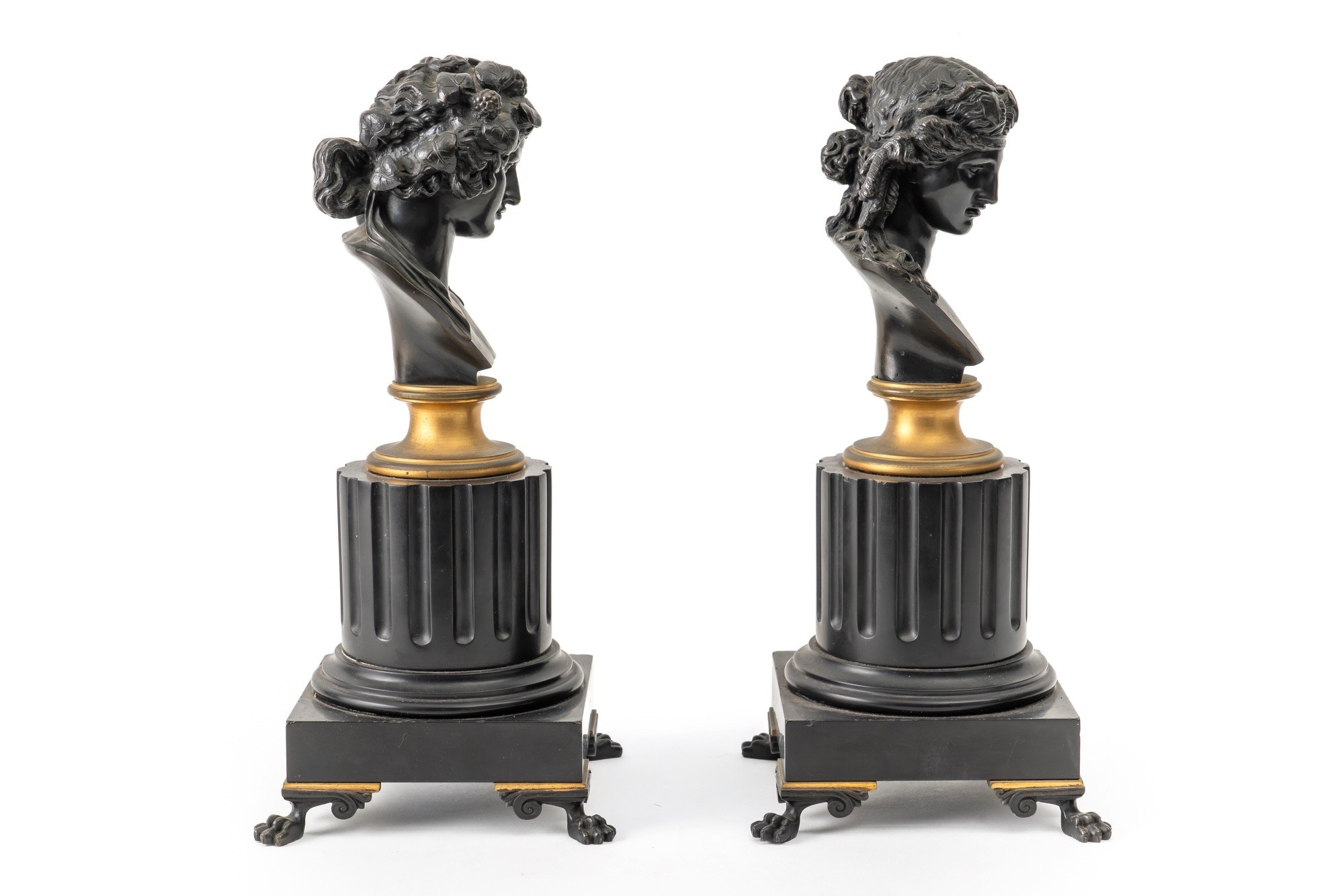
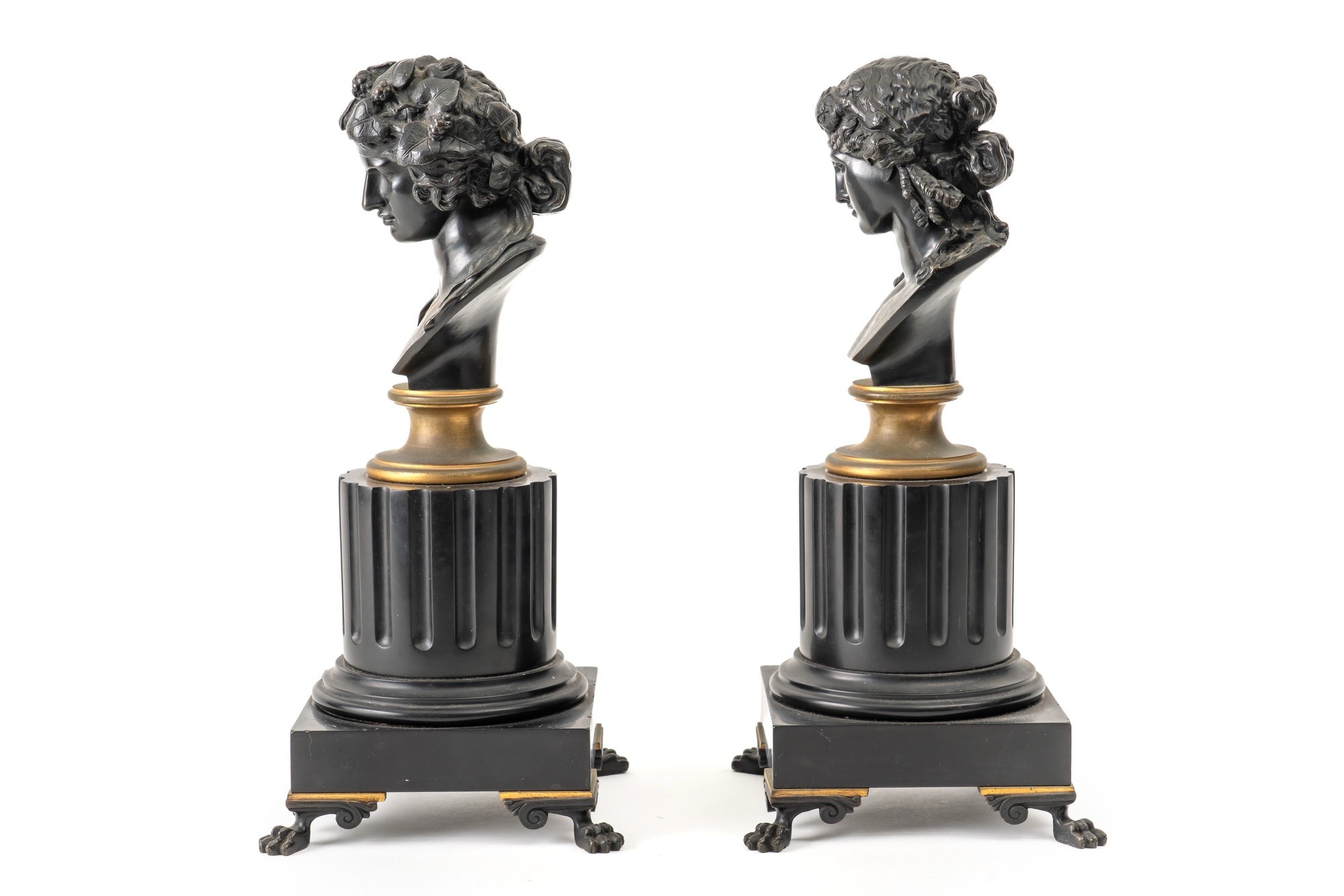
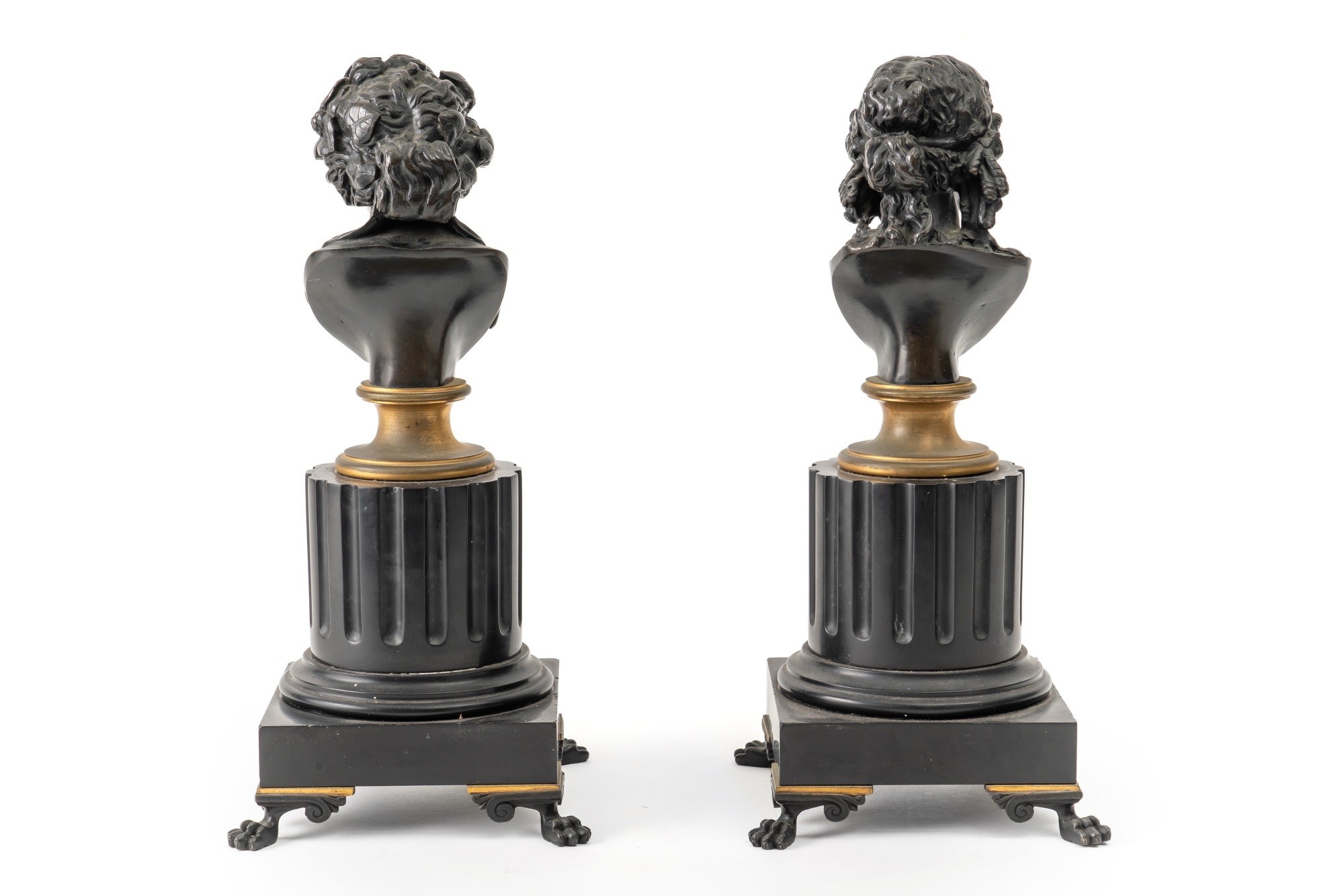
Tinker & Toad has dated these Grand Tour Bronze Busts to the 19th Century.
Such classical representations often shared similar characteristics, leading to differing interpretations and identifications over time.
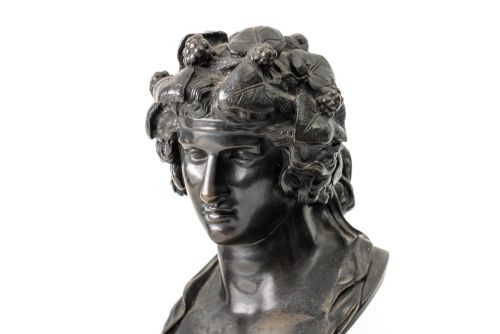
The companion bust depicts Antinous, the celebrated favourite and beloved companion of the Roman Emperor Hadrian. Following his tragic drowning in the River Nile in AD 130, Hadrian had Antinous deified. His image subsequently became widely celebrated throughout the Roman Empire, with sculptors portraying him as an idealised divine figure, frequently associated with Bacchus (Dionysus), the god of wine, vitality and renewal.
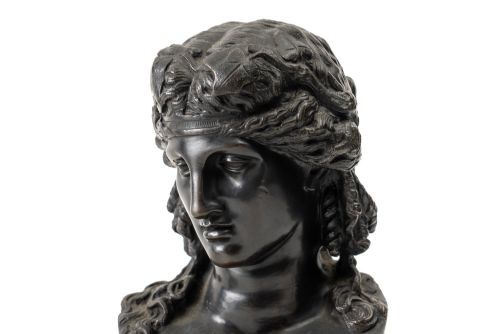
The bust is modelled on the celebrated ancient marble known as the Lansdowne Antinous, discovered at Hadrian's Villa in Tivoli in 1769 and now housed in the Fitzwilliam Museum, Cambridge.
An attractive and finely detailed pair, combining rich bronze patination with contrasting gilt mounts and elegant black marble columns. They reflect the renewed fascination with classical antiquity during the 19th century and the traditions of the Grand Tour.
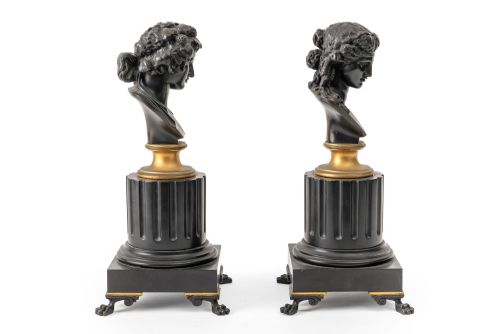
Date: Late 19th century, circa 1880.
Dimensions: 29 cm high each.
Condition: In very good antique condition, with light wear and a pleasing aged patina consistent with age. The bronze busts and their marble plinths present particularly well.
Tinker & Toad has dated these Grand Tour Bronze Busts to the 19th Century.
You can view the stock and full dealer information on the Tinker & Toad Profile Page
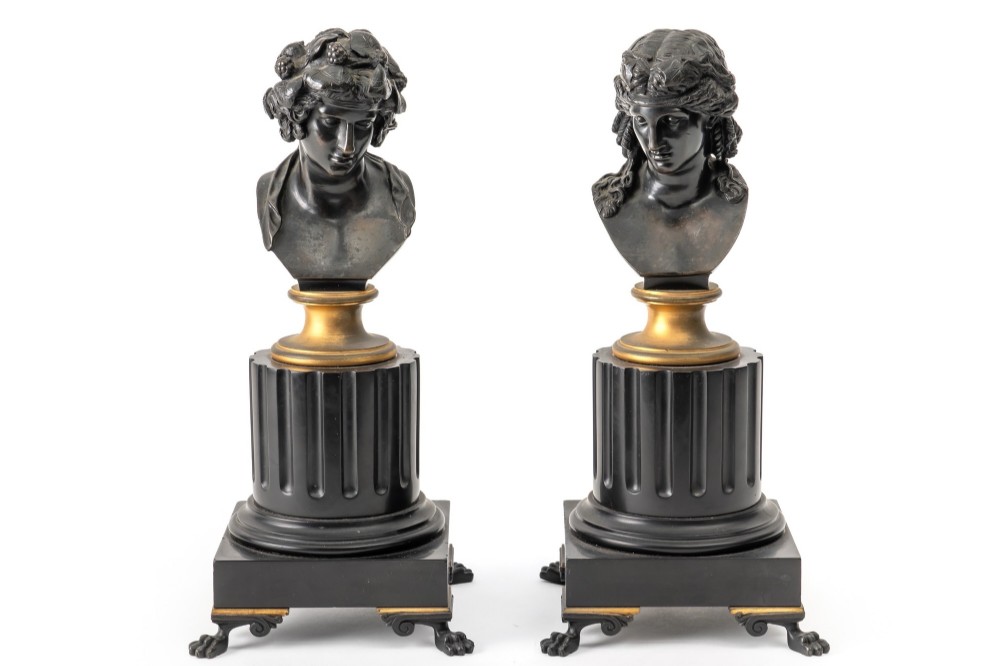
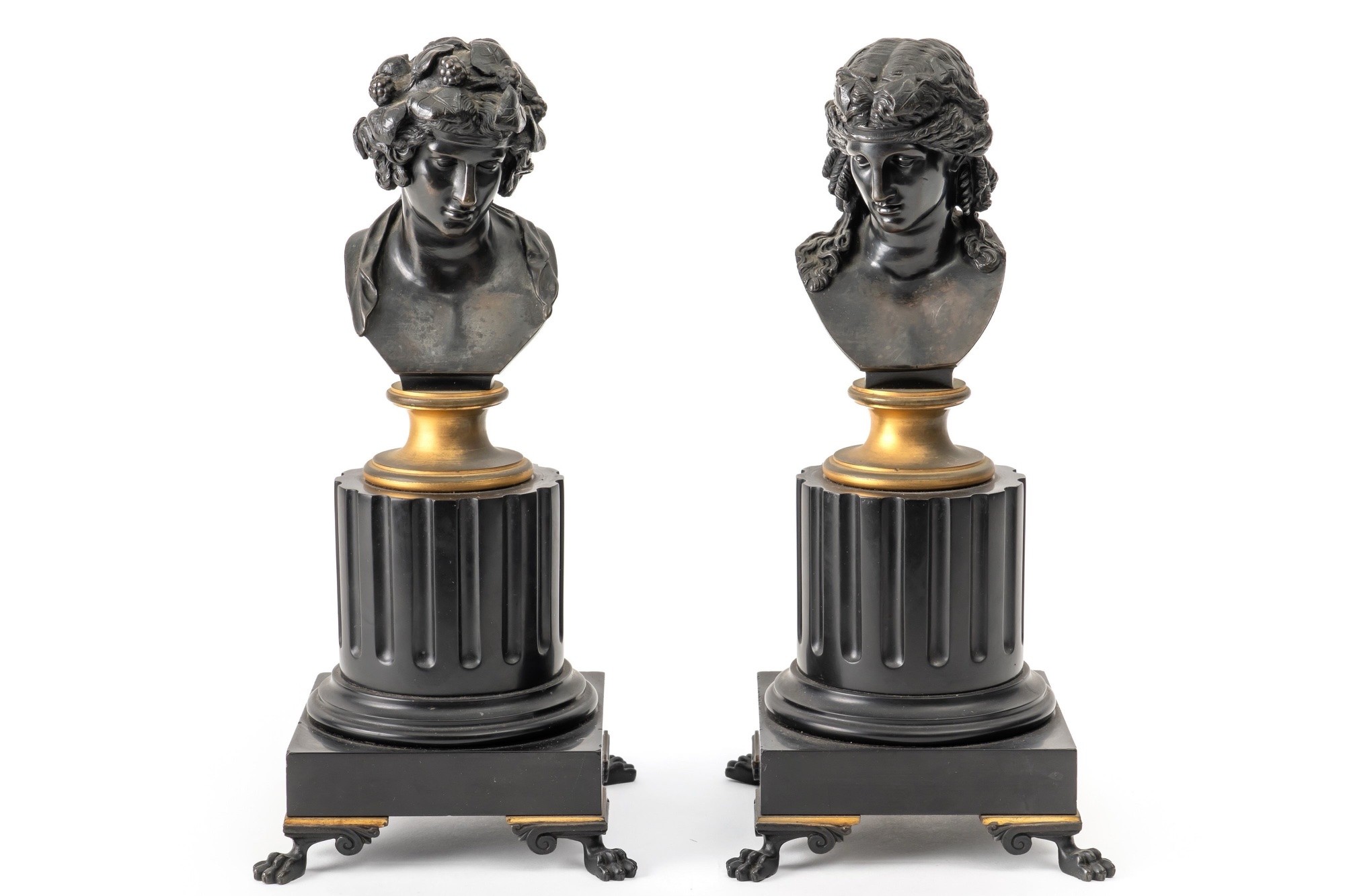
Pair of French Grand Tour Bronze Busts of Ariadne & Antinous, Late 19th Century