


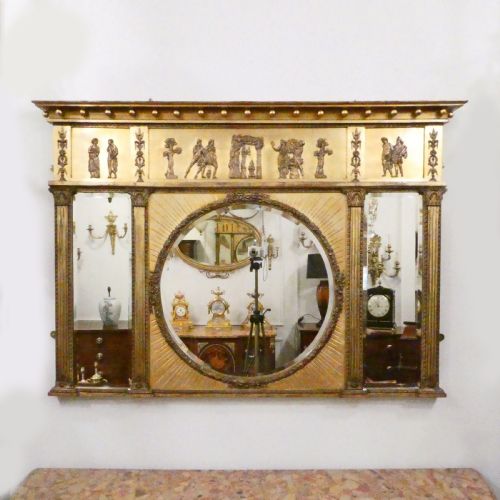


Classical Fluted Wall Mirror
A classical fluted wall mirror brings neoclassical symmetry and bright reflection into a room, drawing the eye with balanced architectural lines.
Classical Fluted Wall Mirror
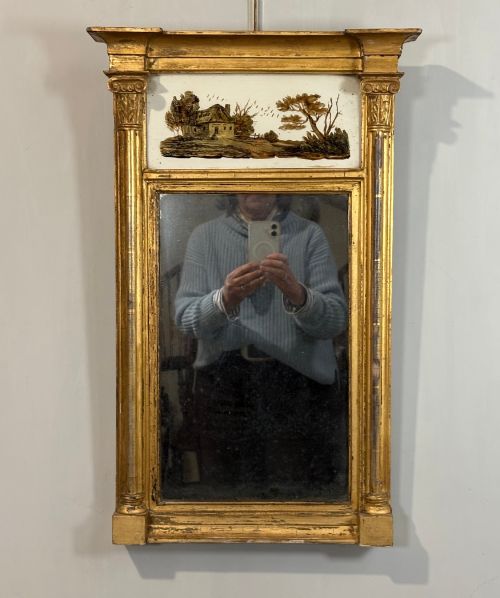
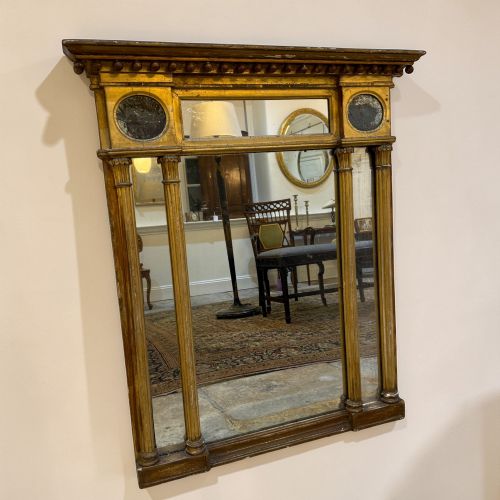
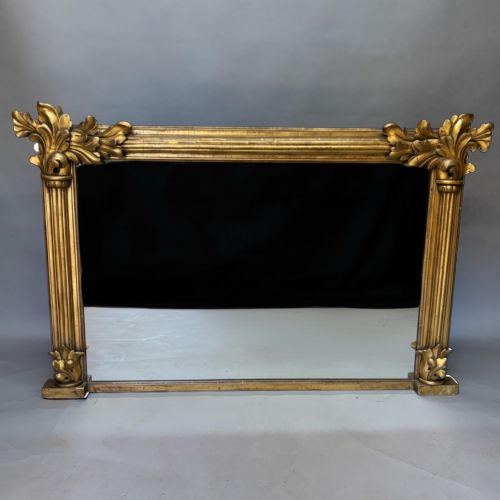
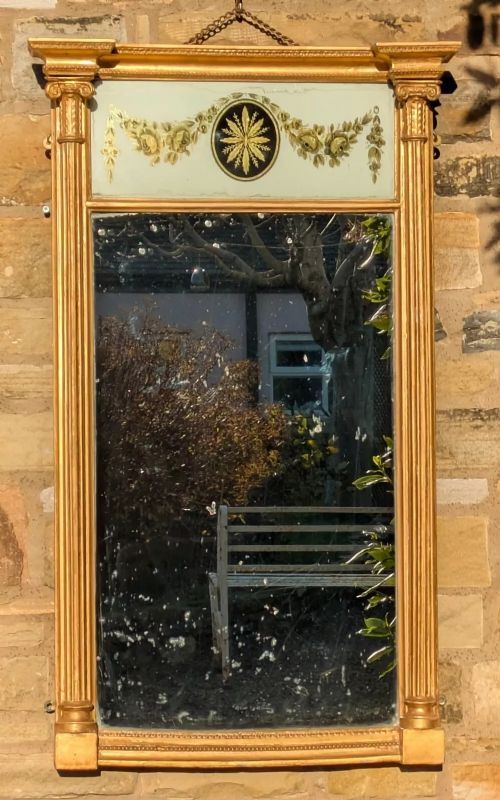
A classical fluted wall mirror typically takes the form of a pier mirror or an overmantel mirror designed to hang above a fireplace or between windows. These pieces originate predominantly from the nineteenth century, encompassing the Regency and Victorian periods with revivals of earlier neoclassical and Adam styles.
Buyers will most frequently encounter giltwood and painted wood frames featuring architectural details such as column frames, ribbed mouldings, and occasionally verre eglomise panels or lion masks. The selection ranges from neat-sized triptych overmantels to large hanging wall mirrors intended to magnify light in principal reception rooms.
How they were made
Carved wood and gesso form the foundational structure of these frames, providing the crisp surface necessary for detailed mouldings and fluted columns. Artisans applied gold leaf, parcel gilt, or paint over the gesso base to achieve the characteristic metallic lustre and decorated finishes seen across the period.
Mirror glass is set within the wooden carcass, sometimes divided into multiple sections as in triptych designs or paired with decorative reverse-painted glass panels. Traditional joinery and hand-applied gilding techniques ensure each frame holds its structural integrity and decorative scheme over centuries.
Classical Fluted Wall Mirror Retail Price Guide 2026
Typical asking prices for classical fluted wall mirror among the pieces listed under this phrase on Sellingantiques today, from the lower quarter to the upper quarter. They describe what is for sale here now, not the wider market.
Listings feature nineteenth-century pieces spanning the Regency, Victorian, and Adam revival styles, constructed from giltwood, painted wood, and gesso.
What varies in quality
The refinement of the carved wood and gesso ornamentation distinguishes finer examples, where fluting, column capitals, and decorative motifs like lion masks retain sharp definition and depth. Lesser pieces display softer detailing where layers of gesso have filled the crisp edges of the underlying carving during earlier refurbishment.
The integrity of the original gilding and the condition of the mirror plate itself define the upper tier of the range. Hand-applied gold leaf ages with a warm, mottled patina, whereas heavy overpainting or poorly silvered replacement glass alters the historical character of the piece.
The Classical Fluted Wall Mirror Glossary
- Giltwood
- Wood coated with gold leaf or gold powder applied over a prepared gesso ground. This finish provides a bright metallic surface that mellows gracefully over time.
- Gesso
- A plaster mixture applied to wood frames to create a smooth surface for carving and gilding. It allows for intricate relief details and sharp architectural mouldings.
- Verre eglomise
- A cold decoration technique where design is applied to the reverse of glass using leaf metal and paint. It frequently appears as a decorative panel above the main mirror glass in Regency pier mirrors.
- Pier mirror
- A tall, narrow mirror designed to hang on the wall space between two windows, often placed above a pier table. These pieces maximise natural light in nineteenth-century interiors.
- Overmantel mirror
- A wide horizontal mirror designed specifically to sit upon the mantelpiece above a fireplace. They reflect ambient room light and often incorporate tripartite plates or column framing.
Classical Fluted Wall Mirror: Frequently Asked Questions
Where should I hang a classical fluted wall mirror?
These mirrors suit principal reception rooms, hallways, and above mantelpieces where their architectural framing can anchor the wall space.
Their reflective surfaces help to bounce light around darker corners and visually expand the proportions of the room.
What is the difference between a pier mirror and an overmantel mirror?
Pier mirrors are traditionally taller and narrower, proportioned to fit the narrow wall space between windows.
Overmantel mirrors are wider and horizontal, built to sit securely above a fireplace mantel.
How do I identify a Regency period mirror?
Regency mirrors frequently feature neoclassical motifs, ebonised details, classical fluted columns, and occasionally verre eglomise panels.
They reflect the design tastes of the early nineteenth century with clean architectural lines.
Are these mirrors heavy?
Many nineteenth-century mirrors use solid wooden frames combined with layers of gesso and glass, resulting in substantial weight.
Proper wall fixings and load-bearing brackets are essential for safe installation.