





Classic Study Desk
These classic study desk pieces combine timber and brass to anchor a workspace.
Classic Study Desk
When searching for a classic study desk, buyers encounter robust mahogany pedestal desks, roll-top variants and partners desks dating from the Georgian period through to the Edwardian and Art Deco eras. These pieces provide substantial writing surfaces supported by banks of drawers or pedestals.
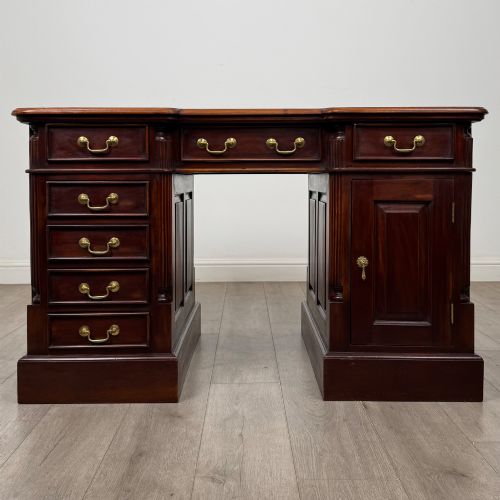
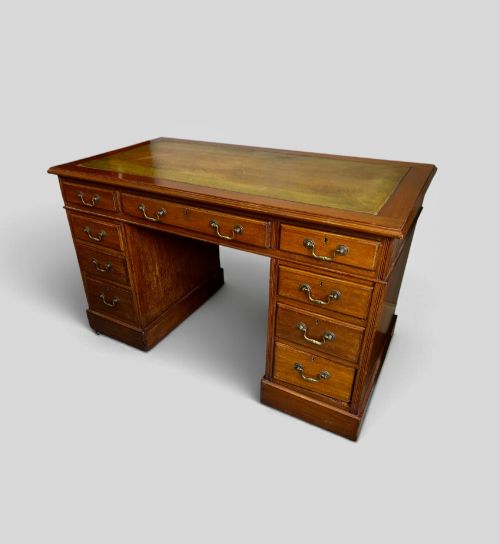
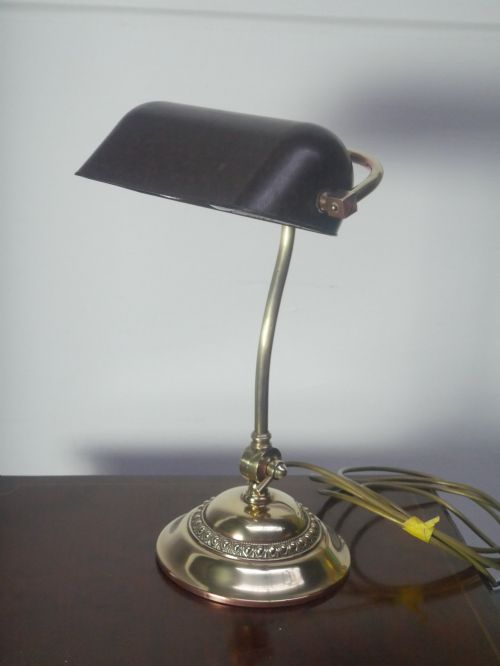
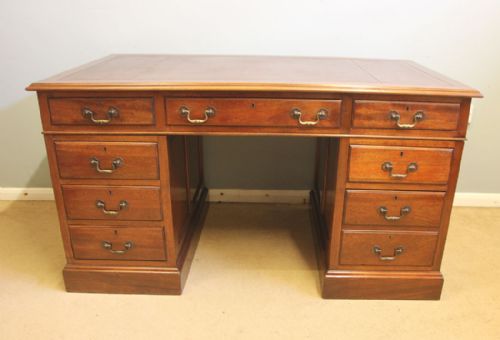
The version most frequently met on this page is the Victorian mahogany pedestal desk, often featuring leather inserts and classical proportions designed for practical daily use. Alongside these timber writing tables, the category extends to associated study furniture including brass desk lamps, bronze sculptures, leather chairs and globes.
Origins span British and European workshops, encompassing revived styles like Chippendale and Sheraton alongside straightforward utilitarian designs in oak and burr walnut.
How they were made
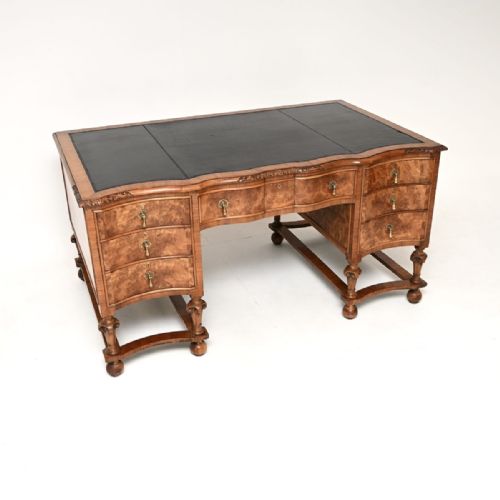
Makers utilised solid timbers and veneers such as flame mahogany, burr walnut and golden oak, often applying polished leather inserts to the writing surfaces. Joinery relied on traditional drawer construction, pedestals and tambour mechanisms.
Metalwork played a structural and decorative role, incorporating cast brass handles, gilt metal mounts, toleware shades and solid bronze castings. Paper mache formed the foundation for globes, while marble provided weight and texture for sculptures and bases.
Materials documented across the inventory include solid brass, bronze, marble, burr walnut, flame mahogany veneer and paper mache.
What varies in quality
Proportion and scale distinguish finer examples, where the depth of the pedestals and the height of the kneehole maintain balanced architectural lines. Timbers selected for distinct figure, such as flame mahogany or burr walnut, elevate the visual weight of the piece.
The refinement of the brass hardware, the suppleness of the inset leather and the crispness of carved details like cockbeading or bracket feet separate standard commercial production from the finest workshop output.
Bruno Zach·Maple and Co
The Classic Study Desk Glossary
- Pedestal desk
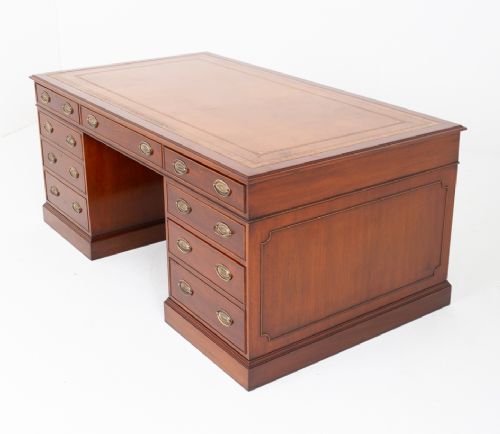
- A heavy writing table supported on two vertical banks of drawers rather than conventional legs. This form provides substantial storage beneath the main writing surface.
- Partners desk
- A double-sided variant designed for two people to sit opposite one another. These large pieces feature drawers and cupboards accessible from both sides.
- Tambour
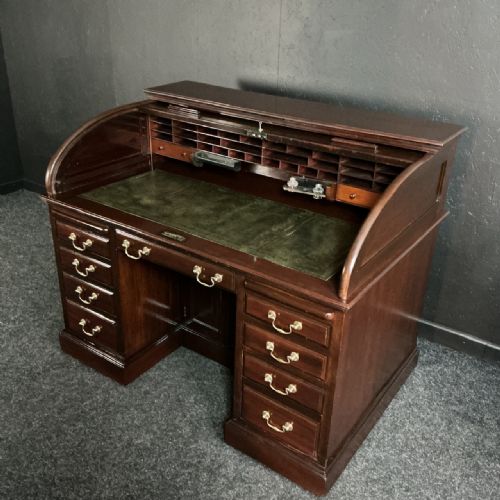
- A flexible sliding shutter formed of narrow strips of wood glued to canvas, allowing roll-top desks to conceal the writing surface. This mechanism requires precise woodworking to operate smoothly.
- Kneehole
- The central recessed space beneath a desk where the user sits. Breakfront versions push this section forward for a more imposing architectural profile.
- Toleware
- Enamelled and painted metal used primarily for desk lamp shades and canisters. The technique adds durable colour to functional workspace items.
Classic Study Desk: Frequently Asked Questions
What is a partners desk?
A partners desk is a large double-sided writing table designed with drawers and cupboards on both faces. This allows two people to work opposite each other.
These pieces typically date from the Georgian and Victorian periods, using solid mahogany or burr walnut construction.
How do I date a pedestal desk?
Dating relies on timber choice, construction methods and stylistic revival details. Victorian and Edwardian examples often feature mahogany with hand-dovetailed drawer boxes.
Earlier Georgian pieces show different secondary woods and lighter carcass proportions, while later Edwardian items incorporate standardised hardware.
Are roll-top desks practical for modern use?
Roll-top desks provide extensive pigeonhole storage and a large writing surface that conceals clutter when closed. The tambour mechanism slides down to lock the compartment.
These heavy timber pieces require adequate floor space and clearance behind the chair.
What is the difference between a writing table and a pedestal desk?
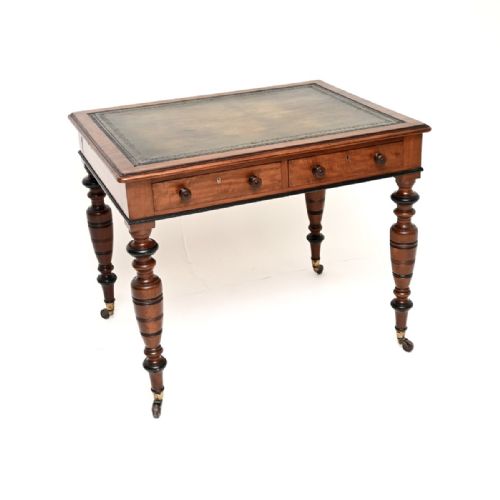
A writing table stands on legs rather than heavy pedestals, offering a lighter visual weight. Pedestal desks incorporate banks of drawers down to the floor.
Both forms utilise hardwoods like mahogany and oak with inset leather tops.