

Home Office Study Desk
A home office study desk brings history into daily workspace, combining practical writing surfaces with period craftsmanship in mahogany, oak, and walnut.
Home Office Study Desk
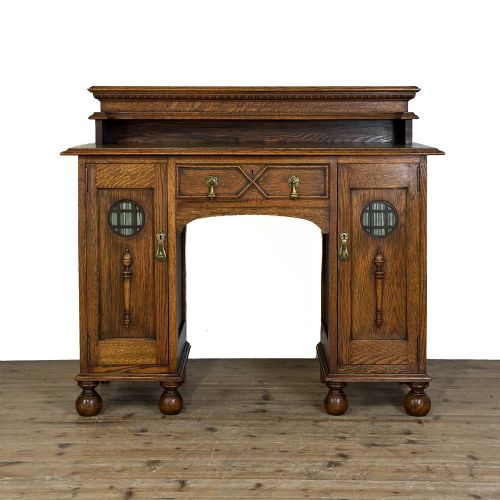
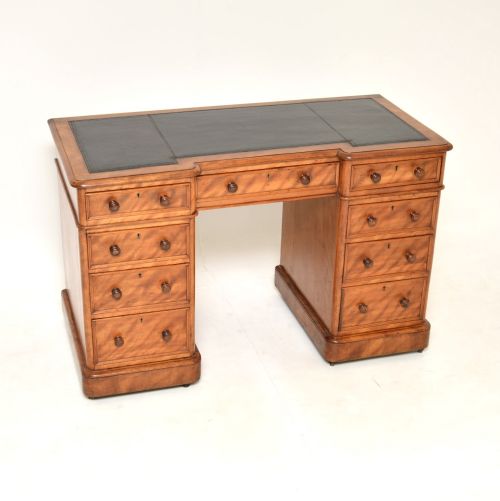
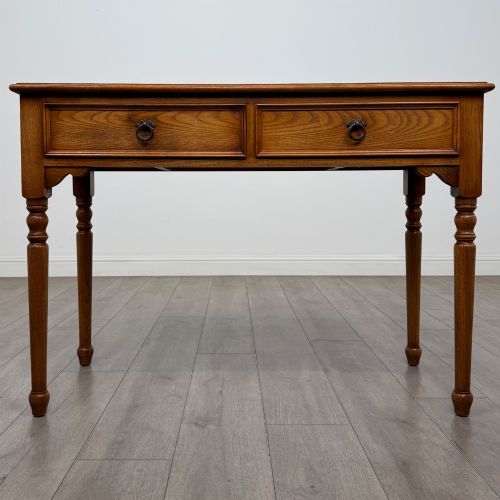
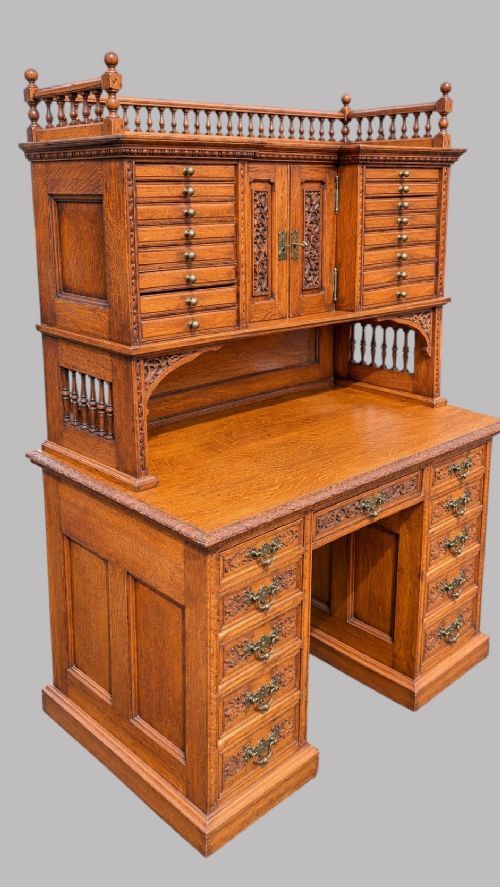
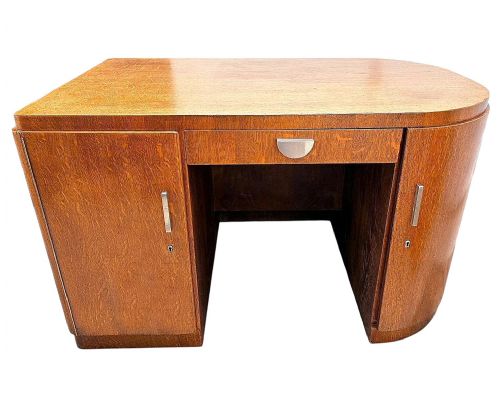
A home office study desk encompasses a variety of traditional forms, from substantial pedestal desks and partners tables to compact writing tables and bureaus. Buyers searching this phrase most frequently encounter nineteenth-century and early twentieth-century examples shaped by Victorian, Edwardian, and Art Deco design aesthetics.
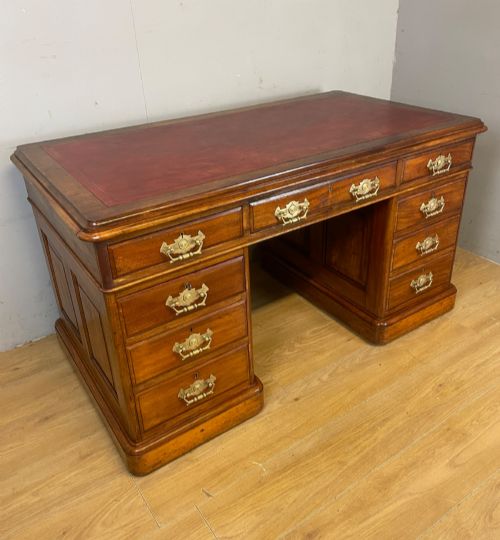
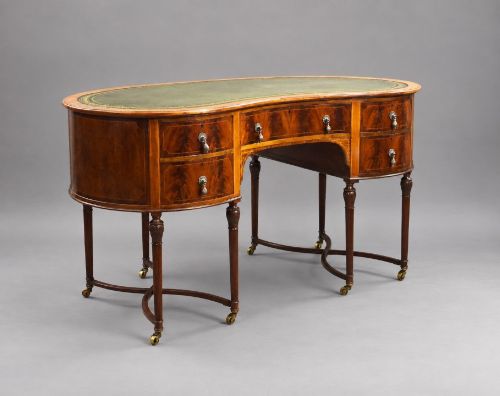
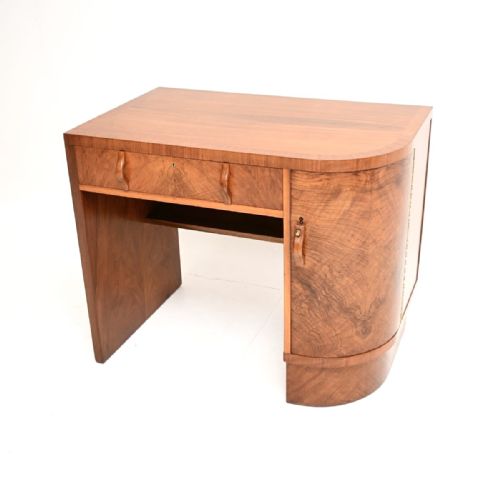
The selection ranges from twin-pedestal configurations equipped with multiple drawers to refined kidney-shaped writing tables and kneehole desks. Oak and mahogany predominate in the earlier periods, while burr walnut and satinwood emerge in later nineteenth-century and Art Deco pieces.
Materials and construction
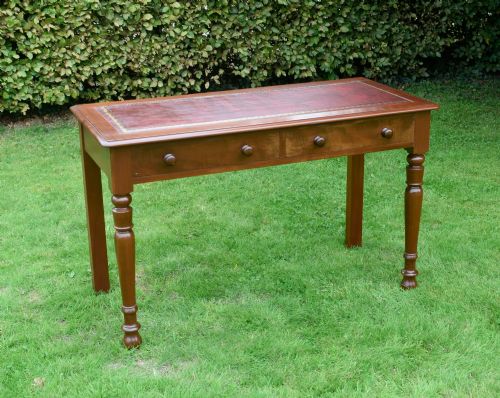
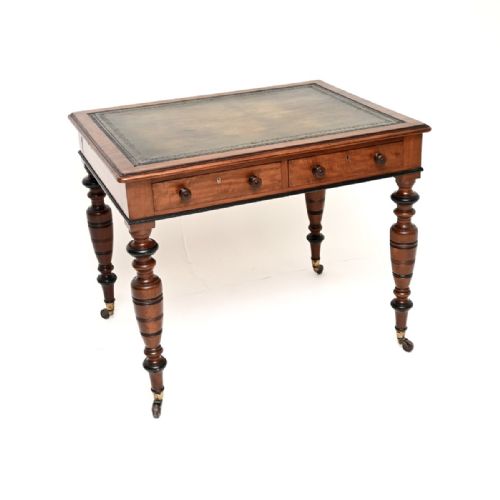
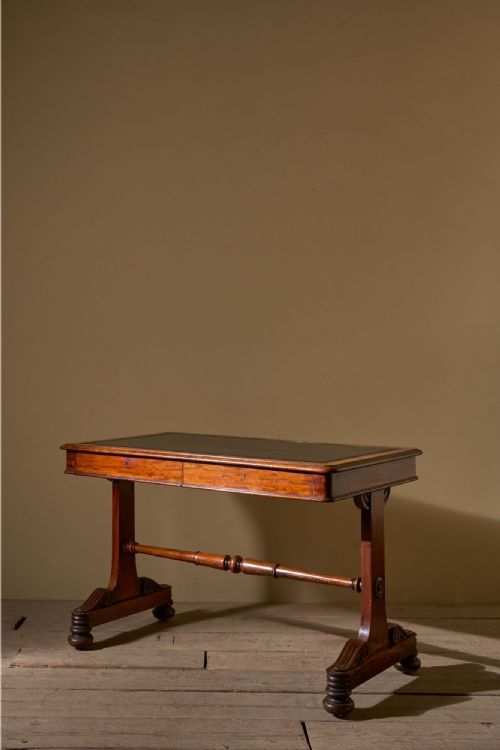
Cabinet makers utilised dense hardwoods like mahogany, oak, and walnut, frequently applying figured burr veneers or satinwood to primary surfaces for visual depth. Leather writing surfaces, often tooled with gold, were traditionally inset into the top of pedestal desks and writing tables.
Brass handles, hinges, and locks provide functional hardware details across Victorian and Edwardian examples. Structural joinery relies on traditional dovetail drawers and solid timber framing, ensuring durability through decades of daily clerical use.
One exceptional Victorian desk incorporates carved paw feet beneath burr walnut timber.
Distinctions in craftsmanship
Quality rests upon the selection of timber figures, the retention of original hardware such as handles and locks, and the integrity of the secondary woods used inside drawer construction. Finer pieces demonstrate precise marquetry, clean dovetailing, and well-preserved leather inserts rather than later replacements.
Proportion and execution separate standard commercial pieces from bespoke workshop productions. Maker attribution, through stamped drawer linings or cabinet labels, elevates the standing of a desk within its respective period.
Edwards & Roberts·Johnstone & Jeanes·Hobbs & Co.·Wylie & Lochhead Glasgow·Maple & Co
The Home Office Study Desk Glossary
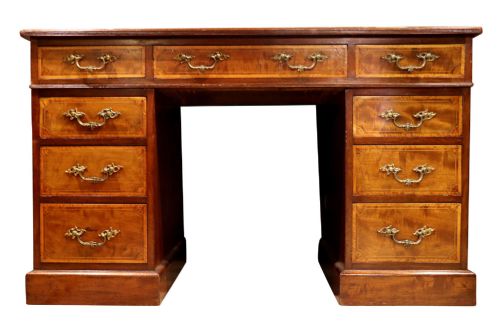
- Pedestal desk
- A heavy freestanding desk comprising two supporting banks of drawers beneath a rectangular top. This form provides substantial storage alongside a central writing space.
- Partners desk
- A large double-sided desk designed for two people to work opposite one another, featuring drawers and cupboards accessible from both long sides.
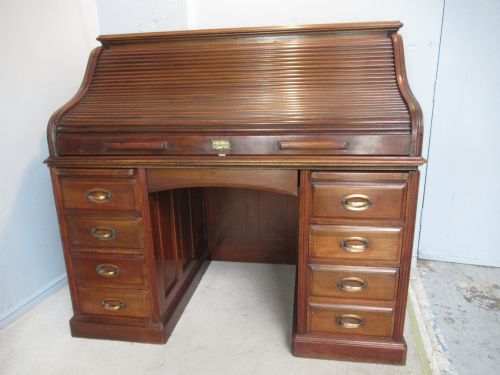
- Tambour
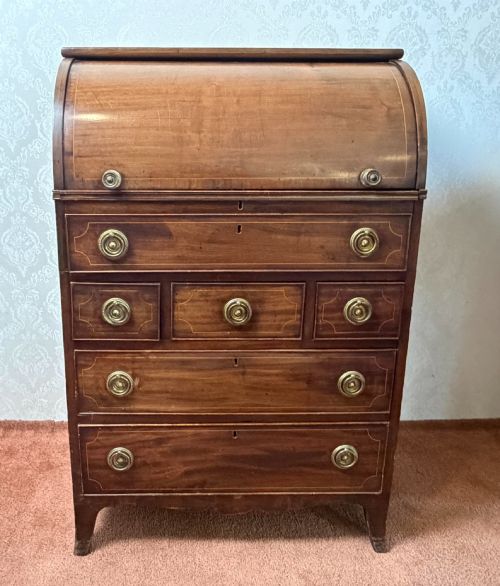
- A sliding door or top constructed from narrow strips of wood glued to a canvas backing, allowing it to curve around a cylinder drum.
- Kneehole desk
- A compact desk featuring a central recessed space for the legs, flanked by single or multiple vertical stacks of drawers.
- Kidney-shaped
- A curved writing table profile resembling a kidney bean, popular in Edwardian and satinwood revival pieces.
Home Office Study Desk: Frequently Asked Questions
What is a partners desk?
A partners desk is a large, double-sided workspace built to accommodate two people sitting opposite each other. These pieces feature drawers and cupboards on both sides.
They were traditionally used in libraries, banks, and large estate studies where colleagues needed shared access to surface space and documentation.
How do I care for a leather desk top?
Leather writing surfaces require gentle cleaning with a slightly damp cloth followed by a neutral leather cream or wax conditioner. Avoid abrasive cleaners or excess moisture.
Regular conditioning prevents the leather from drying out and maintains the flexibility of the gold tooling along the borders.
How do I identify an Edwardian desk?
Edwardian desks often display lighter satinwood or mahogany timbers, frequently incorporating delicate inlay, satinwood banding, and kidney-shaped silhouettes. They reflect a lighter aesthetic than heavy Victorian furniture.
Construction details from this period around 1900 also show machine-assisted precision alongside traditional hand-finishing techniques.