




Plinth Base Desk
A plinth base desk provides a solid foundation for daily work, combining period character with practical storage.
What a plinth base desk is
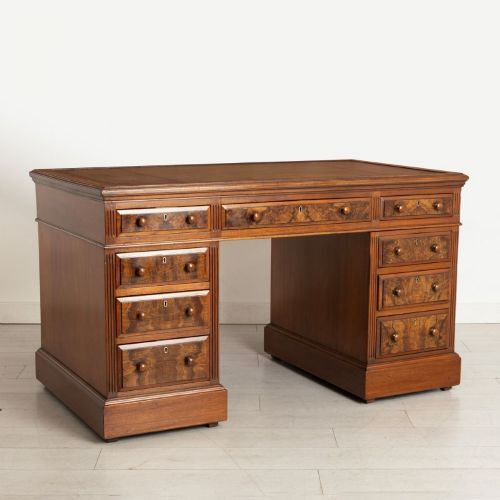
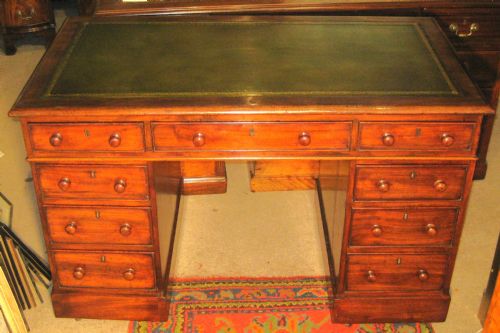
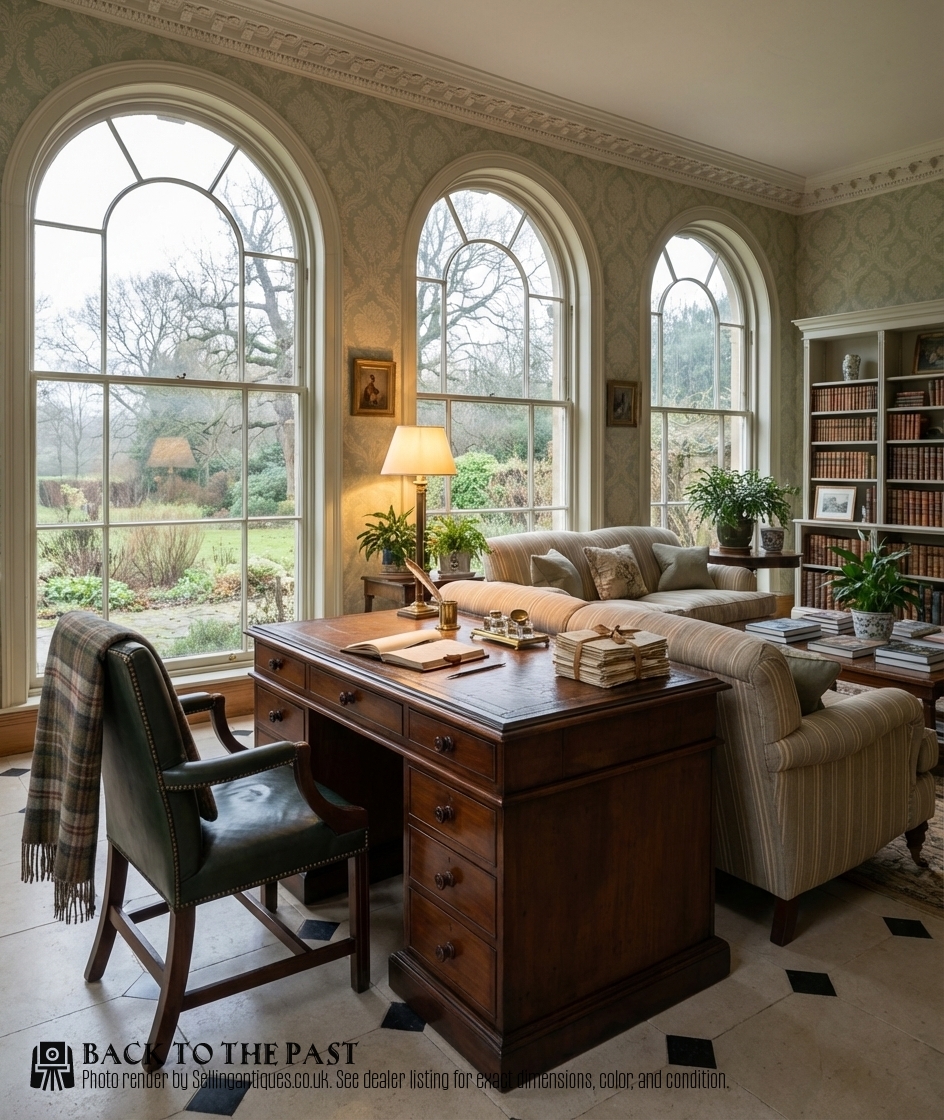
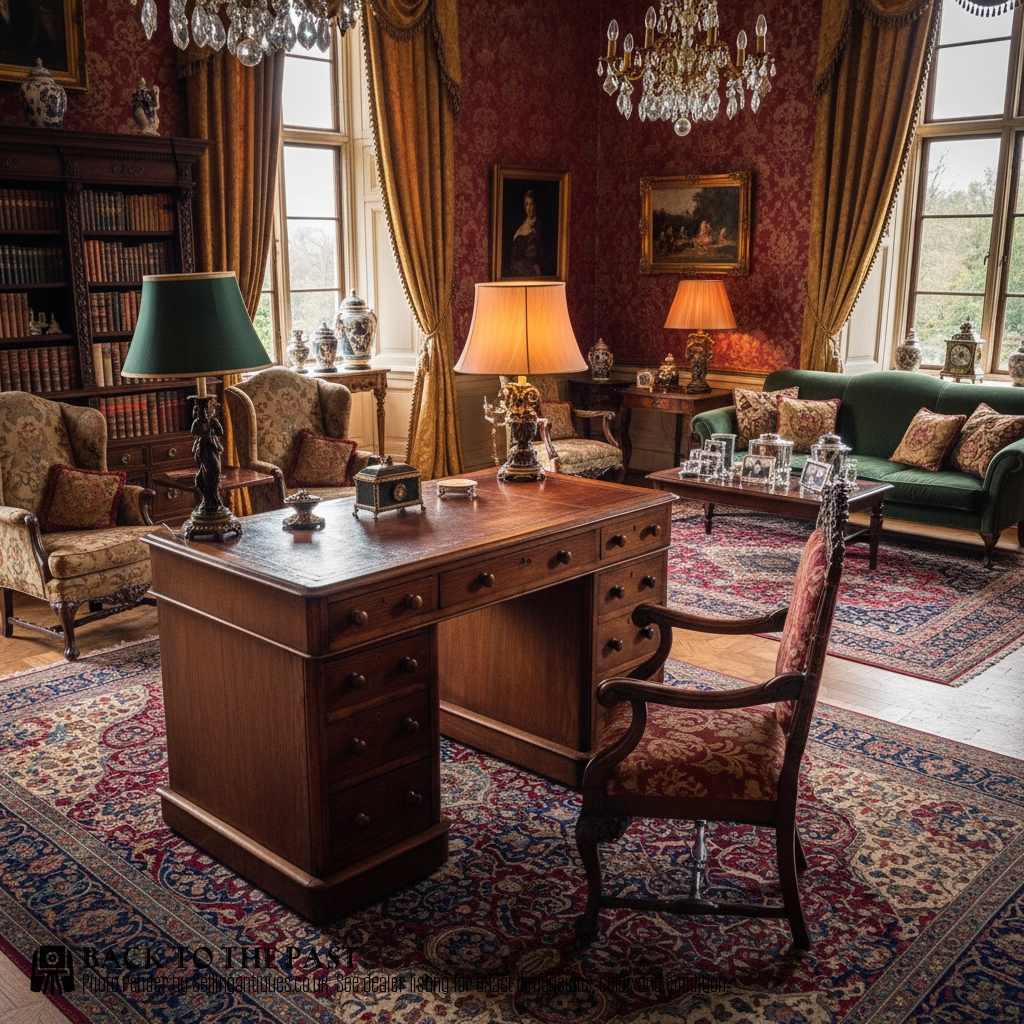
A plinth base desk is a substantial workspace featuring twin pedestals that rest directly on a flat wooden plinth rather than traditional legs or castors. This construction creates a grounded silhouette that suits traditional libraries and studies.
The pieces listed on this page date from the mid-nineteenth century through to the early twentieth century, spanning the Victorian and Edwardian eras. Buyers encounter desks built from mahogany, oak, walnut, and burr walnut.
Forms include three-part twin pedestal desks equipped with fitted drawers, brass handles, and inset leather writing surfaces. English examples dominate the selection, showing Georgian styling and robust joinery.
How they were made
Cabinet makers constructed these desks using dense timbers such as mahogany and oak, often applying figured walnut or burr walnut veneers to the exterior surfaces. Crossbanding and reeded edges add architectural definition to the drawer fronts and tops.
Writing surfaces feature inset tooled leather panels bordered by gilt tooling. Hardware consists of cast brass handles, including swan neck designs, secured to dovetailed drawers.
Retail Price Guide 2026
Typical UK retail prices for plinth base desk, calculated from the Sellingantiques database of over a million retail prices indexed since 2003. This retail price guide relies exclusively on Sellingantiques data; no external sources or auction records are used, so the figures do not describe the wider market.
Listings feature Victorian and Edwardian periods with materials including mahogany, oak, walnut, burr walnut, leather, and brass.
What varies in quality
Quality rests in the choice of timber and the complexity of the cabinet work, from plain oak to highly figured burr walnut veneers. The application of crossbanding and the sharpness of reeded edges separate standard utility pieces from finer examples.
Internal construction reveals the maker's hand through precision dovetailing in the drawer boxes and the retention of original brass hardware. Desks bearing maker stamps or specific trade locations indicate higher workshop provenance.
Deighton and Dunthorne
The Plinth Base Desk Glossary
- Plinth base
- A heavy, flat wooden foundation upon which the twin pedestals of the desk rest. This construction replaces individual legs and gives the furniture a grounded appearance.
- Twin pedestal
- A desk design comprising two separate banks of drawers that support the main writing top. Each pedestal sits directly on the floor via the plinth.
- Burr walnut
- A specialised timber veneer harvested from the wart-like growths on walnut trees. It yields complex, swirling grain patterns highly prized in Victorian cabinet making.
- Crossbanding
- A decorative border technique where strips of veneer are laid perpendicular to the main grain of the panel. It frames drawer fronts and table tops.
- Tooled leather
- A writing surface insert decorated with pressed patterns using heated brass tools and gold leaf. This creates a durable and traditional top for writing.
Frequently Asked Questions
What is a plinth base desk?
A plinth base desk is a twin pedestal writing table where the main body rests on a flat wooden platform instead of legs. This design creates a heavy, grounded profile.
Such desks typically feature multiple drawers arranged in two banks beneath a leather-topped writing surface.
How do I date a pedestal desk?
Dating relies on timber choices, construction methods, and hardware styles recorded in the piece. Victorian and Edwardian examples show specific grain patterns and handle designs.
Maker stamps or workshop labels found inside the drawers provide definitive origin dates.
Are these desks easy to move?
Many period pedestal desks are constructed in three separate sections to facilitate transport. The two drawer pedestals detach from the top writing surface.
Because of the solid timber and plinth construction, these pieces remain heavy and require careful lifting.
What maintenance does the leather top need?
Tooled leather writing surfaces require gentle cleaning with a dry cloth and occasional application of appropriate leather balm to prevent drying. Avoiding excessive moisture protects the underlying wood and gold tooling.
Using a blotter during daily writing preserves the original surface condition.