
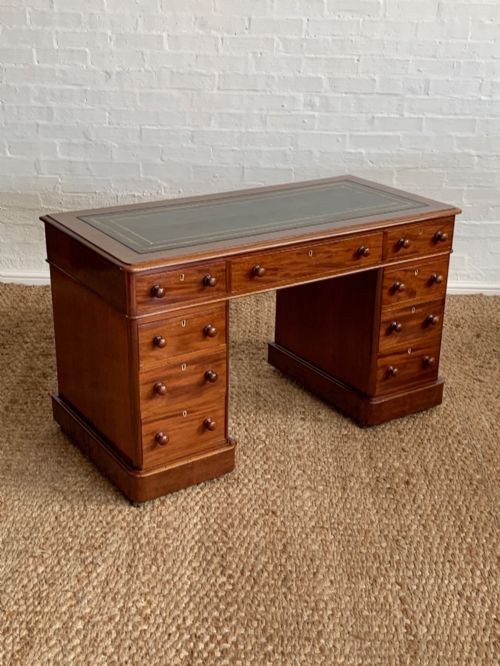


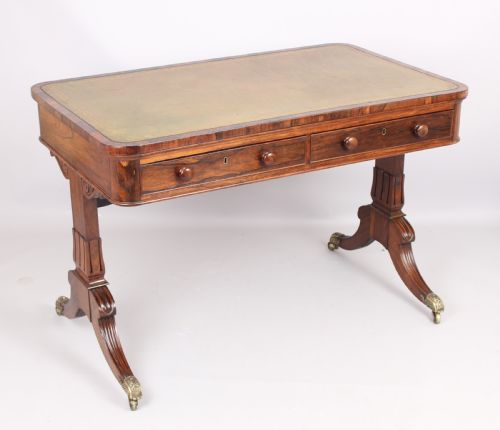
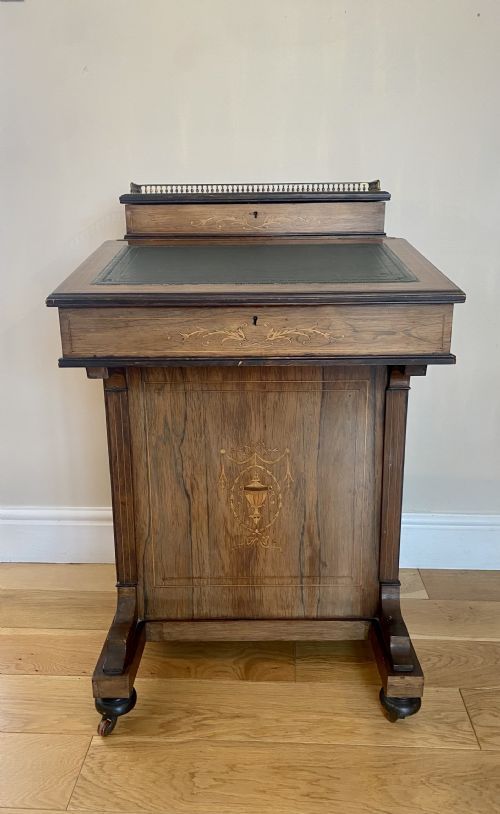


Freestanding Pedestal Desk
A freestanding pedestal desk is a proper piece of furniture designed to sit in the middle of a room rather than against a wall, offering finished panels on all sides.
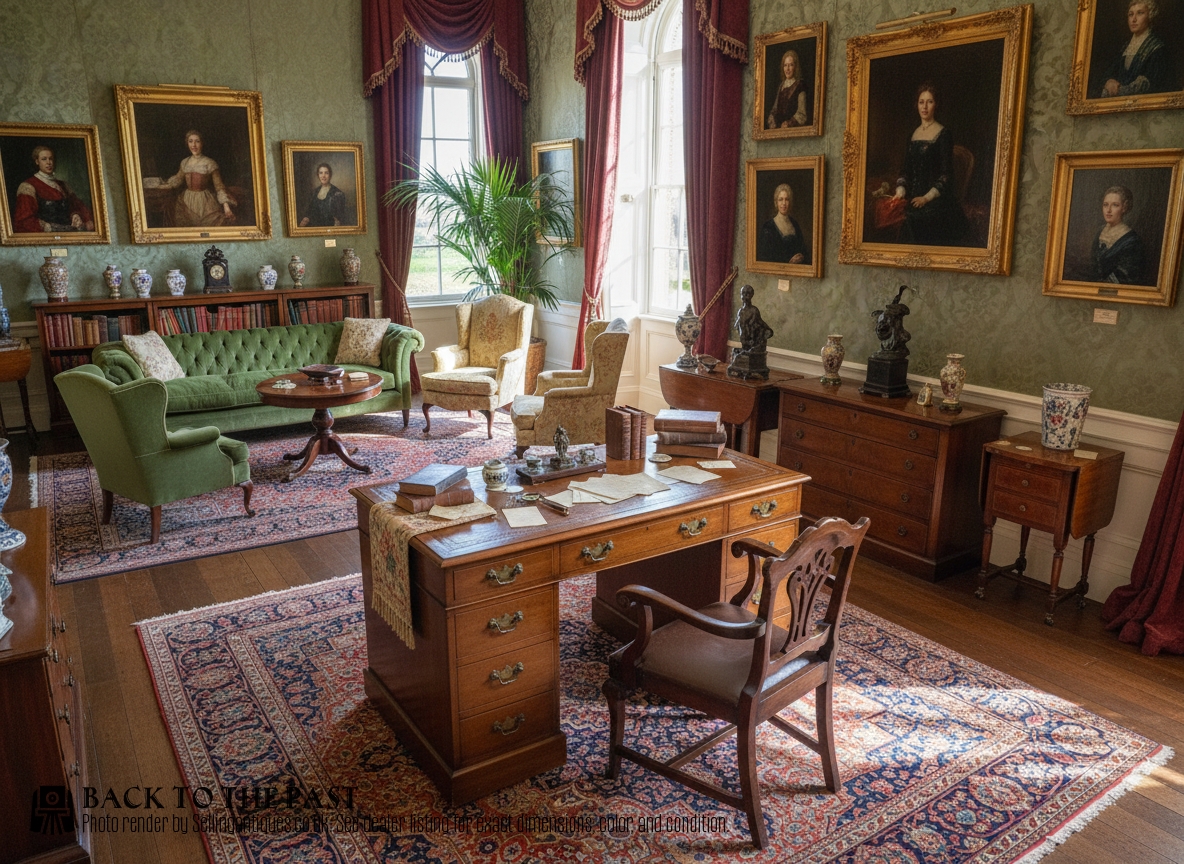
Freestanding Pedestal Desk
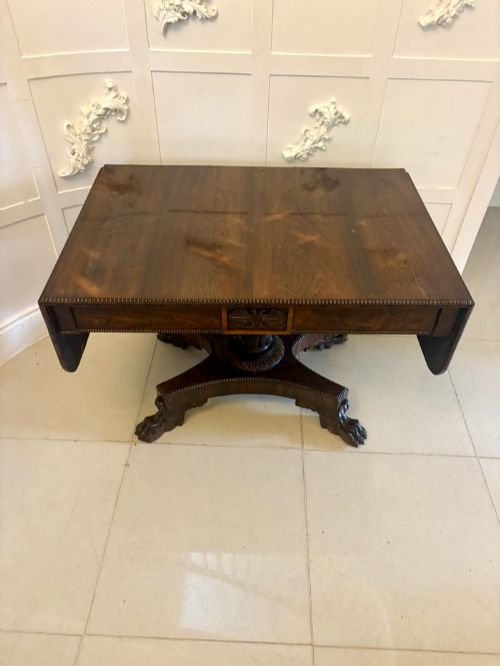
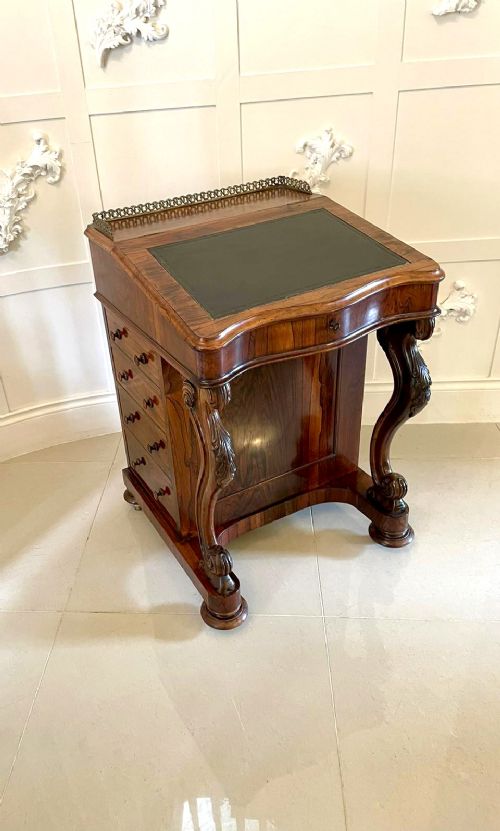
A freestanding pedestal desk provides a finished back and sides, allowing it to occupy the centre of a study or library instead of hiding against a wall. The pieces appearing here span the Georgian, Victorian, and Edwardian eras, executed in forms ranging from traditional kneehole desks to Davenport desks and library tables.
Most examples encountered on this page rely on mahogany, walnut, or rosewood, often complemented by inlaid satinwood, marquetry, or brass details. Many include fitted stationery drawers and sliding writing surfaces alongside tooled leather inserts on the top.
How they were made
Cabinet makers constructed these desks using solid timbers and figured veneers, selecting mahogany, walnut, rosewood, and satinwood for their grain and durability. Surfaces frequently incorporated tooled leather writing inserts and meticulous marquetry inlay or brass mounts.
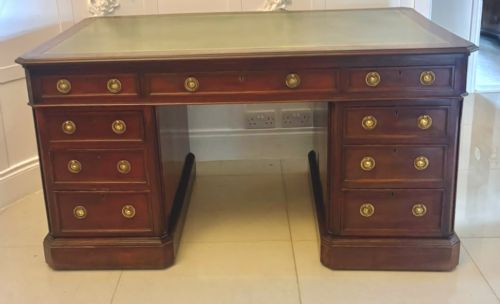
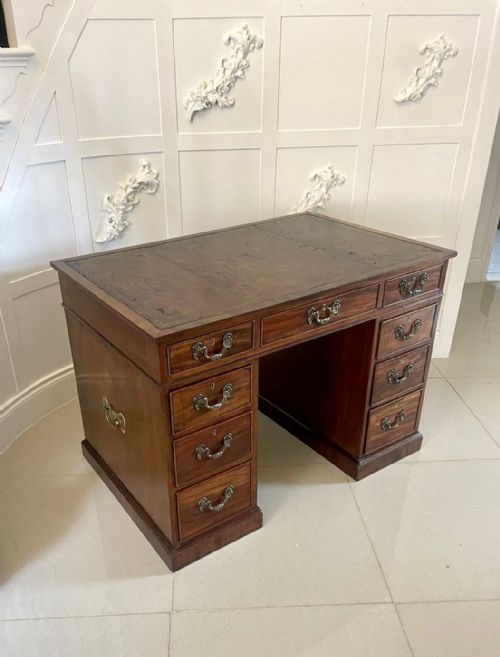
The architectural form relied on twin pedestals supporting a central writing section, with drawers and panels finished uniformly so the rear looked as refined as the front.
Listings include Victorian, Edwardian, and Georgian periods, utilising mahogany, walnut, rosewood, satinwood, and burr walnut with brass and leather.
What varies in quality
The grade of a desk depends upon the selection of timber figures, such as burr walnut or figured mahogany, and the precision of the cabinet work in hidden areas like drawer linings. Subtle details like hand-tooled leather, fine marquetry inlay, and matching grain patterns across the pedestals elevate the piece.
Desks featuring fully finished backs with identical attention to detail command greater appreciation than simpler utilitarian versions designed strictly for basic office use.
The Freestanding Pedestal Desk Glossary
- Pedestal desk
- A heavy writing desk supported by two banks of drawers, standing independently rather than relying on a wall for placement. These often feature a central kneehole.
- Davenport
- A compact form of small desk featuring a sloping writing surface above a set of drawers accessed from the side. They emerged strongly during the Victorian period.
- Marquetry inlay
- Decorative patterns formed by fitting contrasting wood veneers into a prepared ground. It appears on finer surfaces to create geometric or floral motifs.
- Kneehole
- The central recessed space beneath a desk designed to accommodate the user's legs. It is typically flanked by pedestals containing drawers.
- Satinwood
- A pale, lustrous timber native to the tropics, frequently utilised for banding, stringing, and inlay work on dark mahogany or rosewood furniture.
Freestanding Pedestal Desk: Frequently Asked Questions
Can I place this desk in the middle of a room?
Yes, because these pieces are finished on all sides with panelled backs, they sit comfortably away from walls in the centre of a study or library.
This all-around finish distinguishes them from standard desks that require wall placement to hide unfinished backs.
What is the difference between a pedestal desk and a library table?
A pedestal desk incorporates banks of drawers beneath the writing surface, providing substantial enclosed storage space for papers and stationery.
A library table relies on an open frame or simpler drawer configuration beneath the top, prioritising a lighter visual presence in a room.
How do I care for the leather writing surface?
The tooled leather top requires occasional gentle cleaning and conditioning to prevent the hide from drying out over time.
Avoid using harsh chemical solvents near the gold tooling and keep liquids away from the seams of the leather insert.
How can I identify a Victorian desk from an Edwardian one?
Victorian desks generally display heavier proportions, richer dark mahogany or rosewood timbers, and dense carved details or bold brass hardware.
Edwardian pieces often appear lighter in scale, frequently incorporating satinwood inlay, lighter mahogany tones, or painted decorative flourishes.