

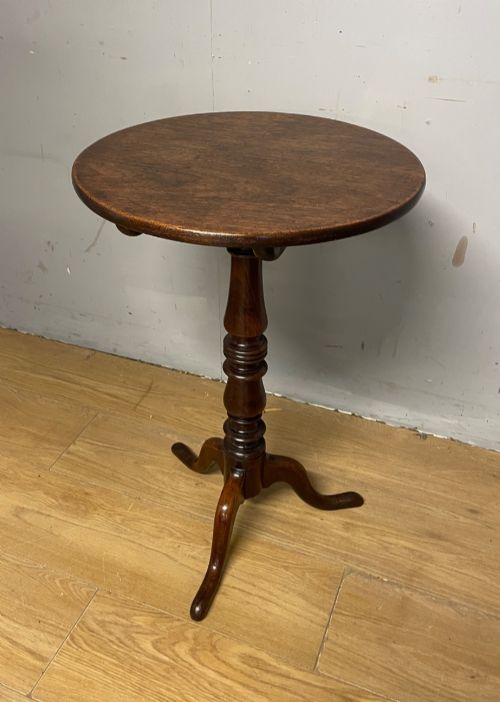
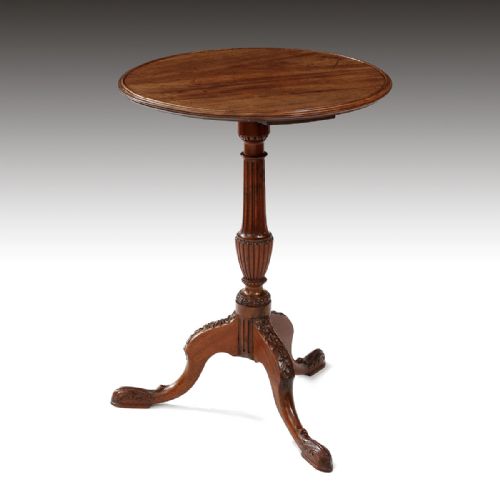
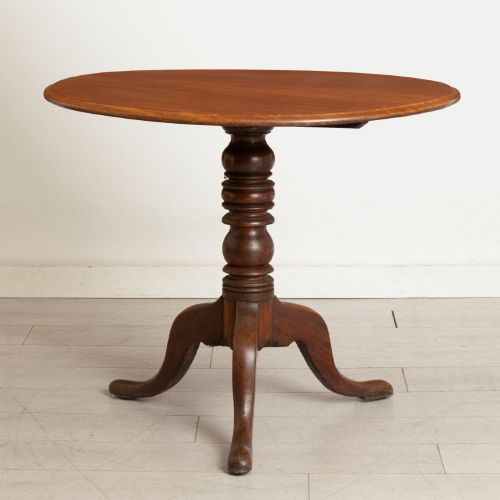
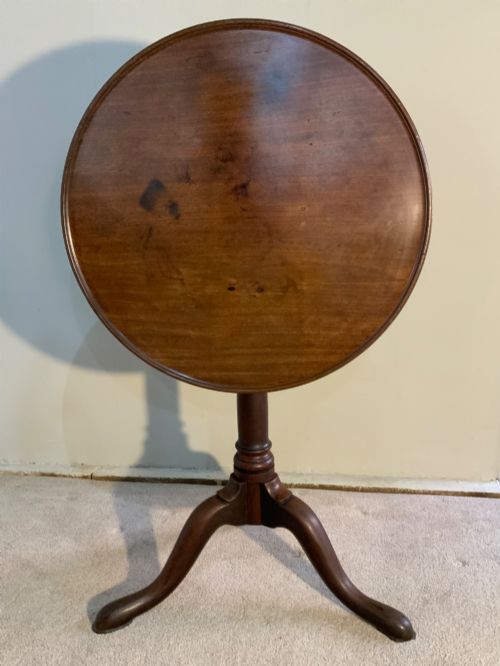
Circular Mahogany Tilt Table
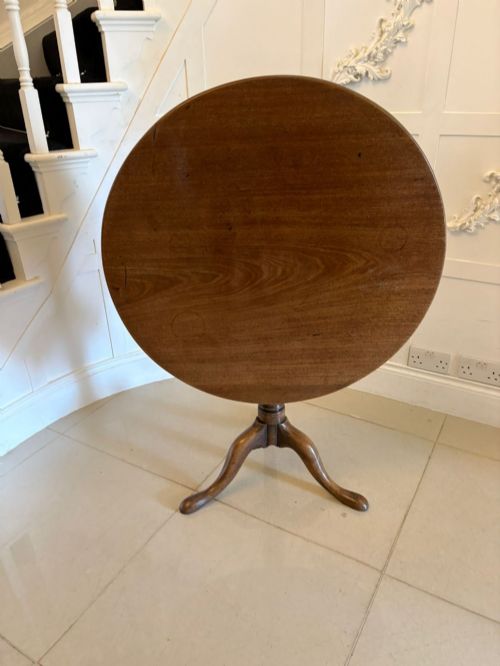
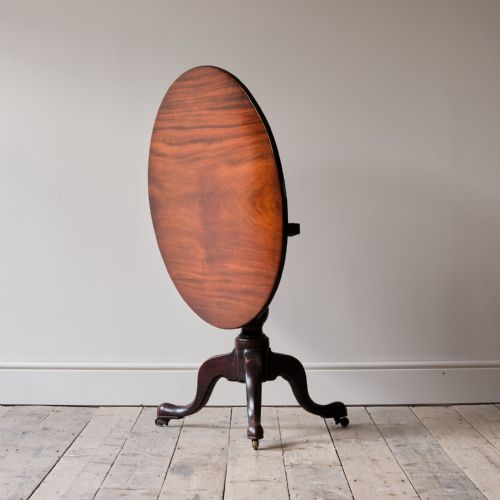
When you search for a circular mahogany tilt table, you are looking at flexible furniture designed to fold upright and stand against a wall when not in use.

Circular Mahogany Tilt Table
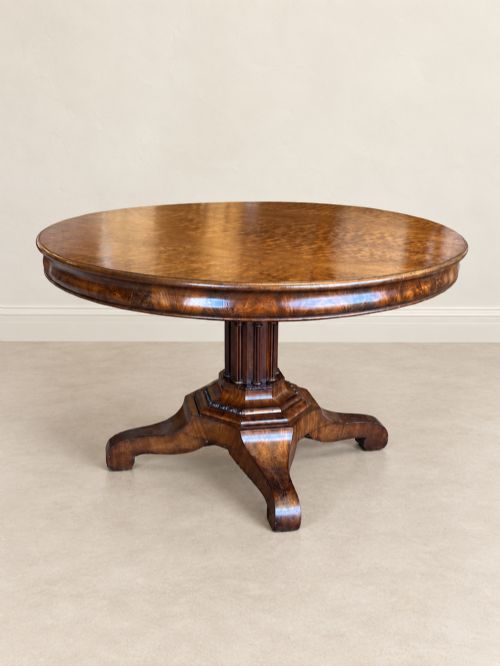
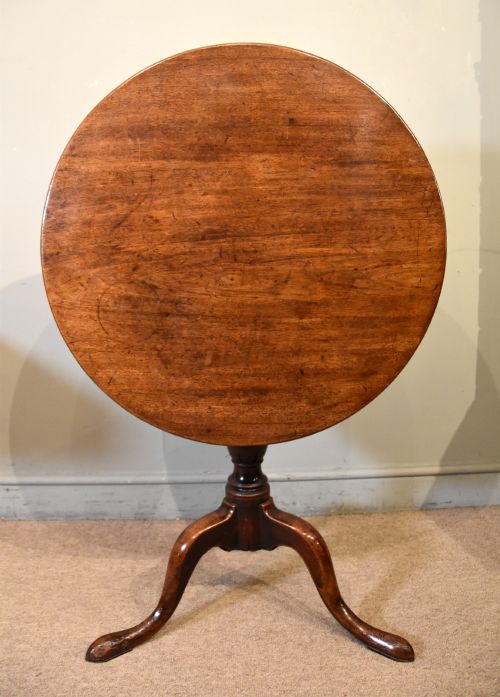
A circular mahogany tilt table combines a round top with a pivoting mechanism that allows the surface to tilt vertically, saving floor space in domestic interiors. These pieces appear across several periods, most frequently originating in the Georgian, Regency, and Victorian eras.
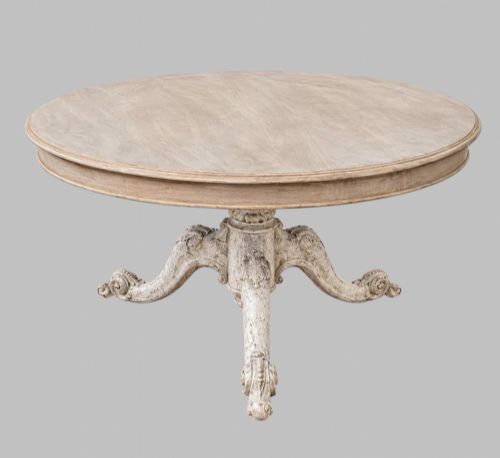
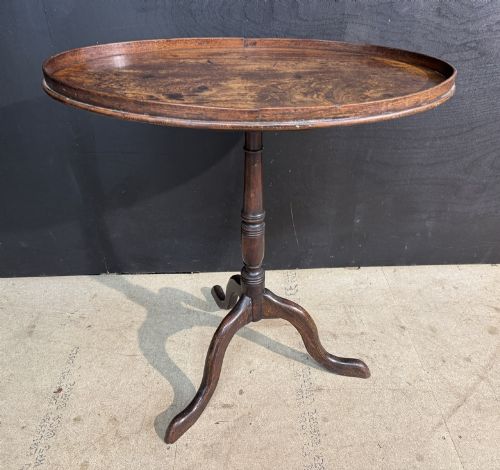
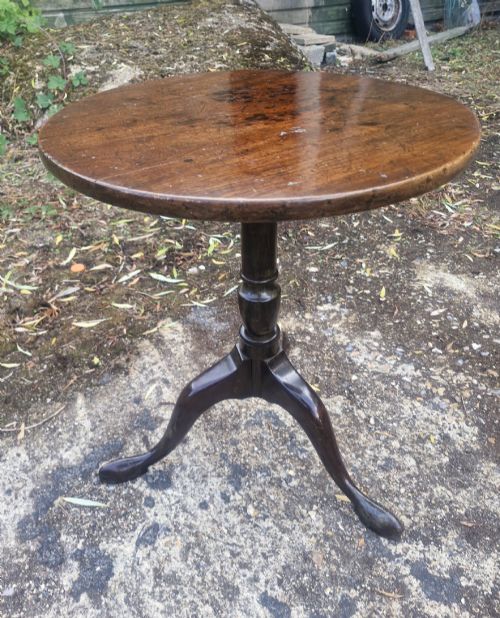
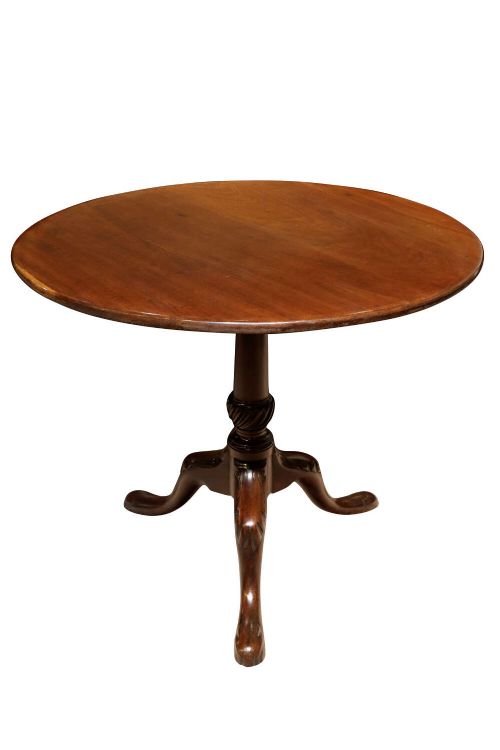
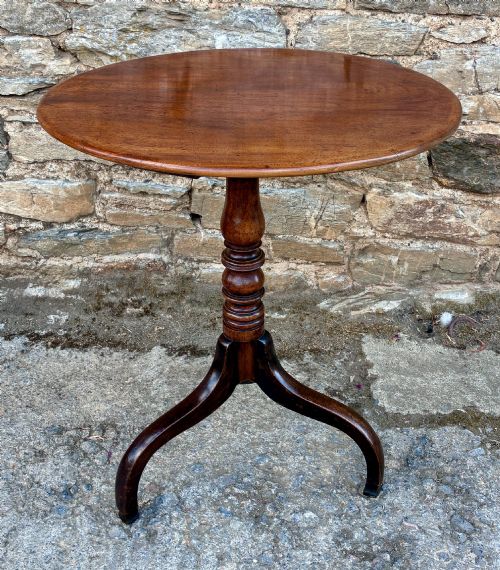
The evidence shows various scales, from small wine and tea tables supported by tripod bases to large breakfast and dining tables resting on heavy pedestals. On this page, you will most commonly encounter tripod occasional tables and larger pedestal dining pieces.
Makers utilised different forms such as birdcage actions and snap-top catches to secure the top in both horizontal and vertical positions. The design serves multiple functions across sitting rooms, libraries, and dining spaces.
What varies in quality
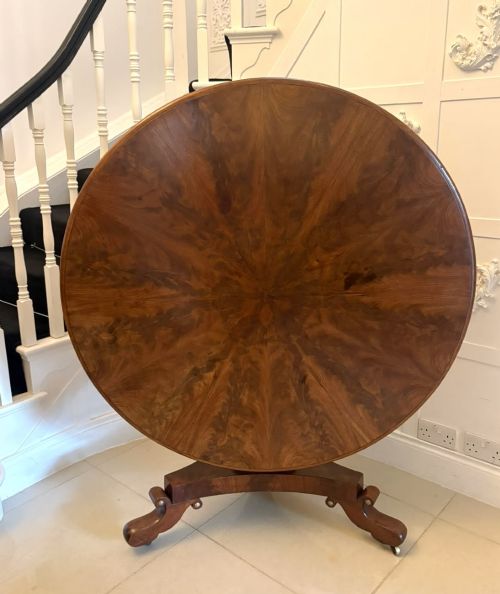
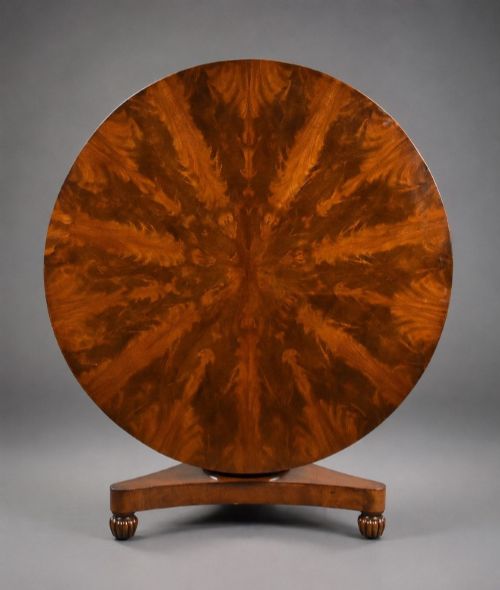
The distinction between tiers rests upon timber selection and the precision of the tilt mechanism. Superior examples display figured or flame mahogany veneers matched symmetrically across the circular top, whereas simpler utilitarian versions utilise plain solid planks.
The stability of the pivot block and the joinery connecting the column to the legs dictate the overall rigidity of the piece. Finer examples exhibit carefully carved tripod legs and responsive brass catches rather than loose joints or crude iron brackets.
Listings feature mahogany, rosewood, walnut, and iron across Georgian, Regency, and Victorian periods.
Gillow·Walker Lancaster·James Winter
The Circular Mahogany Tilt Table Glossary
- Tilt-top
- A table mechanism allowing the top to pivot into a vertical position for storage. This clever design lets the furniture hug the wall when the room needs to clear.
- Birdcage
- A rotating wooden frame beneath the table top that permits both turning and tilting. It uses small spindles reminiscent of a cage to connect the top to the central column.
- Tripod base
- A three-legged support structure commonly found on smaller occasional and wine tables. The arrangement ensures the table sits firmly even on uneven historical flooring.
- Snap-top
- A spring-loaded catch that locks the circular top firmly into the horizontal position. It prevents the surface from pivoting unexpectedly during use.
- Pedestal
- A single central column supporting the heavy circular top, often resting on a platform or scolloped feet. This configuration provides ample legroom for diners seated around larger tables.
Circular Mahogany Tilt Table: Frequently Asked Questions
Why did they make tables tilt?
Tilt-top tables were engineered to save valuable floor space in historical homes when dining or entertaining concluded. Folding the surface upright allowed domestic staff to push the furniture safely against the perimeter of the room.
This practical feature meant a large room could quickly transform from a dining hall into an open space for other daily activities without heavy lifting.
How do I spot a Georgian table?
Georgian tables typically exhibit restrained classical proportions, slender tripod legs terminating in pad or spade feet, and straightforward timber construction without excessive ornamentation. Many examples from this period incorporate a birdcage mechanism beneath the top.
Later Victorian versions tend to feature heavier pedestal bases, more robust scrolling legs, and occasionally more dramatic grain patterns like flame mahogany veneer.
Can I use one as a desk?
While the tilt mechanism introduces slight movement compared to a fixed desk, smaller circular tables function adequately for writing or laptop use. The pedestal base provides decent knee clearance from multiple angles.
Ensure the snap-top catch locks securely before placing any items on the surface to prevent the table from pivoting accidentally.
How do I care for the wood?
Maintain mahogany surfaces by dusting regularly with a soft, dry cloth and avoiding direct exposure to strong sunlight or heat sources. These environmental controls prevent the timber from drying out and the veneer from lifting.
Apply a natural wax polish occasionally to nourish the grain and preserve the depth of the historical finish without building up heavy residue.