

Circular Dial Clock
A circular dial clock tells the time with straightforward clarity, bringing honest utility and period character to any wall.
Circular Dial Clock
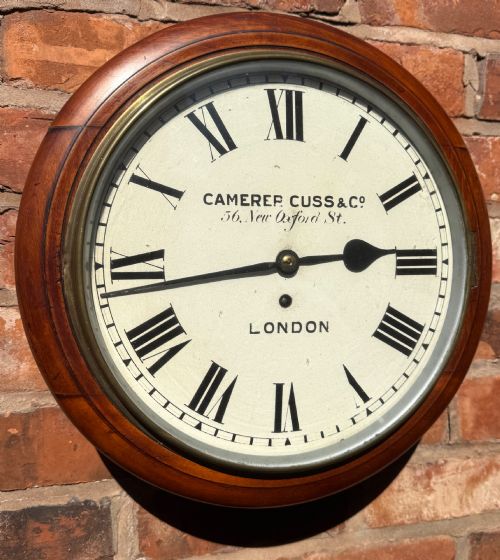
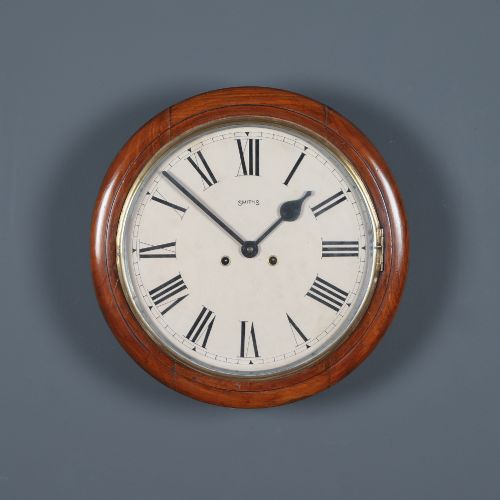
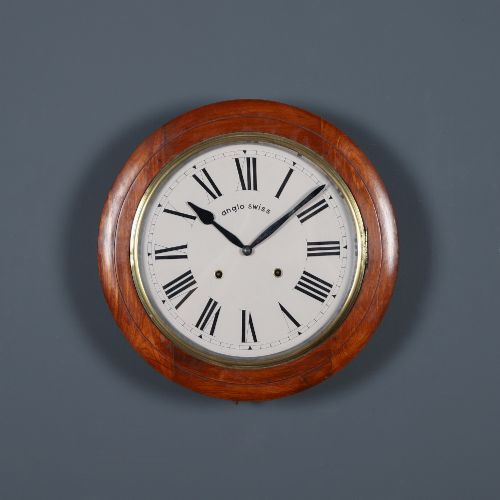
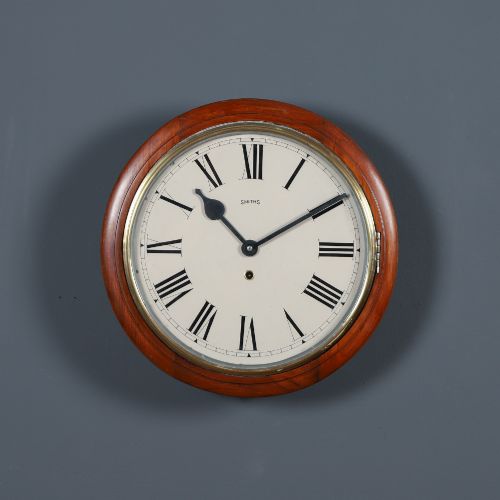
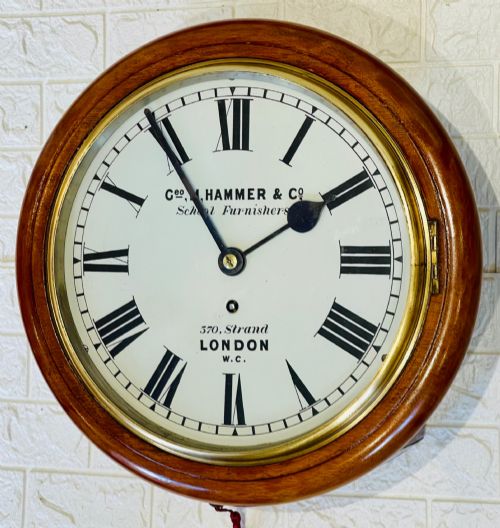
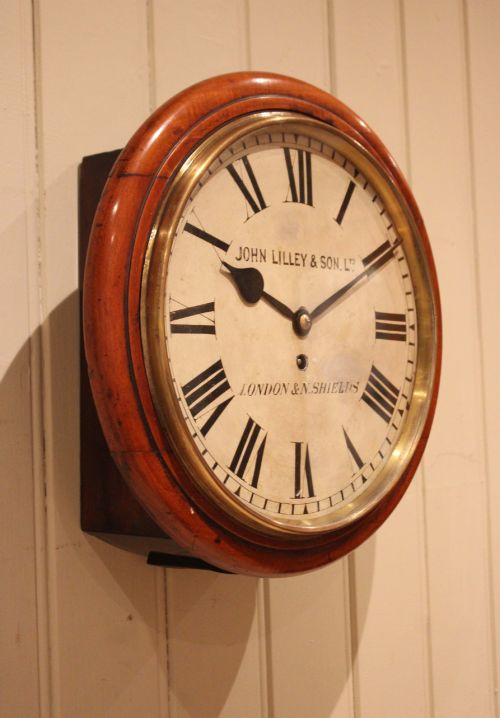
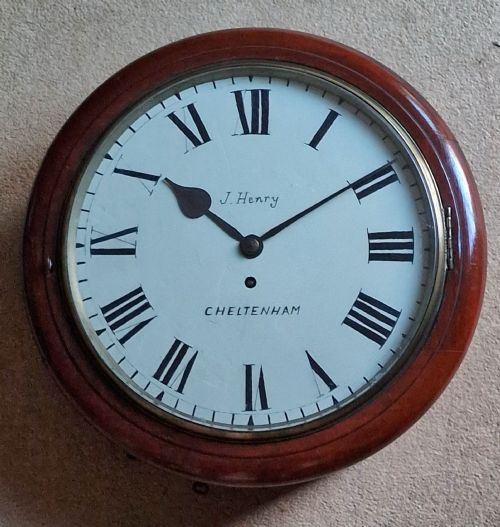
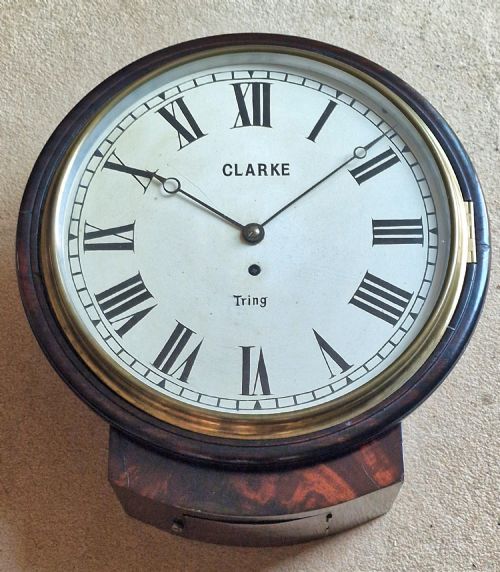
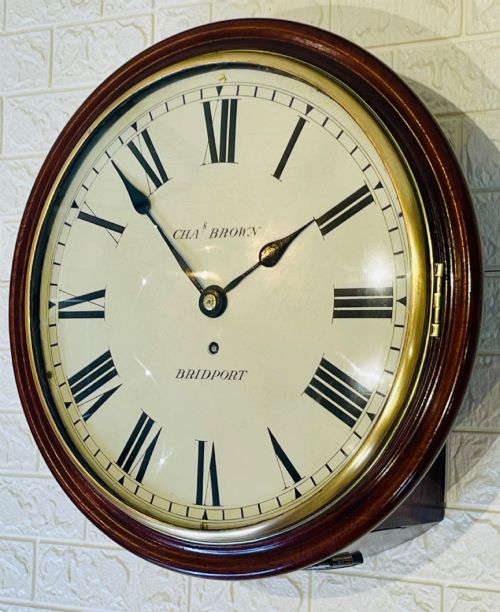
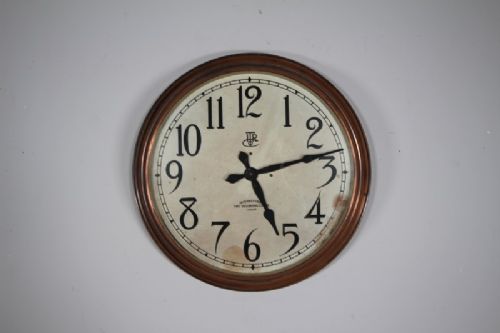
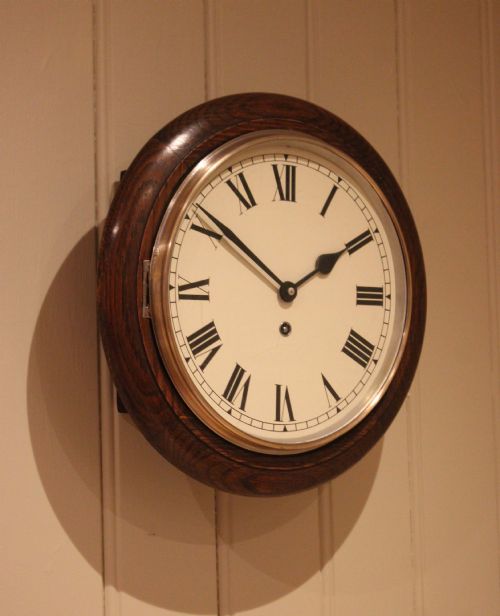
A circular dial clock is primarily a wall-mounted timepiece designed for clear legibility in homes, offices, and transport hubs. When searching this phrase, you will most frequently encounter wall clocks featuring round faces housed in wooden surrounds.
The selection ranges from compact domestic pieces measuring six inches to large station and factory examples spanning over twenty inches. These wall clocks span Georgian, Victorian, and Edwardian eras, alongside later twentieth-century interpretations.
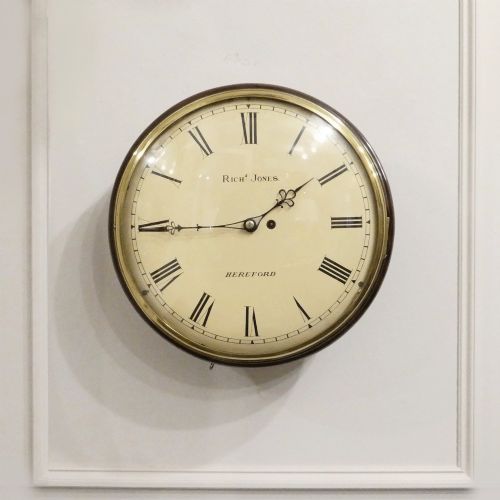
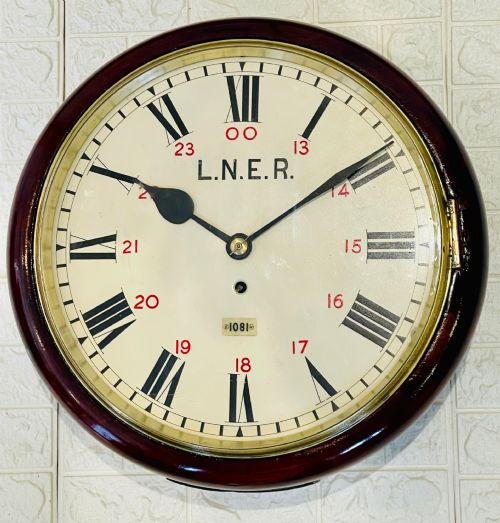
Railway and postal authorities utilised sturdy dial clocks extensively, creating a distinct subcategory bearing company ciphers and station origins. Domestic versions often favour polished mahogany or warm oak cases rather than utilitarian paint finishes.
Materials and movement
Many period examples employ a fusee movement, a conical pulley mechanism designed to equalise the pull of the mainspring as it unwinds. This mechanical arrangement ensures steady timekeeping over the course of an eight-day run between windings.
Circular Dial Clock Retail Price Guide 2026
Typical asking prices for circular dial clock among the pieces listed under this phrase on Sellingantiques today, from the lower quarter to the upper quarter. They describe what is for sale here now, not the wider market.
The inventory includes railway and institutional wall clocks alongside domestic timepieces ranging from compact six-inch dials to grander examples.
Assessing the craftsmanship
Quality rests significantly on the precision of the clockmaker and the integrity of the movement. Examples bearing the signatures of established makers or railway companies often demonstrate superior internal finishing and robust case construction.
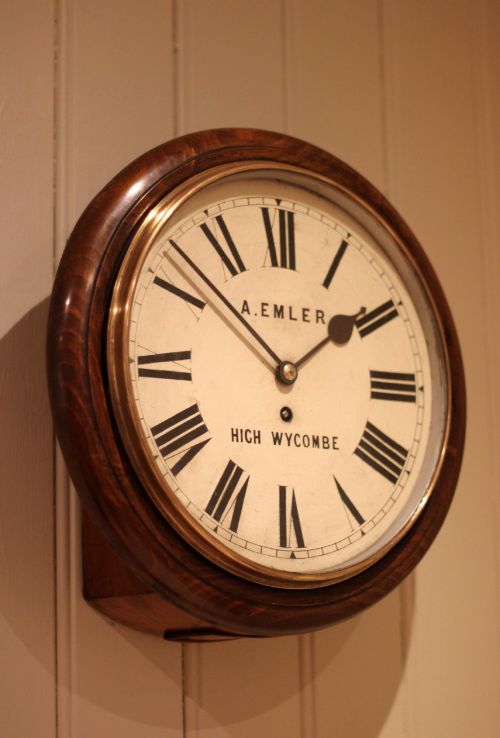
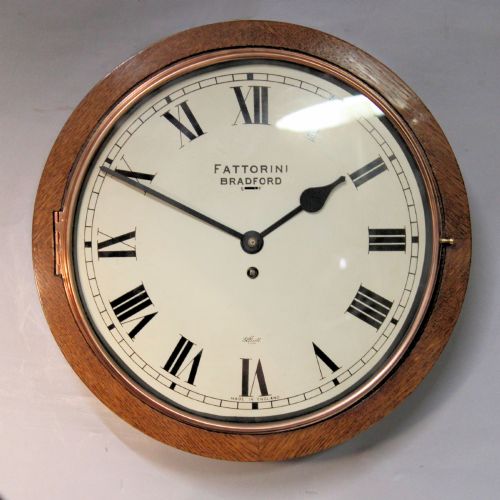
The condition of the painted dial and the retention of original hands heavily influence desirability. Crisp numerals and clean wooden bezels distinguish better-preserved pieces from those subjected to heavy restoration.
Richard Jones of Hereford·Elliott·Camerer Cuss And Co London·Henry Harris Of Monythusloyn·Thomas Hedge Of Colchester·John Walker
The Circular Dial Clock Glossary
- Fusee
- A conical pulley mechanism connected to the mainspring by a chain or cord, designed to maintain even power delivery to the clock movement as the spring unwinds.
- Dial
- The face of the clock where the hours and minutes are displayed, typically painted metal or wood in these wall-mounted examples.
- Bezel
- The brass or wooden ring that holds the glass door protecting the clock dial, often hinged for easy access to the hands.
- Escapement
- The mechanical linkage that regulates the speed of the clock by translating rotational force into controlled impulses.
- Timepiece
- A clock that indicates the time without including a striking or chiming mechanism.
Circular Dial Clock: Frequently Asked Questions
Where were these clocks used?
Many circular dial clocks served in railway stations, post offices, and administrative buildings where precise timekeeping was vital for public operations. Others hung in domestic hallways, kitchens, and schoolrooms to keep households running on schedule.
Railway examples often display specific company initials on their painted faces, revealing their operational history on networks like the Great Western Railway or the London and North Eastern Railway.
How do I wind a fusee wall clock?
Winding involves inserting a key into the small aperture on the dial face and turning it carefully until the spring reaches full tension. Most fusee movements require attention once every eight days to maintain continuous operation.
Care should be taken not to overwind the mechanism, stopping as soon as firm resistance is felt on the key.
How do I hang a heavy wall clock?
Hanging requires fixing a sturdy screw or heavy-duty hook directly into a wall stud or utilising appropriate masonry anchors for brick walls. The weight of mahogany and oak cases demands secure anchoring to prevent slipping.
Once mounted, the case should sit flat against the wall so the pendulum or movement hangs plumb for accurate beating.
How do I date a dial clock?
Dating relies on examining case timber, dial construction, signature styles, and the specific mechanical layout of the movement. Georgian and early Victorian pieces often feature distinctfusee chains and cast brass bezels, whereas later twentieth-century models introduce different escapements and electric or lever movements.
Maker signatures and railway company lettering can also narrow down the active period of production.