


Chippendale Mahogany Drawers
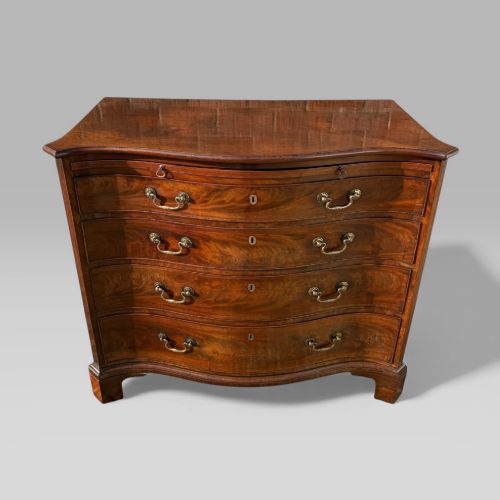
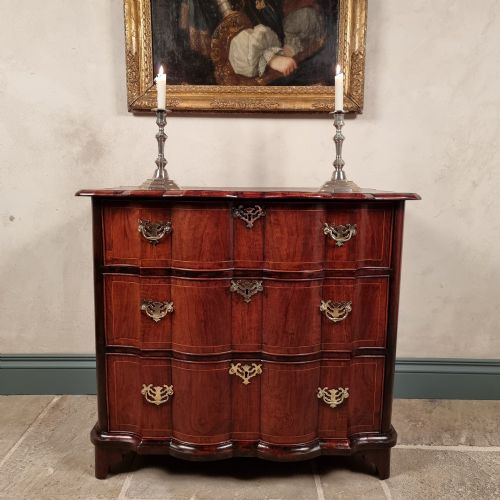
When you search for chippendale mahogany drawers, you meet the enduring scale and sculptural fronts of Georgian craftsmanship.
Chippendale Mahogany Drawers
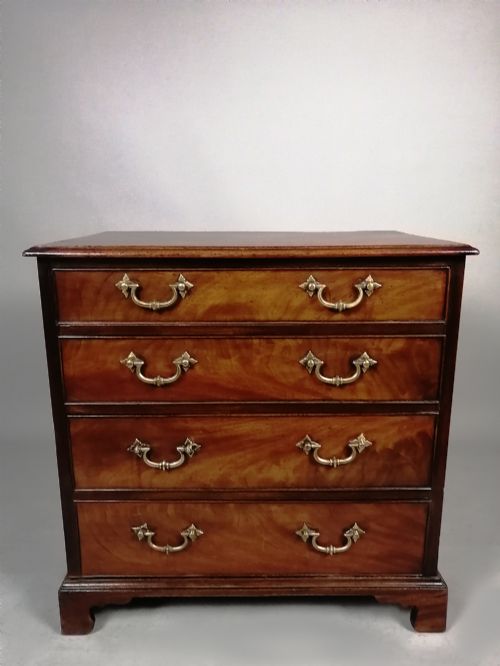
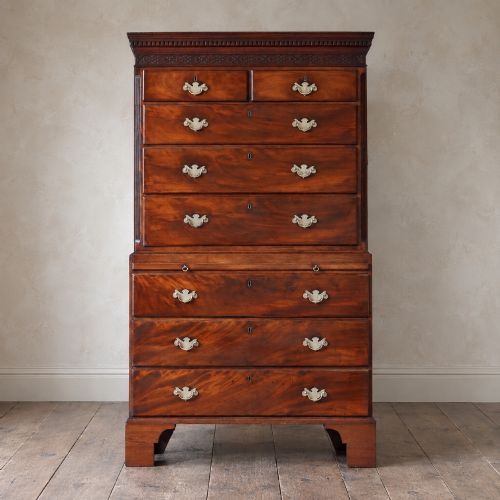
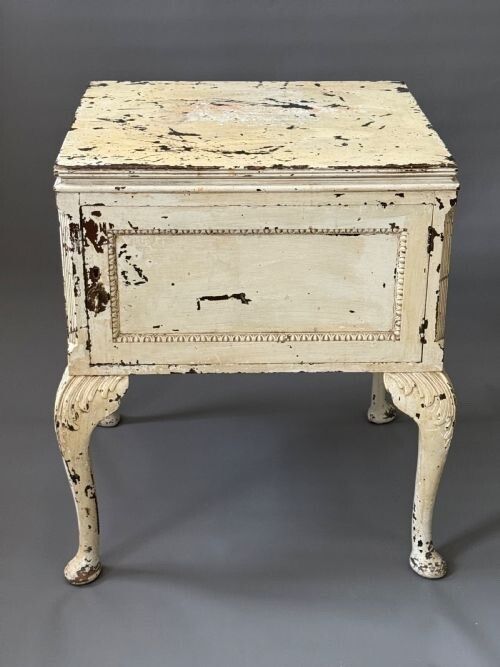
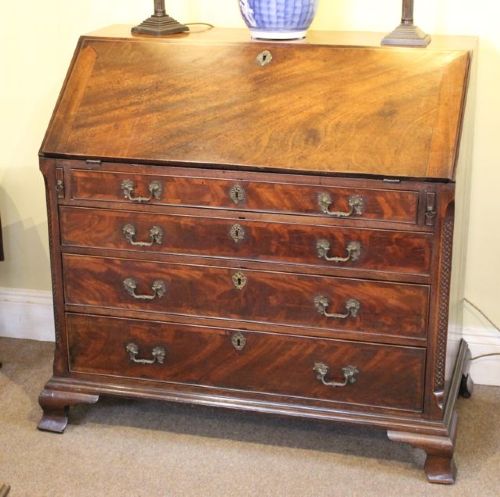
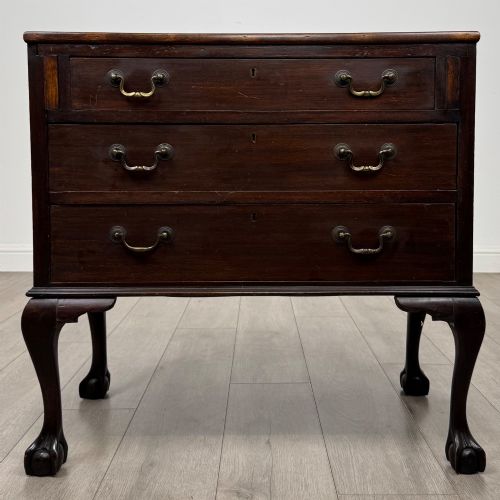
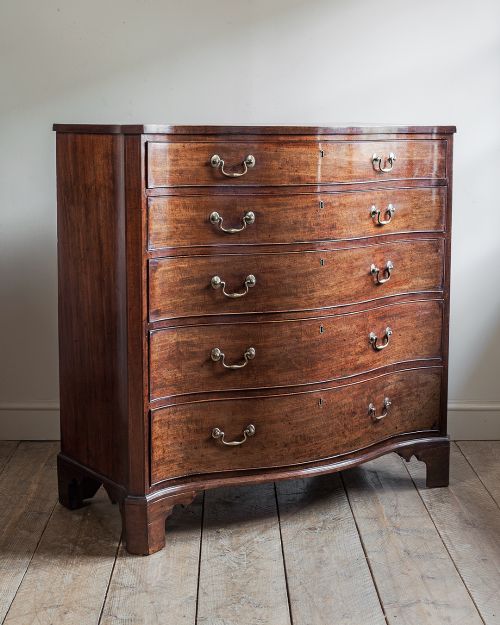
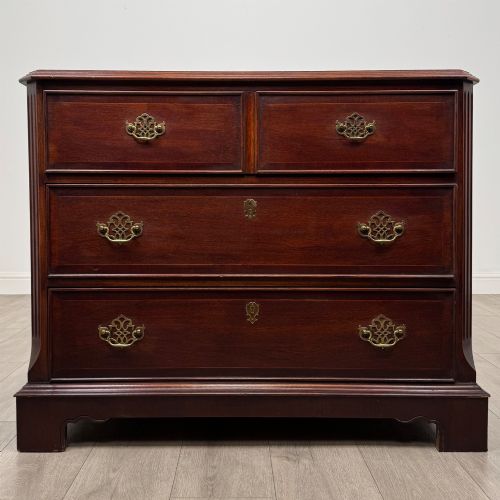
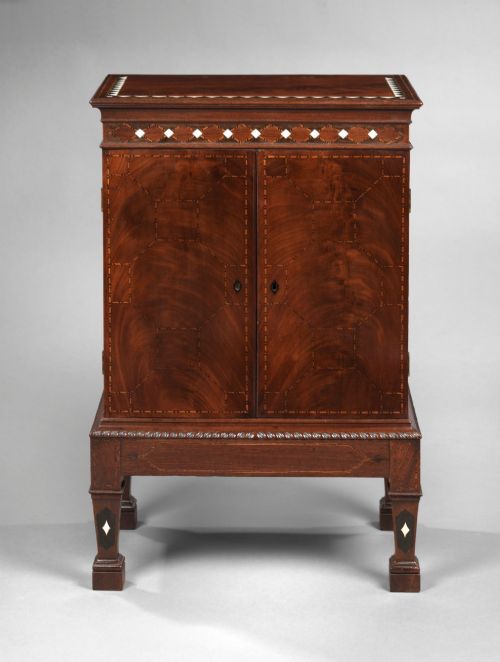
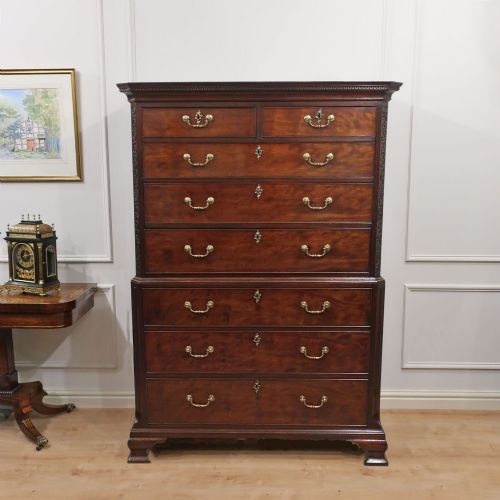
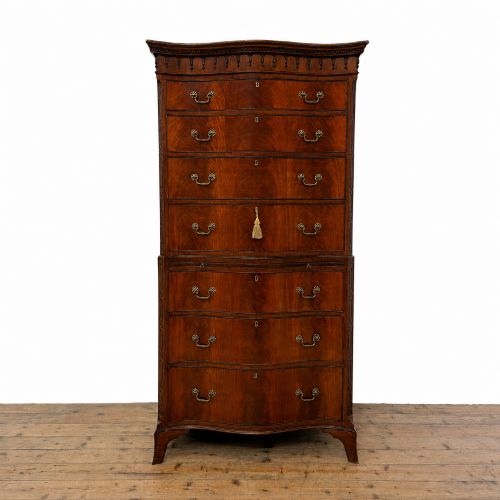
When you search for chippendale mahogany drawers, you encounter pieces that span from mid-eighteenth-century workshops to later revival interpretations. Chests of drawers dominate this selection, frequently appearing alongside tallboys, chest on chest forms, and bureau bookcases.
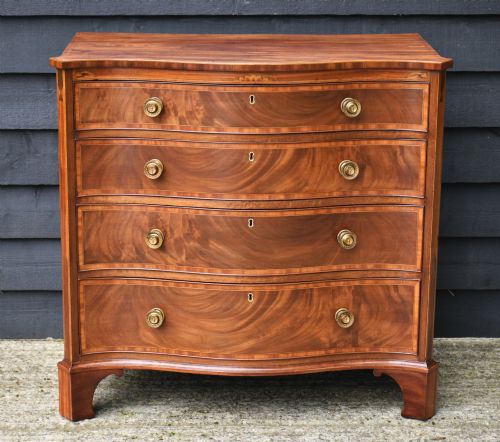
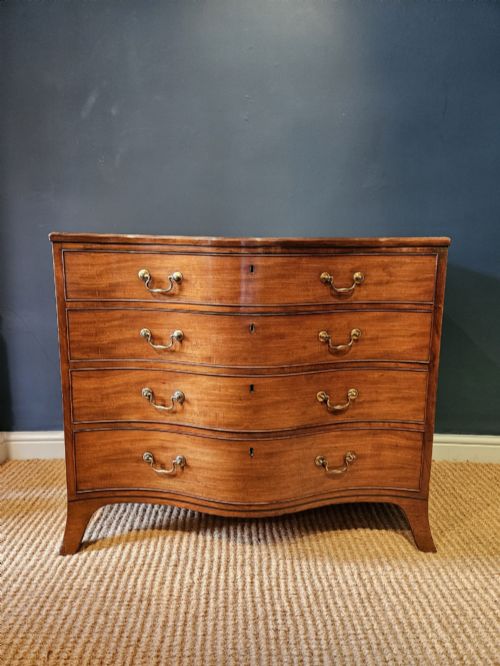
The dominant forms display straight or serpentine fronts, occasionally supported on bracket feet or integrated stands. Eighteenth-century examples sit alongside Edwardian and later revival iterations sharing the same formal vocabulary.
Materials and Construction
Cabinetmakers utilised dense mahogany and Cuban mahogany, often selecting timber with pronounced figuring to enhance the curved drawer fronts and surfaces. Oak frequently forms the internal drawer linings and secondary framing.
Brass hardware, including swan neck handles and pierced backplates, secures the drawer faces, whilst specialised joinery facilitates sliding writing surfaces and concealed compartments.
Several pieces conceal secret compartments behind sliding panels, built for hiding family letters and quiet treasures.
Criteria of Distinction
Distinction rests upon the crispness of carved mouldings, the selection of figured mahogany veneers, and the integrity of original surfaces. Pieces retaining patinated timber and authentic brass mounts demonstrate superior provenance.
Proportion and scale dictate the success of the silhouette, particularly on serpentine chests where the sweep of the drawer front demands precise carpentry.
James Winter and Sons·Thomas Chippendale·Gillows
The Chippendale Mahogany Drawers Glossary
- Serpentine
- A front profile curving outward in the centre and inward at the sides, creating a undulating rhythm across the drawer faces. This form requires exceptional skill from the cabinetmaker.
- Tallboy
- A tall chest of drawers constructed in two sections, often placing a smaller chest atop a larger base to maximise storage whilst maintaining a modest footprint.
- Brushing slide
- A pull-out shelf integrated into the cabinet framework just above the top drawer, traditionally utilised for writing or examining documents.
- Cuban mahogany
- A dense, dark timber imported from the Caribbean, prized for its rich grain and heavy weight during the eighteenth century.
Chippendale Mahogany Drawers: Frequently Asked Questions
What defines a serpentine front?
A serpentine front curves outward in the middle and inward toward the edges. This contour creates movement across the piece.
Cabinetmakers shaped solid timber or applied figured veneers to follow this complex geometry accurately.
How do I spot a revival piece?
Revival pieces often date from the Edwardian period or later nineteenth century. They replicate eighteenth-century forms using machine-assisted techniques.
Internal timbers and secondary woods frequently reveal the later date of manufacture.
What is a brushing slide?
A brushing slide sits just beneath the top surface and pulls out to form a small shelf. Owners utilised these surfaces for writing letters.
They appear frequently on bachelors chests and tallboys.
Why use Cuban mahogany?
Cuban mahogany offered exceptional density and a deep natural lustre. The timber accepted fine carving without splintering.
Its rich grain defined the finest Georgian case furniture.