




Chippendale Period Chest
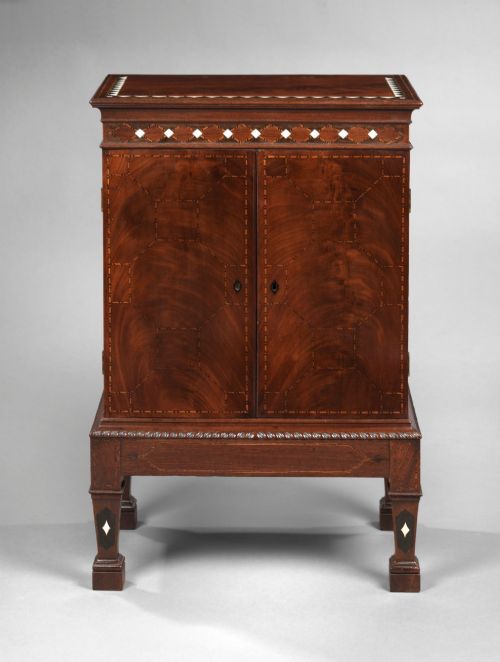
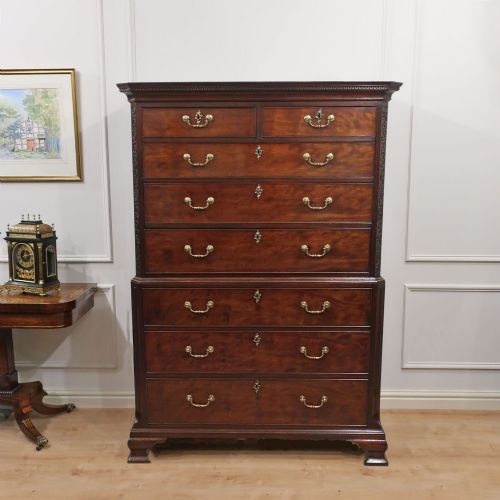
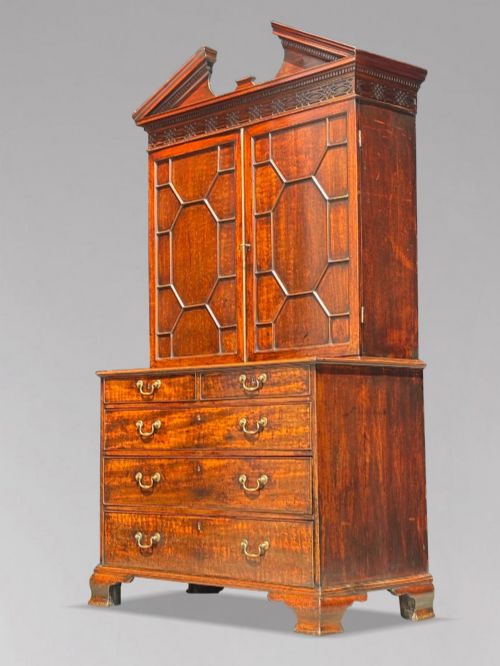
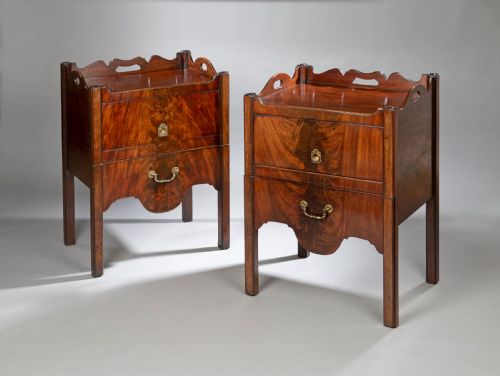
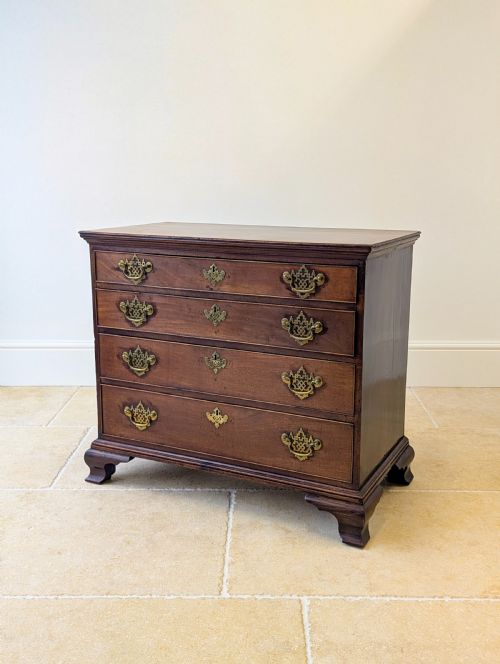
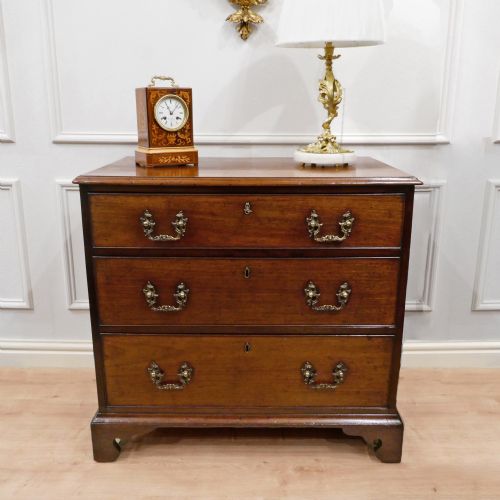
A chippendale period chest brings eighteenth-century cabinet-making into a room through solid mahogany proportions and carved bracket feet.
Chippendale Period Chest
A chippendale period chest encompasses eighteenth-century case furniture spanning the George II and George III reigns, appearing most frequently as standard chests of drawers, taller chest-on-chest forms, and serpentine fronts.
The material record shows these pieces tied closely to eighteenth-century Georgian production, alongside occasional revival examples from the twentieth century.
Buyers seeking this phrase encounter straightforward drawer configurations, brushing slides, and fitted secretaire compartments designed for writing and storage.
Materials and Construction
Makers built these pieces primarily using solid mahogany, frequently augmented with oak drawer linings, brass handles, and occasional boxwood or bone inlay.
Joinery relied on tight dovetailing for the drawer construction and sturdy framing to support taller formats like tallboys and cabinets without warping.
The listings show mahogany combined with oak, brass, and occasional bone inlay across eighteenth-century Georgian periods.
Evaluating Construction and Timber
Quality separates pieces through the selection of timber grain, particularly the depth of the mahogany figure and the crispness of any carved bracket feet or rococo handle mounts.
The integrity of the internal oak drawer linings and the survival of original brass hardware elevate an example above pieces with later replacements.
Thomas Chippendale
The Chippendale Period Chest Glossary
- Chest on chest
- A tall storage unit formed of two stacked sections, where a narrower upper chest sits upon a wider lower base.
- Brushing slide
- A pull-out wooden shelf integrated above the top drawers, historically utilised for folding clothes or writing.
- Secretaire
- A specialised drawer that pulls out and drops down to reveal a fitted writing surface and small pigeonholes.
- Serpentine front
- A furniture face shaped with a central convex curve flanked by two concave curves.
- Bracket foot
- A corner foot shape resembling a simple architectural bracket, often moulded or ogee-profiled on eighteenth-century case pieces.
Chippendale Period Chest: Frequently Asked Questions
What defines a chippendale period chest?
These pieces date from the mid-to-late eighteenth century and are characterised by solid mahogany construction, bracket feet, and refined proportions.
They reflect the prevailing Georgian design vocabulary before later revival styles emerged.
How do I use a tallboy at home?
A tallboy or chest on chest provides vertical storage capacity for folded garments while occupying a minimal floor footprint in a bedroom.
The upper drawers hold lighter items, leaving the deeper lower drawers for heavier textiles.
Where does a brushing slide go?
The slide sits immediately beneath the top surface moulding, pulling outward smoothly on wooden runners above the uppermost drawer.
Cabinet-makers added this feature to provide a temporary horizontal shelf without needing a separate desk.
Are serpentine chests harder to find?
Serpentine-front examples required significantly more labour from the carpenter to curve the solid mahogany drawer fronts and corresponding frame.
This shaped profile appears less frequently than straight-front variations in the surviving record.