


Chinoiserie Transferware Dish
A chinoiserie transferware dish brings Asian-inspired pastoral scenes to the table through blue and white printed ceramic design.
Chinoiserie Transferware Dish
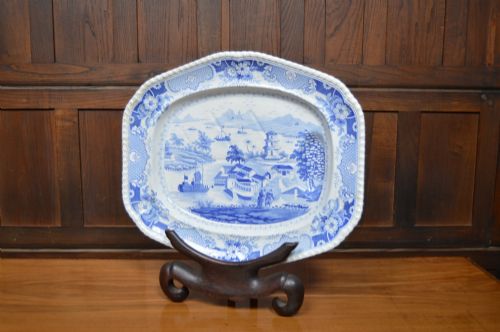
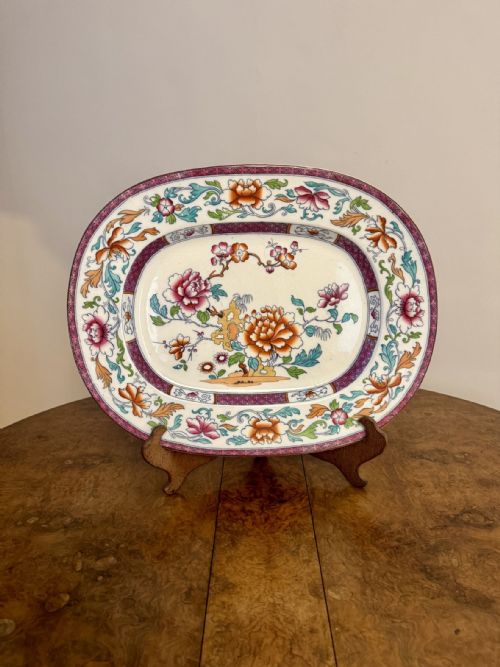
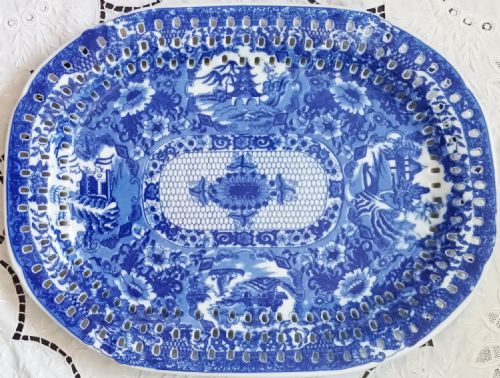
A chinoiserie transferware dish draws on 19th-century, Victorian, and Georgian periods, showcasing elaborate blue and white imagery. Buyers encounter serving platters, decorative plates, meat dishes, and cheese dishes bearing names like India Temple, Zebra Pattern, and Chinese Villa.
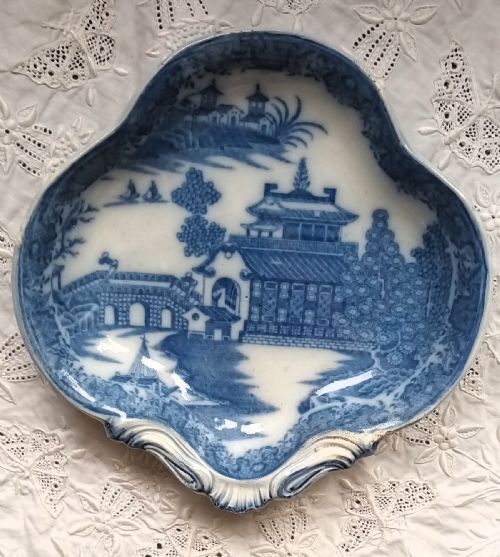
The assortment spans pearlware, earthenware, ironstone, and stoneware forms. Pieces range from large chargers and meat platters with drainers to smaller trefoil dishes, spoon trays, and tureen covers.
English potters produced these items across the 1800s, Regency, and early Victorian eras. The aesthetic relies heavily on stylized pavilions, figures, and botanical motifs printed in cobalt pigment.
Materials and Techniques
Potters formed bodies from earthenware, pearlware, ironstone, or stoneware, then coated them in a clear glaze. Cobalt pigment provided the deep blue colour for the printed designs.
Engraved copper plates transferred the intricate patterns onto tissue paper, which workers then applied to the ceramic surface before firing. This technique allowed factories to produce complex pictorial scenes consistently across plates, platters, and tureens.
Listings feature earthenware, pearlware, ironstone, and stoneware across the 18th and 19th centuries, spanning Regency and Victorian periods.
Evaluating Quality
Quality rests in the clarity of the transfer print and the crispness of the cobalt pigment against the ceramic body. Finer examples display sharp architectural details in patterns like Pagoda or Net without blurring or smudging in the glaze.
The weight and substance of the ceramic body also distinguish the pieces. Dense ironstone and refined pearlware command attention compared to standard earthenware, while specialised forms like pierced serving dishes and fitted drainers require greater skill to manufacture.
John Ridgway·Copeland and Garrett·Minton·John Rogers and Son·Elkin Knight and Bridgwood·Mason
The Chinoiserie Transferware Dish Glossary
- Transferware
- Ceramic pieces decorated by transferring a printed design from an engraved copper plate via tissue paper. This method revolutionised pottery production in the Georgian and Victorian eras.
- Pearlware
- A refined earthenware developed in the late 18th century featuring a bluish glaze that pooled in recesses to hide the cream-coloured body beneath. It forms the base of many early dishes.
- Ironstone
- A heavy, durable type of feldspathic stoneware patented in the 19th century. It resists chipping and provided a sturdy surface for large meat platters and cheese dishes.
- Charger
- A large decorative or serving plate meant for communal use or display. These heavy pieces often feature expansive pastoral or architectural transfer patterns.
Chinoiserie Transferware Dish: Frequently Asked Questions
What are chinoiserie transferware dishes?
These ceramic items feature printed blue and white scenes inspired by European interpretations of East Asian art. They include plates, platters, and tureens produced during the Georgian and Victorian periods.
Potters used copperplate transfer methods to apply detailed motifs depicting temples, bridges, and figures onto earthenware and ironstone bodies.
How were these dishes used originally?
Larger platters and chargers served meat and main courses at dining tables, while smaller plates handled everyday dining. Tureens held sauces or soups, and specialised pieces like cheese dishes protected food.
Many items also served a decorative function on sideboards, displaying rich cobalt blue patterns for guests to admire.
How do I care for antique transferware?
Wash these ceramic pieces gently by hand using mild soap and warm water rather than placing them in a dishwasher. Avoid harsh scrubbing pads that can scratch the aged glaze.
Store large platters securely on edge in plate racks or flat with felt separators between stacked plates to protect the surfaces.