



Chinoiserie Style Mirror
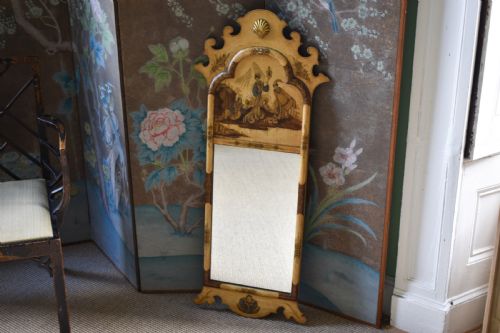
These chinoiserie style mirror pieces bring painted lacquer and carved giltwood into a room, offering the decorative flair collectors seek.
Chinoiserie Style Mirror
A chinoiserie style mirror introduces fantasy landscapes, figures, and gilt motifs to a room through painted lacquer and carved frames. Buyers searching this phrase look for pieces that echo eighteenth-century tastes through nineteenth-century execution and early twentieth-century revivals.
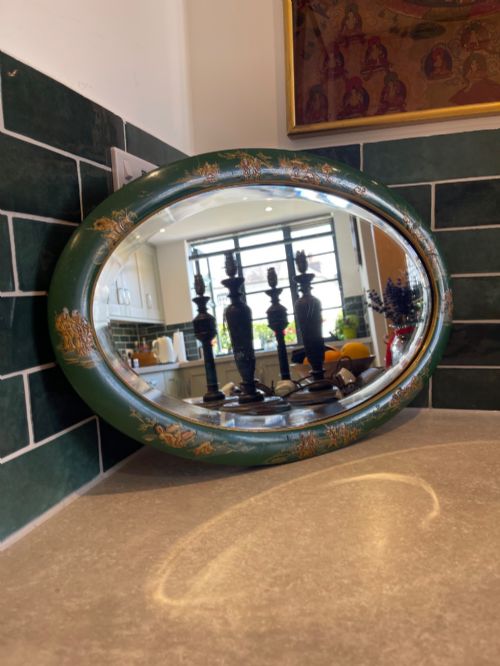
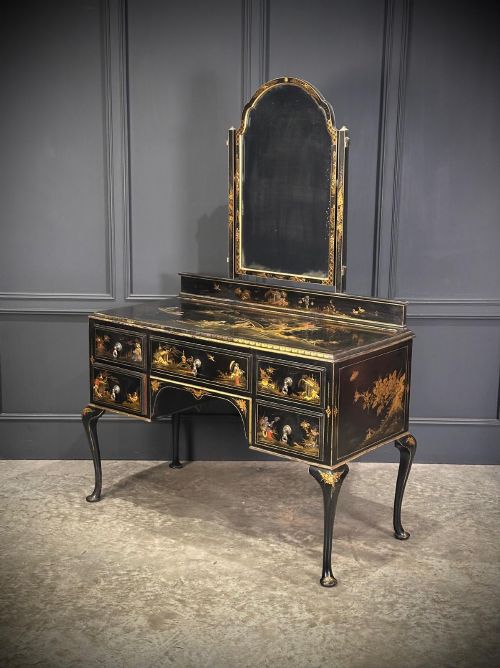
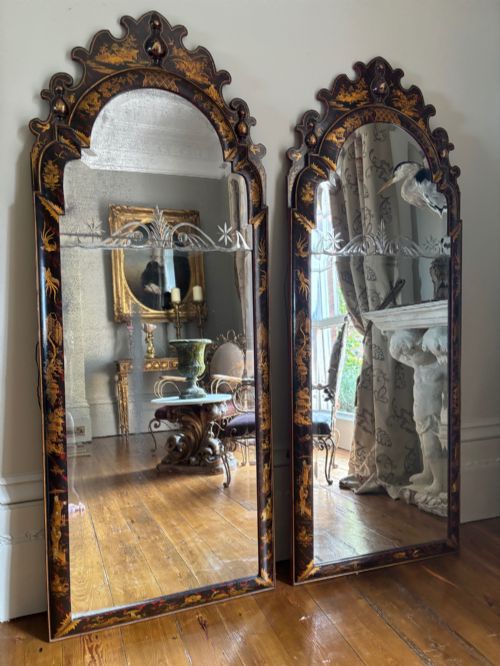
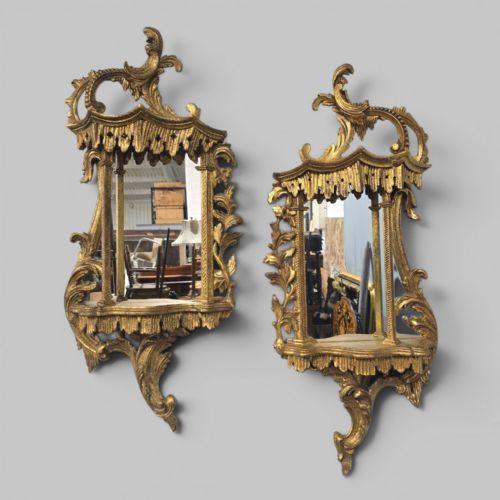
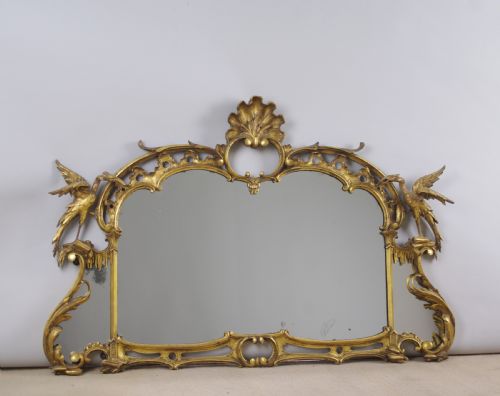
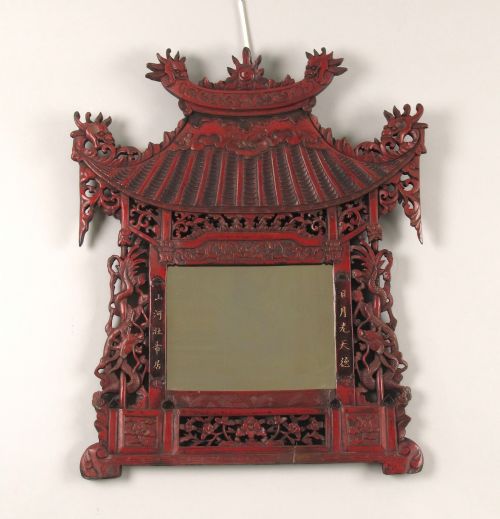
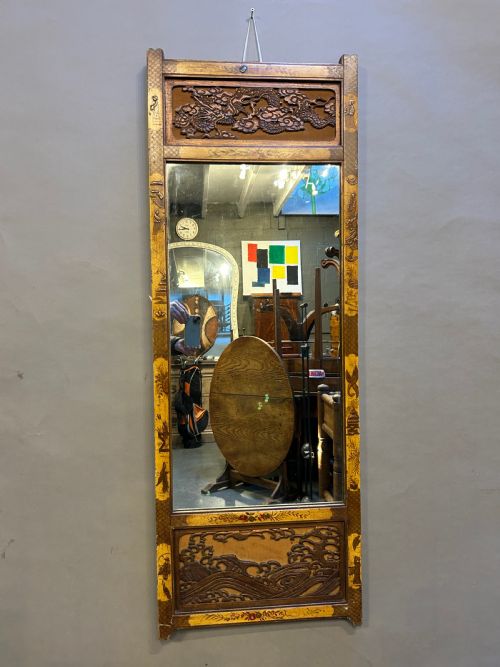
The most common formats on this page are wall mirrors and overmantel mirrors, alongside occasional cheval mirrors and dressing table pieces. These items range from compact black or red lacquered ovals to large giltwood frames bearing pagoda motifs.
The stylistic lineage draws heavily on Chinese Chippendale and Queen Anne revival forms. Makers adopted these historical shapes across the Victorian era, the Edwardian period, and into the nineteen-twenties.
Materials and construction
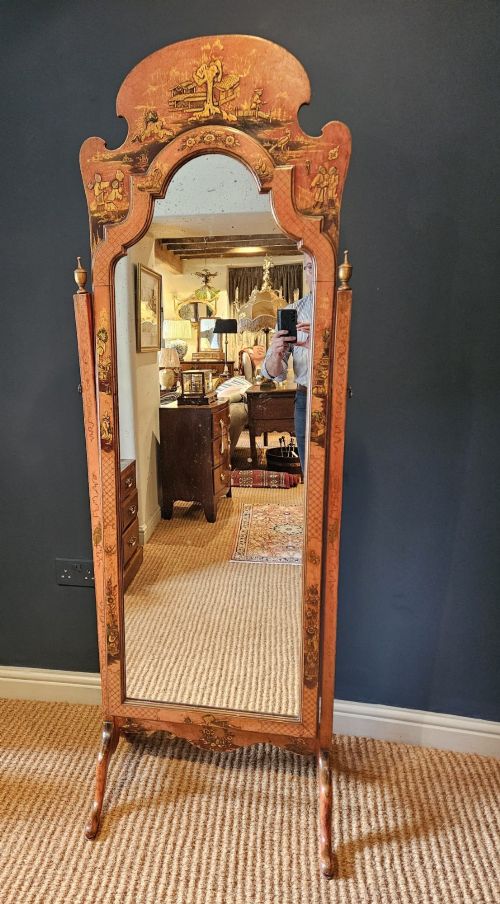
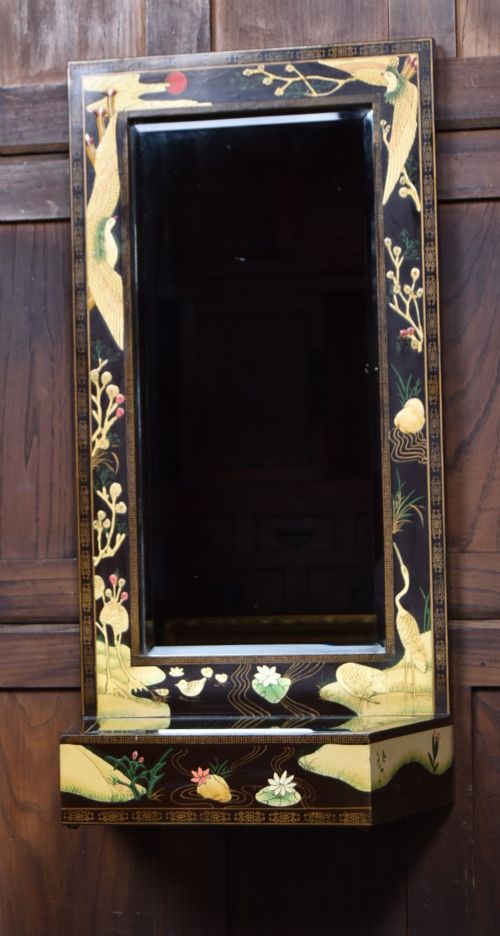
Wood serves as the primary substrate, shaped into frames or architectural forms before receiving surface decoration. Artisans applied layers of lacquer in black, red, cream, or dark blue, often building up raised details for subsequent gilding.
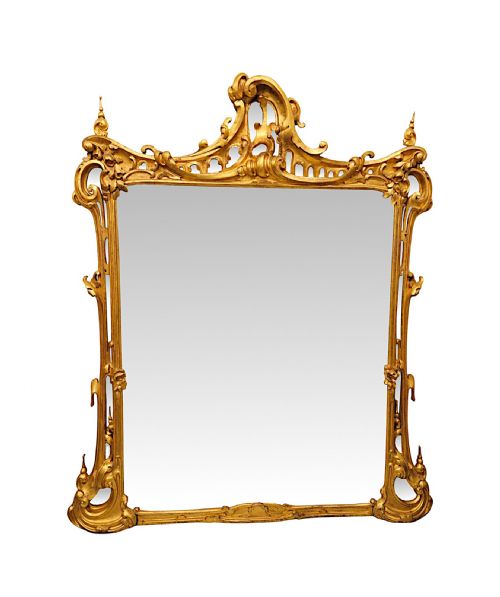
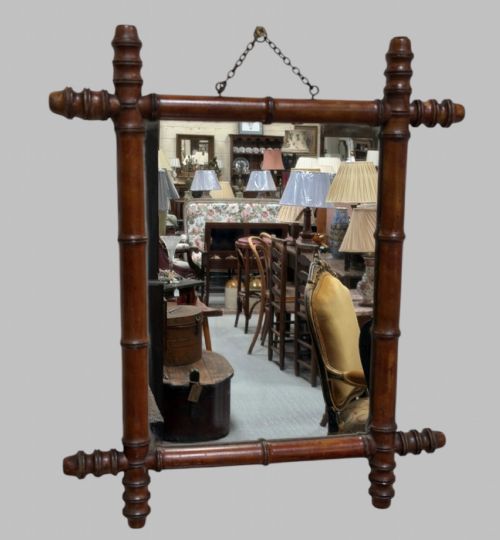
Giltwood and gold leaf feature prominently on Chinese Chippendale interpretations, where carved wooden elements display rococo scrolls and bird motifs. Mirror glass is set within these frames, sometimes accompanied by faux bamboo turnings in wood.
Listings feature periods spanning the Victorian era, the Edwardian years, and the nineteen-twenties, alongside nineteenth-century works.
Assessing craftsmanship and finish
Quality rests in the depth of the japanning and the crispness of the hand-carved detail on the wooden frame. Finer examples show meticulous brushwork in the landscape scenes and secure layering of the gold leaf over the lacquered ground.
The integration of the mirror plate within the frame also marks the tier of the piece. Better production standards display harmonious proportions between the decorative crest, such as a pagoda or carved birds, and the reflective glass below.
The Chinoiserie Style Mirror Glossary
- Chinoiserie
- European decorative style imitating Chinese artistic traditions. It relies on imaginative interpretations of landscapes, pavilions, and figures.
- Japanning
- European imitation of East Asian lacquerwork. It involves layered varnishes cured and polished to a hard finish.
- Giltwood
- Wood carved and coated with gold leaf or metal powder. This technique highlights ornamental carvings on mirrors and furniture.
- Overmantel mirror
- Large mirror designed to hang above a fireplace mantel. These pieces often anchor the decorative scheme of a reception room.
- Cheval mirror
- Freestanding full-length mirror mounted in a frame with pivots. It allows the glass to tilt at various angles.
Chinoiserie Style Mirror: Frequently Asked Questions
Where should I hang a chinoiserie style mirror?
These mirrors suit entrance halls, living rooms, and bedrooms where their decorative frames can catch the light. Overmantel versions work naturally above a fireplace, while wall-mounted ovals function well above console tables.
Placement depends on scale, as larger giltwood pieces require clear wall space to display their carved motifs properly without competing with surrounding art.
How do I date a chinoiserie style mirror?
Dating relies on examining the construction of the wooden frame, the backing boards, and the characteristics of the mirror glass. Revivals from the Victorian and Edwardian periods often mimic earlier Queen Anne or Chinese Chippendale styles.
Clues appear in the composition of the lacquer, the wear patterns on the gold leaf, and the assembly methods used at the corners of the frame.
What is the difference between japanning and lacquer?
Traditional East Asian lacquer uses natural sap applied in numerous thin, polished coats. Japanning is the European interpretation developed during the seventeenth and eighteenth centuries using shellac and varnish.
Both finishes create a glossy, hard-wearing surface that takes metallic decoration well, though european japanned pieces often feature raised gesso details beneath the paint.
Are these mirrors fragile?
The wooden frames and glass plates are durable under normal domestic conditions, but the lacquered and gilt surfaces require gentle care. Avoid placing them in direct sunlight or areas with high moisture fluctuations to protect the finish.
Cleaning should involve only a soft, dry cloth to prevent abrasion to the delicate painted scenes and gold leaf.